
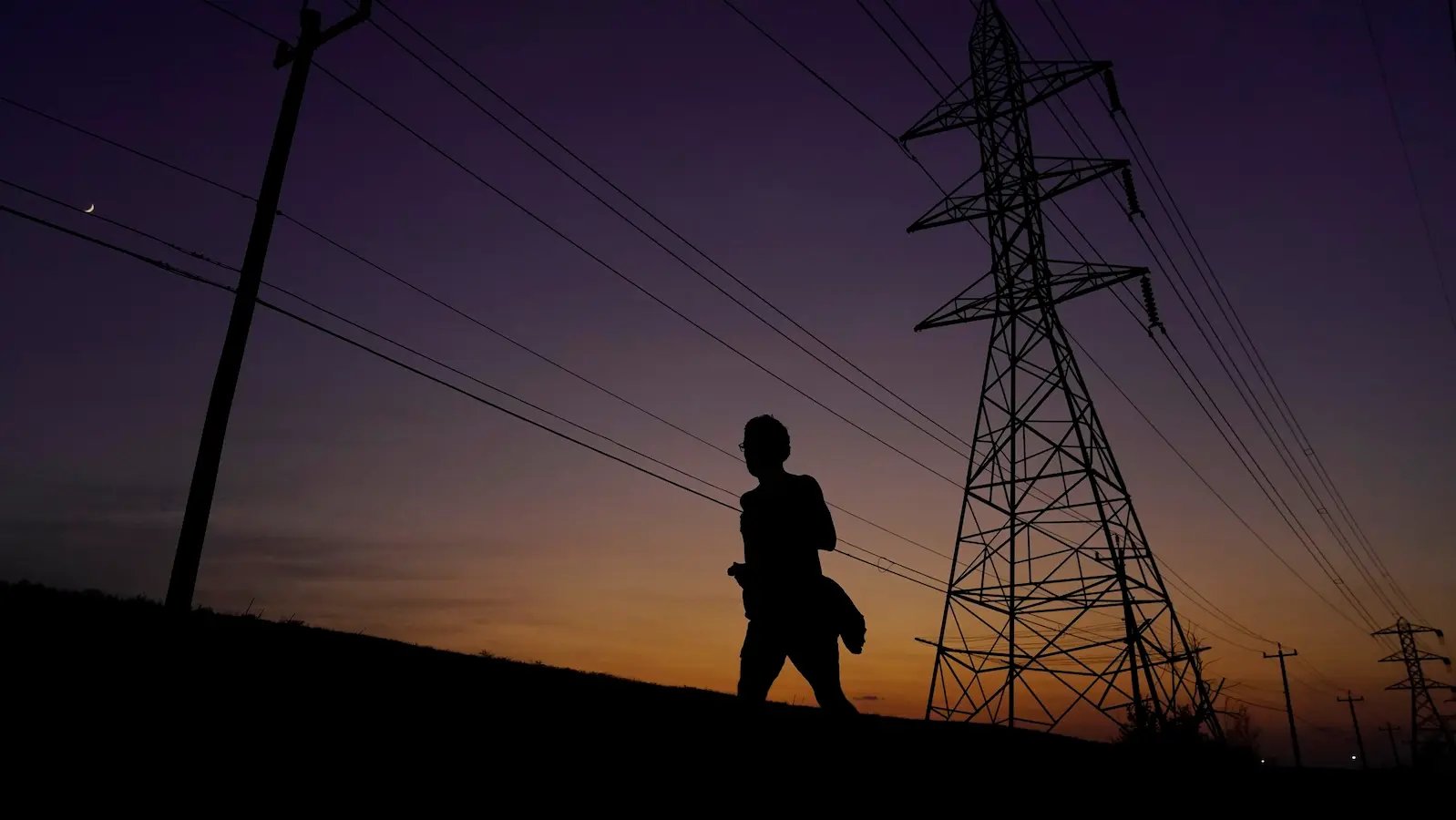
Electric utilities across the United States are shutting off power to a growing number of households, according to a recent report that also found most shutoffs happened during last year’s record-hot summer, a reminder that climate change fuels more intense, frequent, and prolonged heat waves.
Shutoffs can be deadly, especially during extreme freezes and blistering heat. And while health issues are the most worrisome risk, there are other threats to daily life such as losing access to phone, internet, medical equipment, and food storage. Basic physical comfort can prove impossible.
The report by the nonprofit Center for Biological Diversity revealed that six investor-owned utilities disconnected customers between January and September 2024 more than 662,000 times, an over 20 percent jump from the same period in 2023. Those companies included Georgia Power, DTE Energy, Duke Energy, Ameren Corporation, Pacific Gas & Electric, and Arizona Public Service.
But all shutoffs, and the harms they cause, are avoidable, said Selah Goodson Bell, lead author of the report. States and local governments have the power to protect customers by enacting policies like comprehensive shutoff bans during extreme heat and reining in utility rate hikes. While most states already ban shutoffs during cold weather, more and more are starting to ban it during heat waves. “It’s going to be up to cities, municipalities, and states to remedy ongoing energy injustices and hold these utility companies accountable,” he said.
It’s hard to know the true extent and nature of shutoffs because only a patchwork of data exists nationwide. Twenty-two states don’t require utilities to report disconnections at all, and among the ones that do, only 20 states and Washington, D.C., have up-to-date data. Report authors analyzed the six power companies because they provide current disconnection data and collectively serve more than 200 million customers, spanning most regions of the U.S. from California to the Carolinas.
In Georgia, the state’s largest electric utility Georgia Power disconnected customers for nonpayment over 180,000 times from January to September 2024 — a more than 20 percent increase from the same period in 2023. Duke Energy in North and South Carolina also increased shutoffs by nearly 20 percent last year. DTE Energy in Michigan disconnected customers more than 150,000 times, and Ameren in Illinois and Missouri shut off power more than 120,000 times, with both raising shutoff rates in the past few years.
While Pacific Gas & Electric in California and Phoenix-based Arizona Public Service cut off power to fewer customers than the other utilities, the report still found a steady growth in shutoffs since 2022.
Lingering inflation, rate hikes, and climate change have all contributed to the rise in shutoffs, the report found. But the core issue is an “antiquated and broken” utility business model that effectively punishes low-income customers by aggressively raising rates, and then cutting off power when households can’t pay, said Goodson Bell.
As shutoffs increased, the six utilities analyzed in the report also netted $10 billion in profits between January and September 2024, a more than 20 percent increase from the same period in 2023. Less than 2 percent of their shareholder dividends would have prevented all shutoffs last year, the report found. “Customers are losing access to an essential service they need to survive while shareholders line their pockets with lavish returns,” Goodson Bell said.
Besides using more electricity to cope with extreme temperatures, customers are also paying for the mounting costs of repairing and hardening the grid after disasters like wildfires or hurricanes. Yet the report documents efforts by utilities that would worsen climate-driven costs: Almost all the utilities mentioned in the report have worked to expand gas infrastructure and fossil fuel energy supply, and lobbied to weaken rooftop solar and other climate policies.
Representatives from Ameren, Arizona Public Service, DTE Energy, and PG&E told Grist that disconnection is a last resort, and that the utilities offer a range of energy assistance and flexible payment plans. “We recognize that higher costs, including energy bills, can be a challenge for customers,” said PG&E spokesperson Mike Gazda. Duke Energy and Georgia Power did not respond to a request for comment.
For most of the utilities in the report, shutoffs peaked in the summer.
While 42 states already ban shutoffs during cold weather, 23 have now passed heat-based shutoff bans, including Washington state in 2023 and Virginia in 2024. Last year, Illinois strengthened an existing ban by lowering the previous threshold of 95 degrees Fahrenheit to 90. That change appears to have already had a measurable impact: According to the Center for Biological Diversity’s report, summertime shutoffs in Illinois were 13 percent lower in 2024 than in 2023.
But in Michigan and California, which both have temperature-based shutoff bans for extreme heat, disconnections by DTE Energy and PG&E still peaked during the summer. Temperature-based shutoff bans in those states fail to adequately protect customers because they don’t require utilities to automatically restore power to households that get disconnected prior to a heat event, said Goodson Bell. That means that even if a household gets their power shut off right before a ban takes effect, if they can’t pay in time, “They will be forced to endure harsh conditions without access to electricity.”
Arizona Public Service, on the other hand, has avoided a summertime spike in shutoffs by using a date-based shutoff moratorium from June 1 to October 15. The policy was introduced by state regulators after Arizona Public Service cut off power to a 72-year-old woman who owed $51 on her electricity bill, resulting in her death in 2018. But even date-based protections may not be enough because extreme heat is increasingly happening on days outside summer months, Goodson Bell pointed out.
States should instead use both temperature and date-based restrictions to widen the period of time customers are protected, and ban shutoffs completely for certain customers such as those with medical conditions, he said. Such measures are small steps to address widespread harms, said Sanya Carley, a professor at the University of Pennsylvania who studies utility disconnections. “When it comes to disconnections, I think states need to adopt as many protections as they possibly can.”