

| Updated:

After years spent cast as the underbelly of the global economy, mining is undergoing a reputational and financial revival. Ali Lyon explores what’s behind the renaissance, and whether London risks losing its status as the industry’s spiritual home as a result.
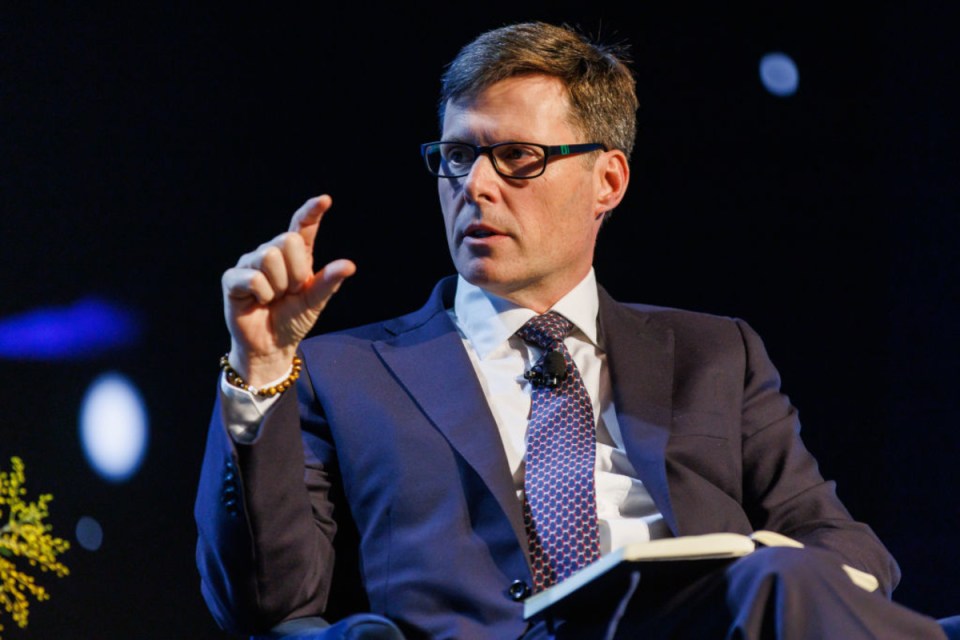
With his thick-rimmed spectacles, salt-and-pepper hair and wiry, lean build, Gustavo Pimenta is a sharp departure from the brash mining executives of yesteryear.
Appointed in 2024 to head up Vale – the world’s sixth-largest miner by revenue – he faced an unenviable in-tray for what is one of the biggest private sector gigs in his native Brazil. The company was yet to emerge from the long shadow cast by a 2019 disaster at one of its dams that cost over 200 lives and billions in lost revenue. It also faced the sizeable challenge of re-establishing itself as the world’s largest producer of iron ore – a title it lost to Rio Tinto as it recovered from the Brumadinho disaster.
And yet, relaxing into a sofa on stage at an industry jamboree last week, the softly spoken executive emitted an air of easy confidence as he gushed about the positive role his industry plays in the world.
“Mining is a good thing,” he said, in answer to a question on his company’s decision to be a lead sponsor of next month’s COP summit. “It improves lives. It makes the world better. And you can count on us in the future.”
Pimenta’s conviction and self-assuredness was evident across much of the well-attended panels and interviews with some of the mining industry’s biggest names over the course of the summit.
Indeed, between espousing the merits of his company’s recent tie-up with Canadian rival Teck, and committing the merged company’s future to the London Stock Exchange, Anglo American’s Duncan Wanblad found the time to make similar overtures about mining’s positive role in the world.
“The world will continue to need mining into the future for many, many decades to come,” he told an audience a day earlier. “It just needs to be done in a different way from how it was done in the last 100 years.”
Mining’s role in the world ‘much more widely realised’
Even a few years ago, such overt displays of pride in a sector as controversial as mining would have been unthinkable. For a generation, a string of high-profile disasters – and the growing salience of environmental and climate crisis-related fears – served to fuel its reputation as a necessary evil of the global economy – but an evil nevertheless.
But as access to critical minerals and metals become all the more important in a world of heightened geopolitical tension – not to mention the electrification of the world’s power system triggering record demand for raw materials – mining has a spring in its step again.
“I think the role that mining plays in contributing to both the overall state of the world and the energy transition, is starting to be much more widely realised,” Danielle Martin, chief operating officer at the International Council of Mining and Metals (ICMM), tells City AM.
“Miners have been saying for some time now, ‘Hey, world, if you want this energy transition to happen, we’re really important.’ And while we may have been saying it for ages, we might not have been saying it in the right way.”
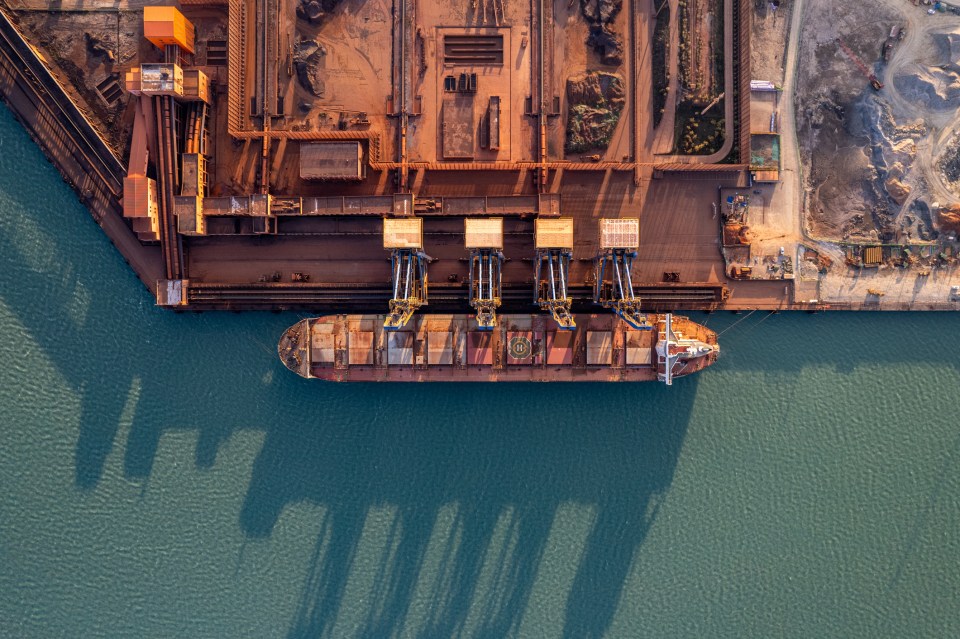
There are structural as well presentational factors driving the industry’s revival. Ample supply of mined commodities is essential for each of the largest macroeconomic and industrial megatrends dominating government agendas today. More copper – 30 per cent more, according to the International Energy Agency – is needed if countries want to manage the added burden the transition from fossil fuels will place on electricity supplies.
Silver and platinum are both integral for AI chips and weapons manufacturing. And with the gold price scaling heights as investors readjust their portfolios away from conventional currencies amid fears of debasement, yellow metal miners have enjoyed record earnings and unprecedented interest from the financial world.
Copper will be ‘crucial’ for the energy transition
That’s not to mention the so-called ‘rare earth’ metals and minerals like Yttrium and neodymium, which have become the bedrock of many of the world’s most important industrial products and processes.
“We’re in a perfect storm for miners,” says Neil Wilson, UK investor strategist at Saxo Markets. “Supply is lacking which is pushing up prices and delivering strong free cash for firms to invest or return to shareholders in a bit of a virtuous circle.”
Adding to the sector’s revival, Wilson says, has been the evolution of environmental, social and governance (ESG) goals from “wishful thinking, to a more cold-headed calculation about what is required in a fragmented world”.
When money was cheap, and corporations were clambering over one another to burnish their ESG credentials, the world’s biggest mining companies underwent several years of introspection and self-flagellation.
A string of protests at several mining giants’ Annual General Meetings (AGMs) and heightened political scrutiny forced an ethical reckoning among its biggest players. That sustained pressure resulted in a 2021 precursor to last week’s London summit – for example – devoting over half its agenda items to issues of the sector’s environmental and inclusion track record.
“We were part of the problem,” says Martin, “but we’re also an important part of the solution – if done responsibly.”
Investors have since cottoned on to its enduring value. Since the start of 2023, two of London’s largest gold miners – Fresnillo and Endeavour – are up 130 and 331 per cent respectively as the breakneck bull run carried them higher. And over the same period in the US, Southern Copper – a red metal juggernaut with mines in Peru and Chile – has rallied by 130 per cent to become the world’s fourth biggest miner by market cap.
Even funds with a more ethical bent, many of whose remits vetoed involvement in the sector for years, are changing their tune. A JP Morgan-run ‘sustainable’ fund bought £200m of shares in Glencore in March, and the World Economic Forum – one of the world’s most fervent cheerleaders of ESG investing – published a paper last year on why “now is the time to invest in mining technologies for sustainable growth”.
“The ESG backlash… has turbo charged the miners,” Kathleen Brooks, research director at XTB, tells City AM. “With more countries rethinking net zero targets, this should also provide a positive headwind for miners in the coming years, and that is why we are seeing them play catch up with other stock market sectors.”
After BHP, will more mining giants quit London?
All of which has led several top advisers to predict a flurry of merger and acquisition activity in the industry, kicked off by last month’s $53bn (£40bn) megamerger between London’s Anglo American and the Canadian commodities giant Teck.
Over a year in which whipsawing markets and trade uncertainty has caused dealmaking in other sectors to shrivel up, activity between miners has – according to Standard Chartered’s mining lead Richard Horrocks-Taylor – held up, and is at similar levels to in the late 2010s.
“The fourth quarter is going to be strong,” he told the FT event. “We’re seeing quite a lot of deals coming up in gold and copper.”
There are – however – real fears that this spurt of dealmaking and – and mining’s implication in the geopolitical megatrends of today – may mean London loses its grip on a sector whose links to the UK capital date back to when the practice itself was being industrialised.
A hangover of the UK’s colonial history, the City is – by revenue – home to three of the 10 largest mining companies in the world despite both their assets and critical mass of staff being thousands of miles away. It also boasts the London Metals Exchange, which remains the pre-eminent and dominant commodities market.
Companies get more flexibility when they are closer to their assets and to key governments. The need to be permanently in London has lessened.
But with returns and liquidity on its equities bourse stubbornly stunted relative to its US counterparts – and the scars wrought by BHP’s 2021 decision to unify its listing in Sydney still fresh – questions over the most suitable financial destination are being asked at all three of London’s biggest players.
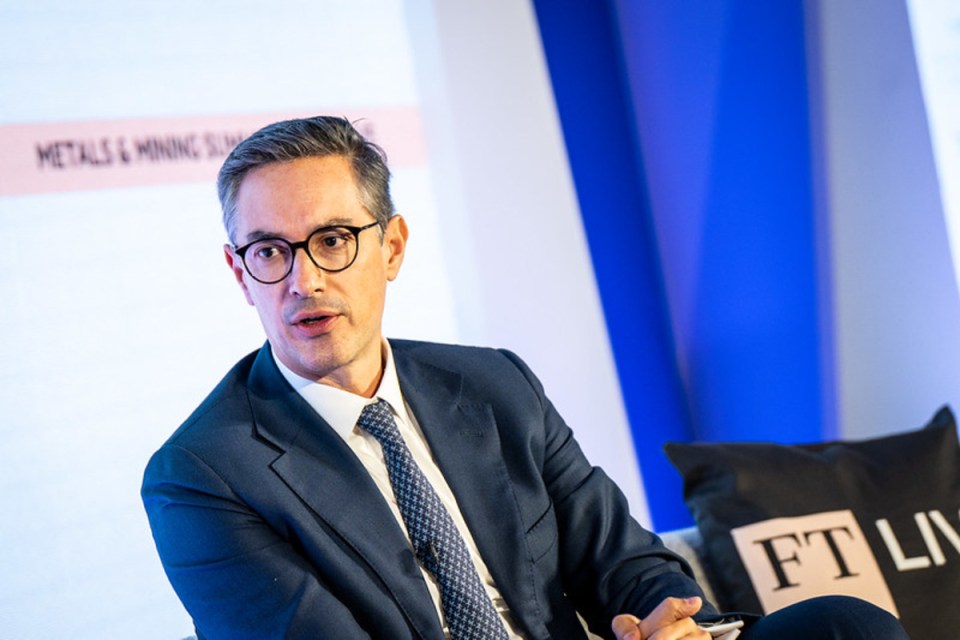
Glencore announced a strategic review of its listing, before shelving plans to move to New York amid fears it would not be large enough to be included in the all-important S&P 500 index. Rio Tinto remains under pressure from a small but vocal minority of investors who believe it should follow in BHP’s footsteps. And while Anglo American confirmed it would retain its London listing last week, its decision to move its headquarters to Vancouver as part of its tie-up with Teck was sufficiently symbolic to earn it a rebuke from a senior British lawmaker.
“Companies get more flexibility when they are headquartered closer to their assets, to the government with which they’re partnering, and to their host communities,” says the ICMM’s Martin. “The need to be permanently in London has lessened.”
As if to prove Martin’s point, access to so-called ‘rare earths’ – minerals and metals that despite their name are not overly scarce but are essential – has become the flashpoint of the latest spat between the US and China. Should those tensions between the world’s two hegemonic powers continue to escalate, London could either become an important neutral harbour or pale into insignificance.
For now, though, the capital remains “the place for miners”, according to Saxo’s Wilson; a sentiment with which Martin ultimately agrees. “London will always be important to mining and metals,” she says. “I don’t think it will ever lose its shine.”