
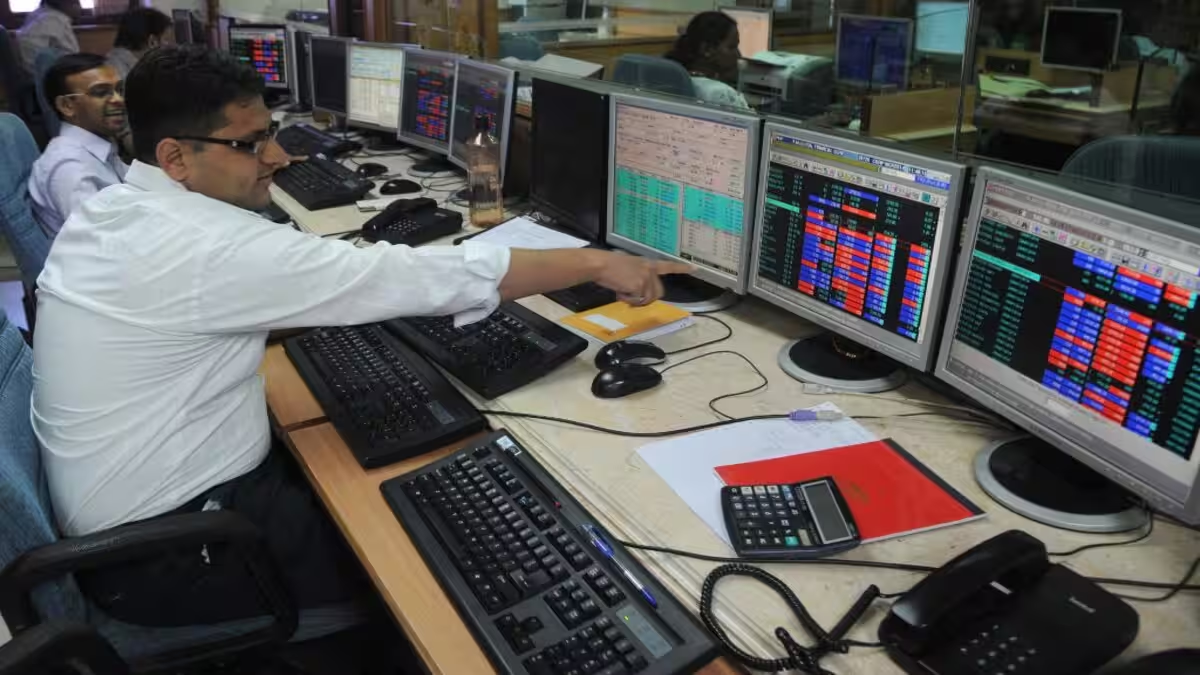
Asian equity markets came under heavy selling pressure on Monday as escalating conflict in the Gulf sent oil prices above $90 a barrel, reigniting fears of higher inflation and prolonged high interest rates. Indian benchmark indices also opened sharply lower, with banking stocks leading the decline amid a broad risk-off mood across global markets.
The BSE Sensex was down 624.10 points, or 0.80 per cent, at 77,527.35 around 9:45 am IST, after slipping to an intraday low of 77,461.72. The NSE Nifty 50 fell 164.35 points, or 0.68 per cent, to 24,169.95.
The weakness followed a sharp rally in crude oil prices after the US launched a ninth consecutive day of military strikes against Iran, while Tehran retaliated with attacks across the region. Shipping activity through the Strait of Hormuz remained severely disrupted, with only four vessels reported to have crossed the strategic waterway on Sunday, raising concerns over global energy supplies.
Brent crude rose
2.6 per cent to $90.40 a barrel, breaching the $90 mark for the first time in more than a month. US West Texas Intermediate crude gained 2.3 per cent to $84.39 a barrel.
The latest jump in oil prices renewed concerns that inflation could remain elevated globally, complicating the outlook for central banks that had only recently begun discussing policy easing.
Banking stocks drag Sensex
The sell-off in Indian markets was led by financial stocks.
Axis Bank slumped more than 5 per cent, while HDFC Bank dropped over 4.5 per cent. Kotak Mahindra Bank lost nearly 3 per cent, making them the biggest drags on the benchmark indices.
Other laggards included IndiGo, Maruti Suzuki, Bajaj Finance, Mahindra & Mahindra and Bharat Electronics.
The few bright spots were defensive and energy-related stocks. Trent gained more than 2 per cent, while ONGC rose nearly 1.5 per cent as higher crude prices boosted sentiment around upstream oil producers. NTPC, Bharti Airtel, Tech Mahindra, Reliance Industries and HCLTech also traded in positive territory.
Asian markets extend losses
The weakness was widespread across the region.
MSCI’s broadest index of Asia-Pacific shares outside Japan fell 0.3 per cent.
South Korea’s KOSPI plunged more than 4 per cent after markets reopened following a holiday, extending last week’s sharp decline. The benchmark has now fallen over 25 per cent from its June peak, confirming a technical bear market as investors dumped semiconductor and technology stocks.
Chinese blue-chip stocks bucked the broader regional trend, rising 1.4 per cent.
Japan’s Nikkei remained closed for a public holiday after tumbling 6.4 per cent last week in a technology-led rout.
Inflation fears return
The latest surge in crude prices has revived worries that inflation could remain sticky despite softer-than-expected US consumer inflation data released last week.
Markets are now pricing in around 29 basis points of Federal Reserve tightening by year-end, with futures implying roughly a 60 per cent probability of a rate hike as early as September.
The move pushed yields on 30-year US Treasury bonds back above the psychologically important 5 per cent level, making bonds more attractive relative to equities and putting pressure on richly valued growth stocks.
AI stocks face another test
The geopolitical uncertainty comes at a time when investors are already questioning lofty valuations in artificial intelligence and semiconductor companies.
The Philadelphia Semiconductor Index has fallen about 20 per cent from its June record high after losing roughly 10 per cent last week.
Sentiment weakened further after Chinese AI startup Moonshot unveiled its open-weight Kimi K3 model, claiming performance close to Anthropic’s frontier AI systems.
Wall Street ended sharply lower on Friday, with the S&P 500 declining 1 per cent and the Nasdaq Composite falling 1.4 per cent.
Attention now shifts to a busy week of earnings from major US technology companies, including Alphabet, Tesla and Intel, which are expected to offer fresh insight into AI spending and corporate profitability.
Despite the recent correction, Bank of America strategist Savita Subramanian remains optimistic on corporate earnings, forecasting companies in the S&P 500 to beat consensus estimates by around 5 per cent, with technology expected to account for more than half of overall earnings growth.