

According to BDO, one in six UK mid-market organisations is at risk of becoming a “zombie” company, generating enough cash to operate, but not enough to invest or grow.

Daniel Berry, Business Development Manager, Xledger UK
[1] As property management firms navigate portfolio and compliance complexity, how can they avoid this risk and scale sustainably?
While regulations and rising costs are contributing factors, ageing technology is a far greater cause of “zombie” companies, as it technically works but fails to provide real-time visibility over cash flow, multiple projects, or entities. As a result, property finance teams can struggle to stay afloat.
We dive into why scaling property management firms risk becoming “zombie” companies, and the steps they can take to create a strong foundation for sustainable growth.
Growth and new entities create complexity
Growth is essential for commercially driven property firms, but it also introduces operational complexity that legacy systems can rarely support. Legacy systems are good at processing transactions and producing specific reports but often force finance to create manual workarounds when producing management information.
As a result, property finance teams must manage increasing volumes of rent payments, supplier invoices, maintenance expenditure, and regulatory reporting, while leveraging an outdated system and an expanding portfolio.
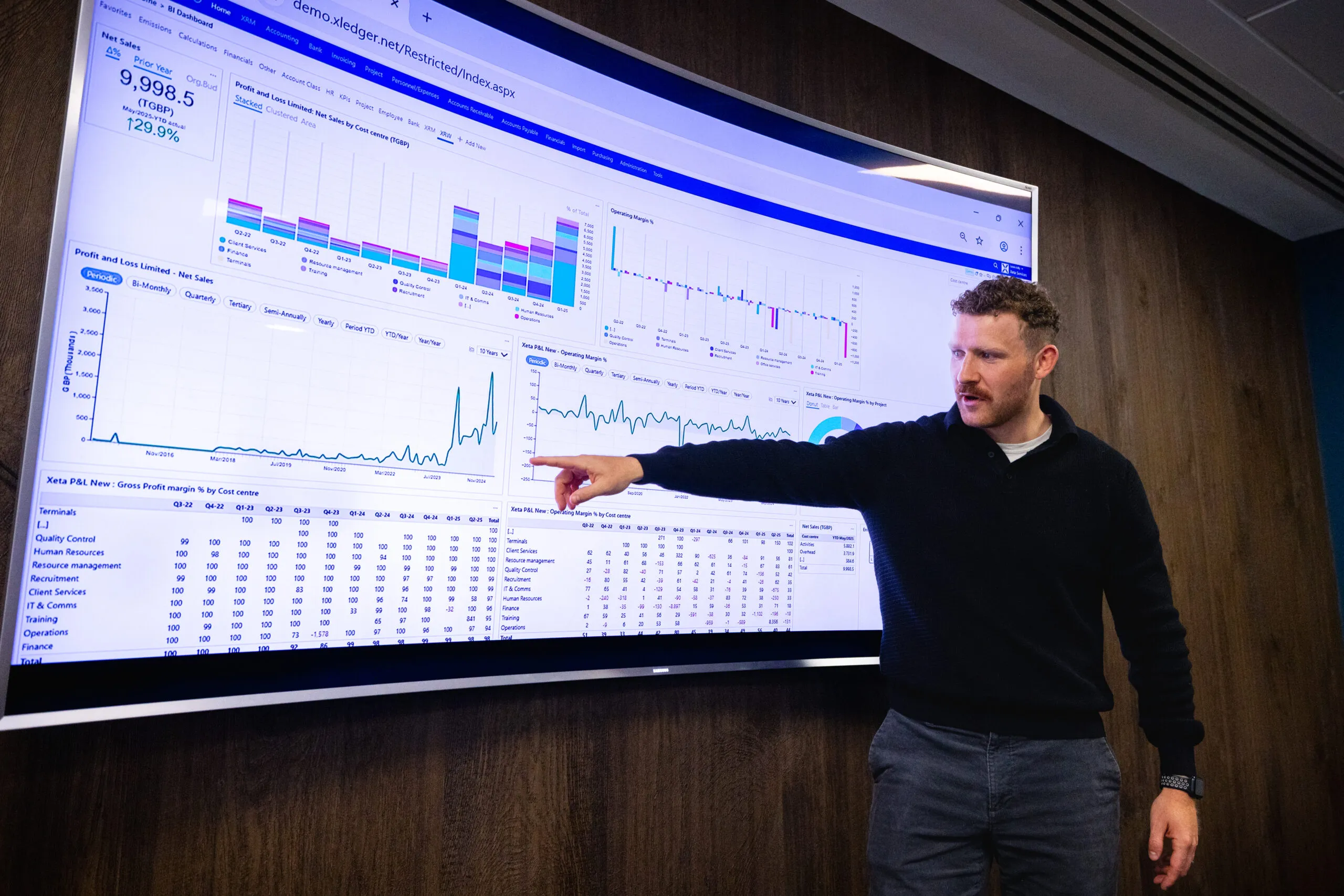 The struggle reaches a peak when finance teams have to manage multiple legal entities, special purpose vehicles (SPVs), or property development arms. Each of these comes with its own reporting and governance requirements and, without effective multi-entity accounting software, producing a consolidated view of financial performance can become time-consuming and error-prone, not to mention creating other familiar challenges, such as:
- Manual consolidation across entities
- Spreadsheet-based reporting
- Delayed month-end processes
- Limited visibility of portfolio-wide cash flow
The issue is rarely a lack of data. More often, the time taken to collect and collate information on multiple properties, entities, and SPVs outweighs the time available to analyse it, reducing finance’s ability to manage each one efficiently.
Why do “zombie” businesses emerge?
BDO defines “zombie” businesses as organisations with enough cash to survive, but insufficient cash to evolve. For property businesses, this usually occurs gradually, and not because of poor commercial performance.
Here are a few significant ways that legacy systems contribute to the creation of zombie businesses:
- Technical debt: Companies spend up to 80% of their IT budget simply maintaining old systems, rather than using that money to invest in ever-evolving technology. [2]
- Manual workarounds: Finance teams are forced to manually import and export data between disconnected systems, eating up time that could be spent on analysis.
- Stagnant decision-making: Without automated real-time data, property firms may deliver delayed month-end reports, with finance leaders using outdated data to make decisions.
- Switching risks: Property firms may be reluctant to replace core business systems that work well enough due to the perceived cost, disruption, and resource requirement.
- Skills gap: As younger skilled workers enter a property firm, they may not have the knowledge or skills to maintain outdated software, again relying on manual workarounds to complete basic accounting tasks.
When reporting cycles become longer and operational data is fragmented across disconnected systems, property finance leaders risk relying on outdated, error-prone data to identify opportunities for growth. Likewise, using historical data to inform borrowing, refinancing, acquisitions, or investments presents risks to the company’s financial health.
Building a connected finance ecosystem
One of the biggest shifts taking place across the property sector is the move away from disconnected landlords and property management software towards cohesive technology ecosystems.
Modern finance software works alongside property management software and other key business systems to create a single property management solution, with built-in bank account access for heightened visibility and control.
Rather than making teams move data between systems manually, integrations allow information to flow automatically, removing duplication and manual effort. This creates a more reliable foundation for crucial accounting processes, including:
- Portfolio reporting
- Financial forecasting
- Governance
- Operational decision-making
It also enables finance teams to spend less time reconciling information and more time understanding it through value-added analysis. Whether a firm uses specialist platforms such as Landlord Vision for portfolio management or integrates finance platforms to improve financial reporting, property firms are recognising that connected technology provides far greater value than disconnected systems.
Why does project accounting matter?
Alongside managing tenants and payments for rental properties, finance teams are often responsible for managing refurbishment programmes, planned maintenance, capital improvements, and new developments.
Automated project accounting tools that are built into rental property accounting software enable property finance teams to monitor these activities separately from other operational expenditure, as individual projects across a variety of dimensions.
Instead of manual spreadsheet reporting, this method provides greater visibility of budgets, project performance, contractor costs, and return on investment (ROI), ultimately enabling greater flexibility and financial control.
Looking beyond compliance
Regulatory requirements continue to evolve, particularly with Making Tax Digital (MTD) for Income Tax and wider digital reporting initiatives changing how organisations maintain financial records and stay compliant.
Capabilities such as automated bank feeds, integrated approval workflows, live dashboards, and a mobile app enable finance teams to stay on top of portfolio performance without relying on manual reporting cycles. At the same time, software that tracks income and expenses in real-time empowers leaders to make strategic decisions with confidence in the underlying data.
Interested in understanding how Xledger helps property management companies scale sustainably? Get in touch with our expert consultants today.
By Daniel Berry, Business Development Manager, Xledger UK
References
[1] BDO (2025), Sharp increase in zombie companies in UK mid-market | BDO
[2] Atera Team (2024), Unveiling the hidden costs of legacy IT | Atera