
Investing.com — The International Energy Agency (IEA) has warned that certain European countries could face physical jet fuel shortages over the next six weeks if the Strait of Hormuz remains restricted.
The Middle East supplies roughly 75% of Europe’s jet fuel consumption, according to the IEA, with the shortfall risk growing just as the region enters its peak summer travel season.
Oil prices have surged following the outbreak of the U.S.-Iran war in late February, with Brent crude up more than 50% versus the January average and jet fuel outpacing crude. U.S. Gulf Coast jet fuel is up approximately 90% versus the January average.
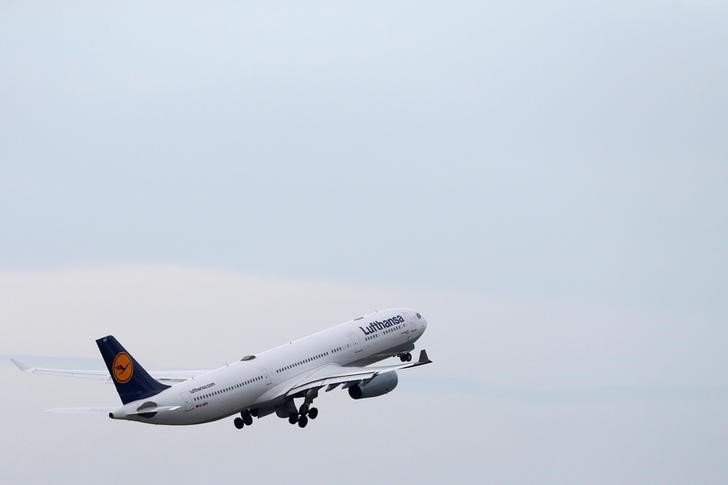
This has prompted European carriers to begin to take measures. said it will discontinue its CityLine services, removing 27 regional jets, while also planning to retire four A340s and two 747s and reallocating nine A350s to Discover Airlines.
“Lufthansa’s passenger airlines hedge fuel at a rate of ~80%, with unhedged portion set to be reduced by ~10%,” Jefferies analysts led by Sheila Kahyaoglu said in a note.
Meanwhile, has flagged the war and elevated fuel costs as a headwind to longer-dated bookings, noting that later-in-the-year reservations are running 2% below year-ago levels.
KLM also trimmed capacity by 80 European return flights for next month, representing less than 1% of European capacity.
Industry group Airlines for Europe, which counts Lufthansa, and EasyJet among its members, has called on the European Union to introduce bloc-level monitoring of jet fuel supplies, temporarily suspend the EU’s carbon market for aviation, and cut aviation taxes.
The U.K., Germany, France, Spain, Türkiye and Italy collectively cover 63% of their own demand through domestic refining, providing relative insulation against Middle Eastern supply disruptions, according to Jefferies.
European countries are already looking to alternative sources, with trade data showing an uptick in non-Middle Eastern jet fuel imports, notably from the United States.
At $4.50 per gallon, Jefferies estimates that fully restoring margins to levels seen when fuel was at $2.50 per gallon would require fare increases of more than 30%.