
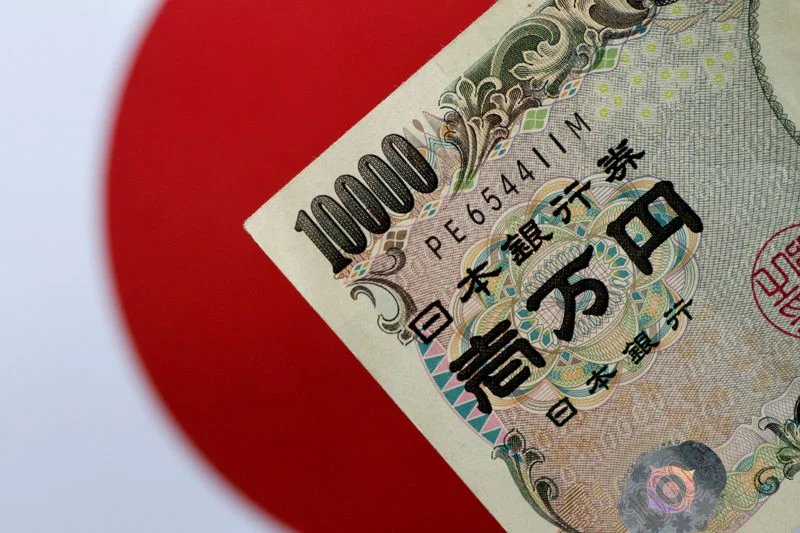
Investing.com — The U.S. dollar on Monday was little changed as traders digested the aftermath of the Federal Reserve’s latest policy decision, confirmed coordinated U.S.-Japan intervention in the yen, and easing geopolitical tensions that pushed oil prices lower and reduced near-term inflation concerns.
At 16:52 ET (20:52 GMT), the , which tracks the greenback against a basket of six major peers, was flat at 99.90. It fell 1.5% last week in the wake of the Fed’s decision to leave interest rates on hold alongside a murky outlook for monetary policy.
The dollar was constrained by confirmed U.S.–Japan yen intervention, with the pair last down 0.3% to 157.18 after earlier hitting 155.23. The euro fell 0.2% to $1.1508.
The spotlight was also on falling oil prices which reduced near-term inflation anxiety — a dynamic reinforced by President Trump’s announcement over the weekend that negotiations with Iran on the Strait of Hormuz and denuclearization would begin today, marking a notable geopolitical de-escalation.
Speaking on Sunday, Bessent affirmed that Washington strongly supports Japan’s steps to correct the substantial undervaluation of the yen and explicitly warned that the U.S. Treasury would not hesitate to participate in further joint market action.
The intervention marks the first collaborative U.S.-Japan yen-buying operation in decades, stepping in after the currency plunged to a 40-year low beyond 162 yen per dollar late in July.
That intervention capped a volatile July for the yen, which ultimately registered a 1.6% monthly gain against the dollar – its best monthly performance since October. – as market intervention combined with hawkish signals from the Bank of Japan to spark a heavy unwinding of short positions.
Market participants also digested Friday’s monetary policy update from the Bank of Japan, which kept benchmark interest rates steady at 1.0% as expected.
However, BoJ Governor Kazuo Ueda maintained a hawkish stance, warning of upside inflation risks driven by high energy import costs and signaling that the central bank remains prepared to deliver further rate hikes later this year.
Broader currency trading was anchored by developments in the Middle East, where U.S. President Donald Trump announced that direct negotiations with Iranian officials would resume on Monday.
Bank of America Global Research strategists argued that while market sentiment on the yen remains deeply entrenched in bearish territory due to structural outflows and policy risks under Prime Minister Sanae Takaichi, the joint intervention marks a fundamental shift.
BofA highlighted that the USD/JPY pair at 155 could prove to be a critical “inflection point” for currency desks. Strategists noted that during previous intervention episodes earlier this year, USD/JPY found a firm floor around 155, reinforcing the market perception that official currency defense was ineffective.
However, a decisive break below 155 could trigger a broader shift from dip-buying toward selling into rebounds, unlocked by corporate dollar-hedging flows.
“The shift to coordinated intervention with the United States raises expectations for a broader policy framework aimed at stabilizing the yen,” Shusuke Yamada, FX/Rates strategist at BofA Securities, said.
“With the U.S. participating, the ultimate constraint associated with unilateral reserve depletion has effectively been removed, making it significantly harder for speculative investors to challenge the authorities,” Yamada added.
To limit any adverse impact on the U.S. Treasury market from dollar sales, both Finance Minister Katayama and Treasury Secretary Bessent emphasized plans to utilize the Federal Reserve’s Foreign and International Monetary Authorities (FIMA) Repo Facility.
BofA noted that the joint action also raises market expectations for an accelerated pace of Bank of Japan interest rate hikes, potentially pulling forward the next 25-basis-point hike from October to September.
Trump confirmed he had called off a planned military strike to pursue a diplomatic agreement aimed at reopening the Strait of Hormuz, causing to tumble more than 4% and easing immediate energy-driven inflation fears across global markets.
With geopolitical risk premiums easing slightly, foreign exchange traders are turning their focus to a crucial slate of U.S. economic data this week to gauge the Fed’s rate path heading into September, highlighted by a swathe of updates on the labor market culminating in the July nonfarm payrolls report.
Ayushman Ojha, Pranav Kashyap, and Anuron Mitra contributed to this article