
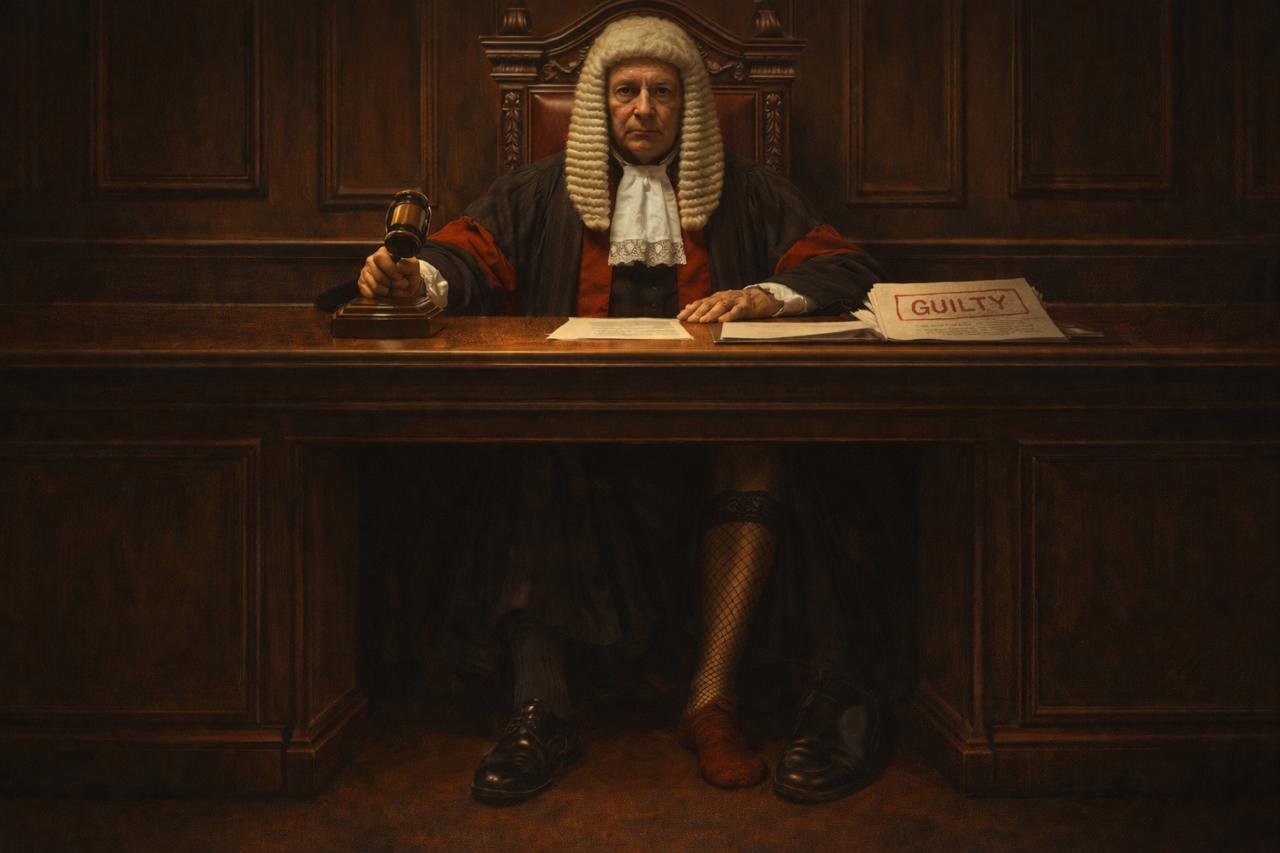
As the art market returns to measured growth, the movement around Mr. Phantom is becoming less about hype and more about structure — scarcity, collector conviction, controlled output and a market beginning to understand what it is looking at.
There are moments in every market when attention begins to move before consensus catches up.
Not loudly.
Not all at once.
But quietly, through behaviour.
Collectors ask different questions.
Capital becomes more selective.
Availability tightens.
The best works stop circulating casually.
And the market begins to pivot.
That is the moment now forming around Mr. Phantom.
For Invest Insider News, the pivot into this artist is not simply an artistic observation. It is a market observation. The same questions asked across equities, property, private assets and digital markets can also be applied to contemporary art:
Where is capital moving?
Where is supply controlled?
Where is conviction forming?
Where is the market still early enough for serious positioning?
Mr. Phantom sits directly inside that conversation.
Not because the wider market is suddenly easy. It is not.
Not because every contemporary artist will benefit equally. They will not.
But because the art market is beginning to reward discipline again — and Phantom’s market has been built around precisely that.
A Market Returning With More Discipline
The global art market has moved through a period of recalibration. Speculative buying softened, short-term trading became less aggressive, and collectors became more selective.
That period was not necessarily negative.
It removed noise.
According to the Art Basel and UBS Global Art Market Report 2026, global art sales returned to growth in 2025, rising 4% year-on-year to an estimated $59.6 billion. Dealer sales rose 2% to $34.8 billion, while public auction sales increased 9% to $20.7 billion. The report described the recovery as measured and uneven, rather than indiscriminate.
That distinction matters.
This is not a market where everything rises simply because confidence returns. It is a market where capital is becoming more intelligent. Buyers are looking harder at provenance, supply, artist development, collector depth and resale behaviour.
In that kind of environment, the artist with the strongest structure often becomes more interesting than the artist with the loudest visibility.
That is where Mr. Phantom begins to separate himself.
The Great Pivot
The great pivot is not just a pivot into art.
It is a pivot into scarcity-led cultural assets.
Collectors and investors are increasingly looking beyond traditional markets for assets that carry both emotional and financial relevance. Art sits in a rare position because it is not only held for return. It is held for meaning, identity, status, legacy and cultural alignment.
The Art Basel and UBS Survey of Global Collecting 2025 found that high-net-worth collectors allocated an average of 20% of their wealth to art in 2025, up from 15% in 2024. Among ultra-high-net-worth individuals with more than $50 million in assets, the average allocation rose to 28%.
This is the backdrop against which Mr. Phantom becomes important.
The market is not simply asking, “Who is visible?”
It is asking, “Who has structure?”
Who has a collector base?
Who has cultural relevance?
Who has scarcity?
Who has a market that can hold under pressure?
What we have found so far is that Phantom’s appeal is not resting on one factor alone. It is the combination that matters.
The work has identity.
The releases have control.
The collector base appears increasingly committed.
The supply story is tightening.
And the narrative is strong enough to hold attention beyond the first viewing.
That is not a typical emerging-artist profile.
That is a market structure beginning to form.
Why Mr. Phantom Is Different
Mr. Phantom is not entering the market as a decorative artist.
He is entering it as an artist with a world.
Artsy describes him as an anonymous London-based street artist whose politically charged practice uses public space as both canvas and catalyst for social commentary, with work confronting themes including inequality, conflict and collective responsibility.
That matters because collectors are no longer only buying image. They are buying language. They are buying thesis. They are buying a position inside a wider cultural conversation.
Mr. Phantom’s work carries that.
The anonymity gives the market a psychological edge, but the anonymity alone is not the story. The stronger story is what the anonymity allows: message over persona, critique over celebrity, and a visual language that sits between rebellion, luxury, politics and power.
His own platform describes the work as politically charged, emotionally raw and designed to provoke, while also highlighting charity and activism as part of the wider practice.
That combination is important for a new generation of collectors.
They want cultural edge, but they also want substance.
They want works that feel current, but not disposable.
They want artists who can speak to power, identity, technology, conflict and the systems shaping modern life.
Phantom’s work does that without needing to over-explain itself.
What We Have Found So Far
The early read on Mr. Phantom is clear.
This is not just a visibility story.
It is not simply a case of an artist receiving attention and hoping the market follows.
The market around Phantom appears to have been built through restraint.
Controlled releases.
Selective access.
Narrative-led collections.
A growing secondary-market conversation.
And a collector base that seems to understand the importance of holding.
That last point is critical.
Markets move differently when owners do not rush to sell. Thin supply changes psychology. Buyers become more decisive because they recognise that the next opportunity may not look the same as the last one.
This is one of the strongest signals around Phantom: the sense that available supply is narrowing at the same time interest is widening.
Recent market references have also strengthened that conversation. A London Art Exchange announcement reported that The Matrix by Mr. Phantom achieved a £147,000 auction result in London, exceeding its high estimate by 40%. While any single sale should be treated as one data point rather than the whole market, it gives collectors a visible benchmark around which confidence can begin to form.
And benchmarks matter.
They give the market something to measure against.
They create comparison.
They influence future expectations.
They help turn private conviction into public reference.
For Phantom, the important point is not only the number. It is what the number represents: evidence that the market is beginning to attach serious value to the narrative, scarcity and cultural weight surrounding the artist.
Scarcity Is Becoming the Core Story
The most important factor in Phantom’s market is not exposure.
It is supply.
Exposure can be created. Scarcity cannot be faked for long. Either the artist controls output or the market becomes flooded. Either collectors hold or they sell into every rise. Either the demand structure deepens or it remains shallow.
So far, Phantom’s market appears to be moving toward the stronger side of that equation.
The signals around future output suggest a more selective release environment. That matters because the wider art market is already becoming more disciplined. When confidence returns into a market where supply is limited, price behaviour can change quickly.
It does not always move smoothly.
It moves in steps.
One serious sale can reset expectations.
One unavailable work can increase urgency.
One collector entering the market can change the tone of negotiations.
One tightly held collection can reduce visible supply almost overnight.
That is why scarcity-led markets require attention before the momentum becomes obvious.
By the time everyone agrees, the best access is often already gone.
The Collector Psychology Behind the Pivot
Markets are not driven by data alone.
They are driven by behaviour.
When collectors believe there will always be more work available, they wait.
When they believe access is narrowing, they move.
When they believe an artist’s market is maturing, they hold.
When they believe the next release will be harder to secure, they become more decisive.
That psychology is now beginning to matter around Mr. Phantom.
Collectors are not simply responding to aesthetics. They are responding to a full market environment: scarcity, story, timing, identity and validation.
The strongest art markets are rarely built on one dramatic moment. They are built through a sequence of aligned conditions.
A clear artistic language.
A controlled supply structure.
A committed collector base.
External market references.
Cultural relevance.
And a wider market backdrop that is becoming more favourable.
Phantom has several of those elements working at the same time.
That is why this pivot deserves attention.
Art Is Becoming a More Serious Wealth Conversation
The wider financial world is also changing how it speaks about art.
The Deloitte Private and ArtTactic Art & Finance Report 2025 notes that 51% of wealth managers now offer art-related services, compared with only a quarter in 2011. Deloitte also points to an estimated $992 billion in art and collectibles expected to change hands over the next decade as part of a broader wealth-transfer environment.
This does not mean art should be treated like a liquid stock. It should not.
Art is illiquid.
It requires specialist knowledge.
It depends on provenance, condition, authenticity, artist development and collector confidence.
But it does mean art is no longer sitting outside the wealth conversation.
It is becoming part of it.
That is particularly relevant for artists like Mr. Phantom, where the market is not only about visual appreciation but also about scarcity, access and positioning.
For financial readers, this is the key point: Phantom is not interesting only because he is an artist. He is interesting because his market is beginning to display characteristics that investors already understand.
Limited supply.
Increasing attention.
Narrative strength.
Early validation.
Potentially widening demand.
Those are market signals.
The Vogue Question: Why Him, Why Now?
Why does Mr. Phantom feel timely?
Because his work speaks to the age we are living in.
Power without transparency.
Identity without privacy.
Systems without accountability.
A public constantly watching and being watched.
A society caught between image, control and collapse.
That is the psychological charge inside the work.
Pieces such as The Matrix are not merely decorative statements. Artsy describes the work as a blend of classical portraiture and dystopian symbolism, presenting authority through the image of a regal figure whose humanity has been replaced by digital static.
That is why Phantom holds attention.
There is surface impact, but also underlying tension. The viewer is not simply seeing a picture. The viewer is being asked to consider the structure behind the picture.
Who controls the signal?
Who controls the narrative?
Who controls value?
Who disappears behind the system?
That is where the art becomes more than aesthetic.
It becomes a marketable philosophy.
What This Means for Holders
For existing holders of Mr. Phantom works, the current environment is significant.
The wider market is improving, but selectively.
Collector capital is returning, but carefully.
Scarcity is becoming more important.
And Phantom’s output appears increasingly controlled.
That combination can create leverage for holders.
Not guaranteed leverage.
Not instant liquidity.
But strategic leverage.
In any thin market, ownership of the right work matters. Collectors holding strong examples are not just holding inventory; they are holding access. And when access narrows, the market often begins to treat existing works differently.
The strongest holders understand this.
They do not react to every movement.
They observe the structure.
They watch supply.
They watch demand.
They watch who is entering the conversation.
With Phantom, the conversation appears to be widening.
That is why the current moment feels less like a short-term spike and more like the beginning of a more serious market phase.
Final Observation
The great pivot into Mr. Phantom is not about chasing noise.
It is about recognising alignment.
The art market is returning to growth.
Wealth conversations around art are becoming more sophisticated.
High-net-worth collectors are allocating more attention and capital to cultural assets.
And within that environment, Mr. Phantom is emerging with scarcity, narrative weight and growing collector conviction.
That is the real story.
Not hype.
Not overstatement.
Not speculation dressed as certainty.
Structure.
The market is beginning to understand that Phantom’s value proposition is not built on volume. It is built on restraint. And in a market where the best collectors are becoming more selective, restraint may become one of the most powerful forces of all.
For buyers, the window may be narrowing.
For holders, the position may be strengthening.
And for the market watching Mr. Phantom, this may prove to be more than a seasonal movement.
It may be the beginning of the pivot.
Editorial note: This article is market commentary only and should not be treated as financial or investment advice. Art markets are specialist, illiquid and subject to risk. Collectors should seek independent advice before making acquisition or sale decisions.