

Key Highlights
- BTC momentarily surged to $70,000 on Coinbase, marking its strongest performance since early June
- Treasury Secretary Scott Bessent revealed plans to expand bond buyback programs from $2 billion to at least $4 billion beginning September 9
- At a White House cryptocurrency summit, President Trump urged lawmakers to advance the Digital Asset Market Clarity Act
- Exchange stablecoin reserves have contracted by $14 billion since May, potentially constraining additional price gains
- The Senate has scheduled a procedural vote on the Clarity Act for September 15
On Wednesday, Bitcoin crossed the $70,000 threshold, achieving a price level unseen since the beginning of June. This surge represents the cryptocurrency’s strongest performance in nearly three months.
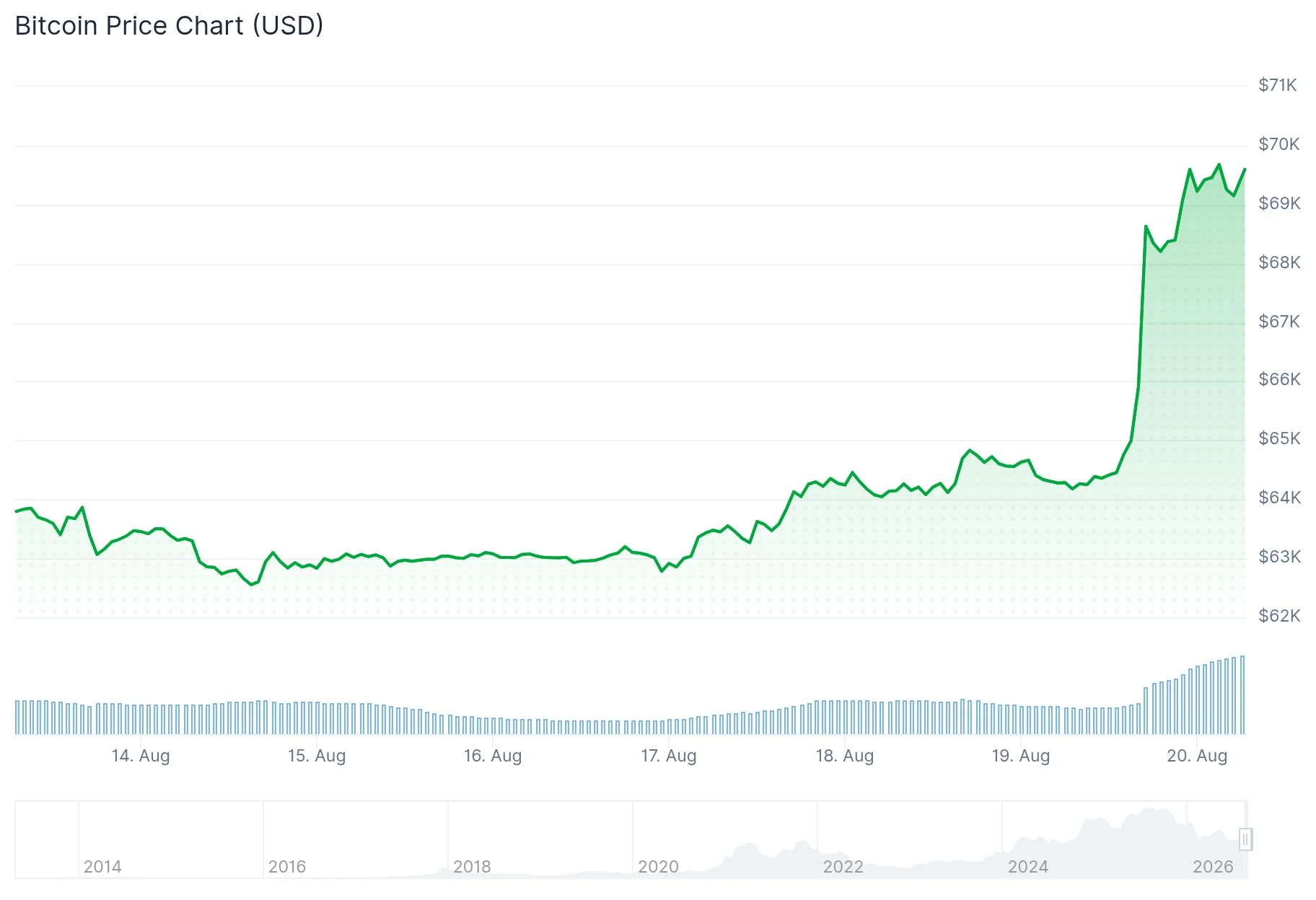
The leading cryptocurrency by market capitalization reached $70,000 on the Coinbase exchange before experiencing a modest retreat. Current trading activity shows BTC hovering near $69,581, representing a 24-hour gain exceeding 7%.
A significant catalyst for this upward momentum came from the United States Treasury Department. In a notable announcement, Treasury Secretary Scott Bessent disclosed plans to substantially increase bond buyback operations, elevating the minimum from $2 billion to $4 billion per transaction beginning September 9.
This policy shift triggered an immediate response in the bond market. Thirty-year Treasury yields, which had climbed to nearly two-decade highs just 24 hours prior, declined to 5.19%—a reduction of 9 basis points following the announcement.
Market participants interpreted the enhanced buyback program as a positive liquidity development for broader financial markets. Increased government participation in long-dated debt instruments typically loosens financial conditions, creating a favorable environment for risk-oriented assets such as Bitcoin.
White House Advances Crypto Regulatory Framework
President Trump contributed additional momentum to the cryptocurrency rally during a White House event featuring prominent digital asset industry leaders. He urged congressional representatives to approve what he termed a “fair version” of the Digital Asset Market Clarity Act.
The gathering included executives from major cryptocurrency platforms including Coinbase, Gemini, Ripple, and Chainlink Labs. Speaking at the SALT conference, Senate Banking Committee Chairman Tim Scott expressed optimism regarding the legislation’s prospects for September advancement.
Legislative proceedings will continue with a procedural vote scheduled for September 15. Congressional negotiators remain engaged in discussions to resolve outstanding issues related to cryptocurrency rewards structures, decentralized finance regulations, and ethics requirements.
Declining Stablecoin Reserves Present Challenge
Digital asset exchange Bitfinex highlighted a potential obstacle to sustained price appreciation. According to their analysis, stablecoin balances held on trading platforms have declined by $14 billion since May, reducing the available capital that could propel Bitcoin to higher valuations.
“Until stablecoin supply turns, the rally stays unfunded,” Bitfinex posted on X.
Data from CryptoQuant indicates the Stablecoin Supply Ratio has increased from 9.82 on June 30 to 11.69, demonstrating tighter liquidity circumstances throughout the past six weeks.
Market analyst Ted Pillows identified $74,000 as a critical resistance level worth monitoring. In his social media commentary, he suggested that Bitcoin reclaiming this price point on a weekly basis would substantially diminish the probability of a decline below $55,000.
Technical analyst Aksel Kibar had earlier identified an inverse head-and-shoulders formation with its neckline positioned around $66,600. A definitive breach of this technical threshold suggested a potential advance toward $76,000.
Meanwhile, Federal Reserve meeting minutes released Wednesday revealed most policymakers supported maintaining current interest rates at the July gathering, though a minority advocated for an increase and expressed concerns about upward inflation pressures.
