
Nearly a quarter of Japan’s municipal water utilities operated at a loss in fiscal 2024, the highest ratio in 10 years, and rate hikes appear inevitable nationwide, an Asahi Shimbun analysis found.
Water utilities are, in principle, designed to be self-supporting. Fees collected from households and businesses are expected to cover costs for water purification, pipe maintenance and personnel expenses.
However, the analysis shows a growing number are “operating below cost,” meaning their fee revenue has fallen short of expenses.
For fiscal 2024, 65.6 percent of all utilities fell into this category, a 6.7 percentage-point increase from the previous year.
While tax subsidies from general accounts can cover some shortfalls, they are increasingly becoming insufficient.
The funding gap means essential work is being neglected, according to Takuya Urakami, a professor of public utility studies at Kindai University.
“Even with subsidies, they can’t secure enough funds for the maintenance and management of aging water pipes and other infrastructure,” he said.
The Asahi Shimbun analysis, which compiled data from the ministry of internal affairs and the Digital Agency, shows a sharp deterioration in finances.
The proportion of utilities with a current account deficit had hovered in the low 10-percent range after hitting 10.2 percent in fiscal 2017. But it jumped to 17.1 percent in fiscal 2023.
In fiscal 2024, the ratio surged to 23.2 percent, representing 379 of the 1,632 utilities surveyed.
The financial strain is attributed to soaring personnel and material costs, the long-term population decline trend, and the proliferation of water-saving appliances.
According to Urakami, worsening finances prevent utilities from building up “savings” for future facility maintenance and management costs.
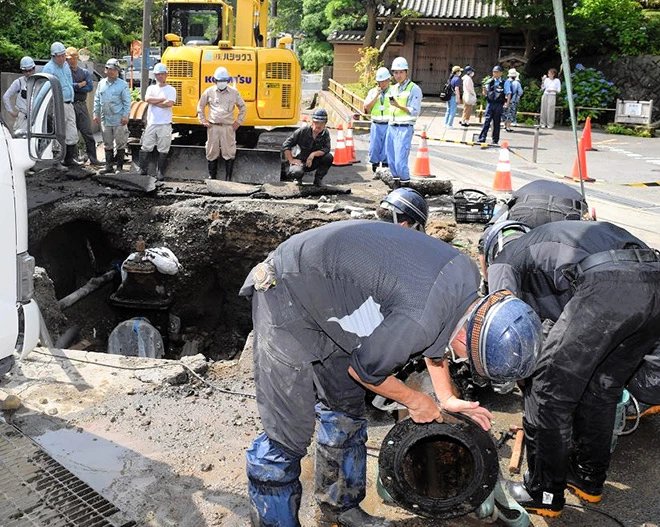
This is critical, as 26 percent of the nation’s water pipes had already exceeded their 40-year legal service life as of fiscal 2024.
Urakami said municipalities have long postponed necessary upgrades to avoid raising water rates.
“The longer they postpone, the higher the construction costs become. To systematically implement seismic retrofitting and renewal investments, rate hikes are unavoidable,” he said.
Those fee increases are already under way.
While 30 to 70 utilities raised rates annually between fiscal 2015 and 2022, the number climbed to about 360 in fiscal 2023, and it has already exceeded 90 in fiscal 2024, ministry data shows.
Urakami argues that regional consolidation of water utilities is an effective way to moderate the increases.
“If they cooperate with neighboring municipalities, cost reductions are also possible through the consolidation of facilities and centralized management,” he said.