
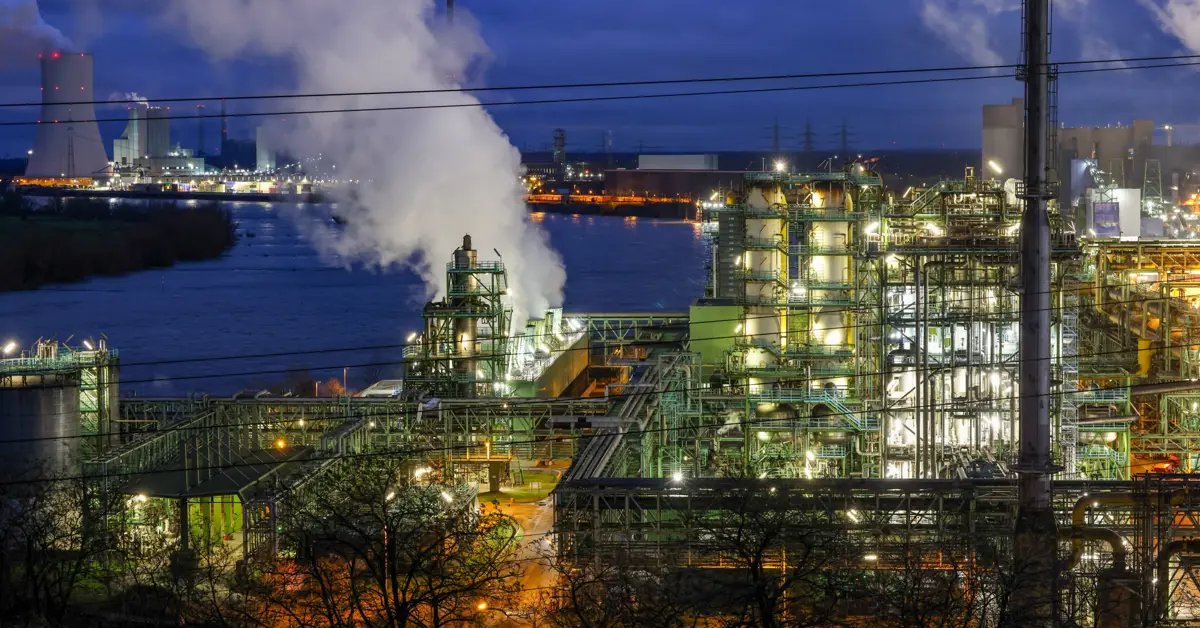
(Bloomberg) — At a factory in Germany, there are increasingly hours when it is simply too expensive to produce steel.
Plant Manager Uwe Reinecke gets two emails a day with the next day’s electricity prices, helping determine almost hour by hour when the mill can afford to run. Soaring power costs have repeatedly forced the plant, owned by Italy’s Feralpi Group, to halt production this autumn, even as it has orders to fill.
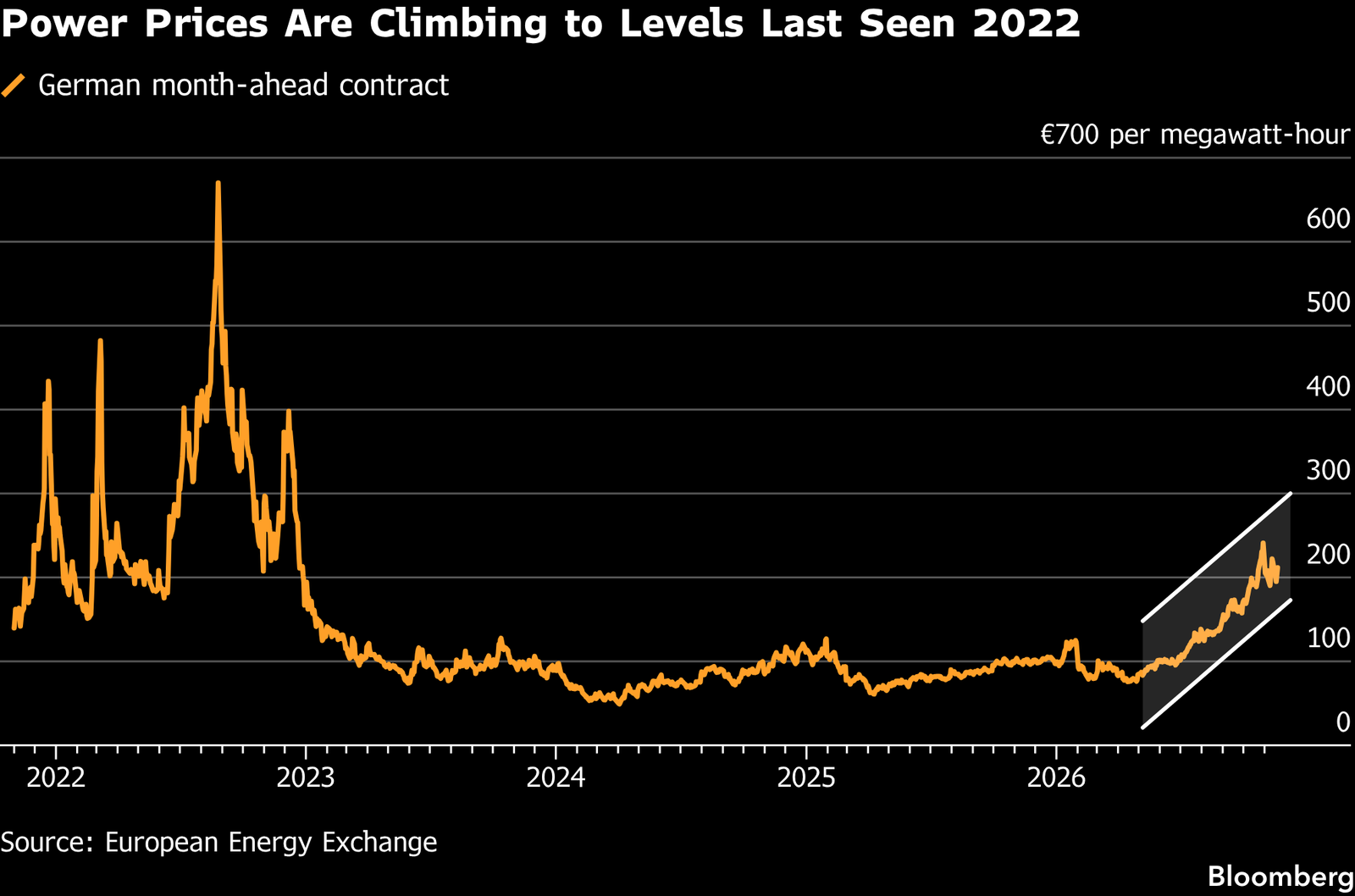
The predicament points to a stark reality: Europe’s second major energy crisis in less than five years is already taking hold in wholesale markets. Power contracts for each of the next three months are trading around €200 a megawatt-hour, roughly double last winter’s levels. The main culprit is a familiar one: surging natural gas prices.
The consequences stretch far beyond a German steel plant. Persistently high electricity costs threaten industrial production across Europe, risk adding to inflationary pressures and could eventually feed through to household bills. They also risk further eroding the region’s competitiveness and testing an economy that has so far proved surprisingly resilient to the latest energy shock.
Many energy-intensive manufacturers buy a large share of their electricity on the spot market, leaving them immediately exposed when prices rise. Feralpi’s plant is among them, relying on electricity to power its furnace while buying much of its needs close to delivery.
“The current rise in prices is significantly steeper than the increase we’ve been seeing since the summer, and that’s causing us enormous difficulties,” Reinecke said.
Wholesale prices are what utilities and industrial consumers pay when buying electricity in the market, with contracts ranging from power for the next day to delivery months or even years in advance. That allows some buyers to lock in prices and reduce their exposure to short-term swings.
Day-ahead prices, for example, reflect the immediate cost of power and depend on factors such as weather, renewable output and demand. Longer-dated contracts also reflect expectations for broader factors such as fuel costs, economic activity and availability of power plants.
European gas prices have tripled from a year ago as the war in the Middle East tightened global supplies and intensified competition with Asia. That pushes up electricity costs too because gas-fired plants often set the wholesale power price when cheaper sources can’t produce enough to meet demand.
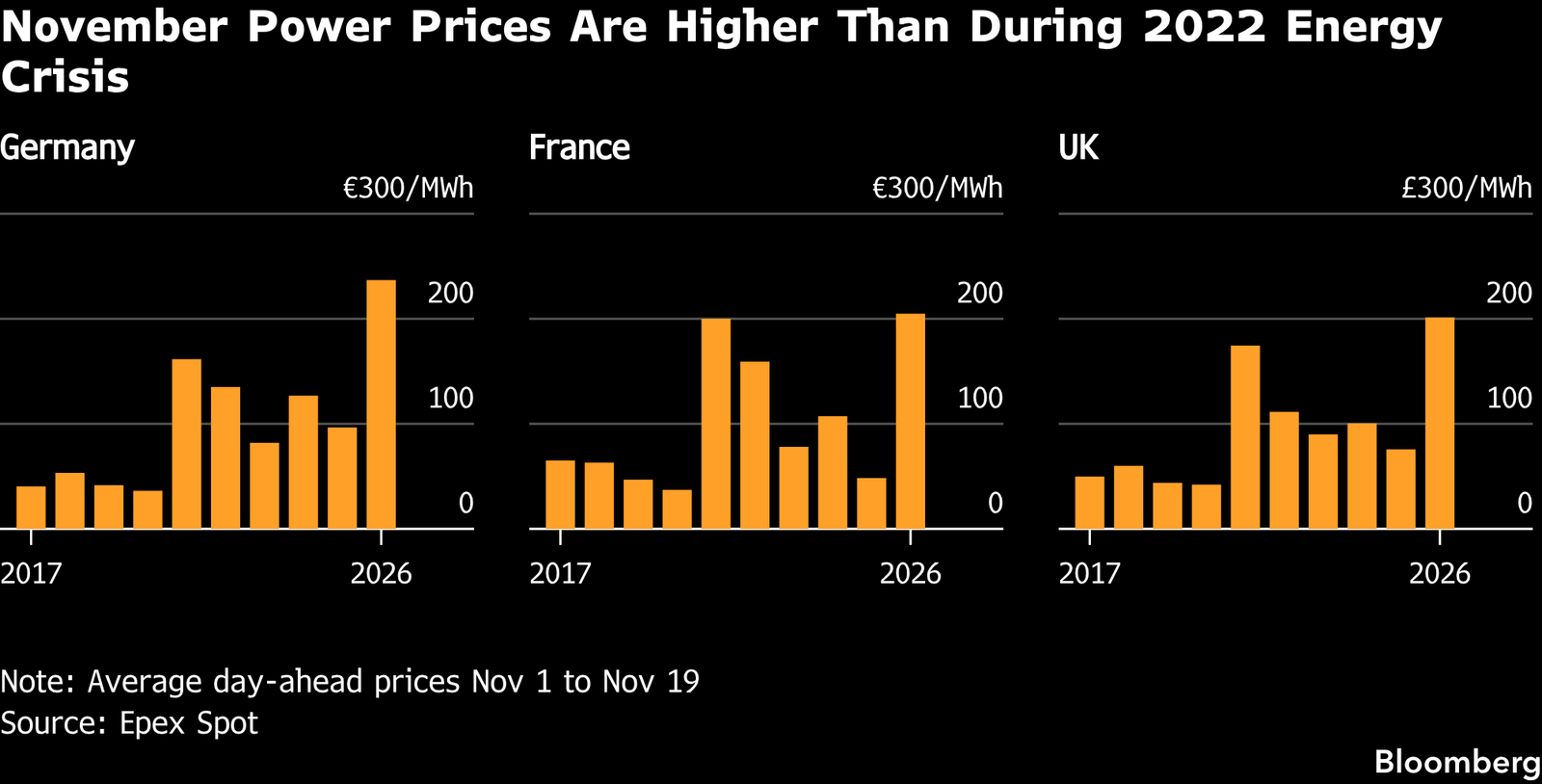
Prices are still well below the extreme peaks reached during the 2022 crisis, when Europe scrambled to replace Russian gas. The concern this time is less about extreme price spikes than the prospect of elevated costs persisting through winter.
Some of the pain is hidden for now. Tens of millions of households are protected by fixed or regulated tariffs, while many large industrial users buy electricity months or even years in advance. But those buffers have an expiry date, meaning prolonged high prices will eventually feed through as contracts are renewed.
The impact is already beginning to reach consumers. Some suppliers have raised prices for 2027, including a 3.3% increase in EnBW’s household electricity tariff from January. Germany’s coalition this week agreed to introduce a power tax cut for next year to cushion the rising costs. In neighboring Poland, Prime Minister Donald Tusk said Tuesday that the nation plans to shield consumers from the high prices.
And the squeeze could get considerably worse as Europe heads deeper into winter. In a more severe scenario, monthly power contracts could shoot up to €300 if gas prices rally further and the region experiences another spell of unusually cold weather, according to BB Energy Trading Ltd.
Even at current prices, the strain is spreading. Two German power suppliers, Grüüün and Stromee, stopped delivering power to their customers, echoing the 2022 crisis when dozens of smaller power and gas suppliers collapsed after being caught out by record wholesale prices.
Others are also getting squeezed. In Austria, utility Verbund AG said low hydropower output forced it to buy expensive electricity on the spot market, resulting in a €120 million earnings hit in the first nine months of the year. Spanish stainless-steel producer Acerinox said higher energy costs hurt its European operations by €16 million last quarter. Long-term purchase agreements only covered roughly half of its power demand, according to an earnings report.
The reason Feralpi hasn’t hedged much of its power purchases is that many of its customers place orders at relatively short notice. Companies without sufficient hedges “run the risk of operating at a loss, forcing them to consider at least partial production shutdowns” this winter, said Timothée de Rancourt, who leads Paris-based consultancy Royale Energy Solutions.
At extreme prices, electricity can become more valuable to some industrial companies than the goods they use it to produce. Companies that locked in power at much lower prices are selling some of those hedged volumes back into the market rather than using the electricity to keep factories running, De Rancourt said.
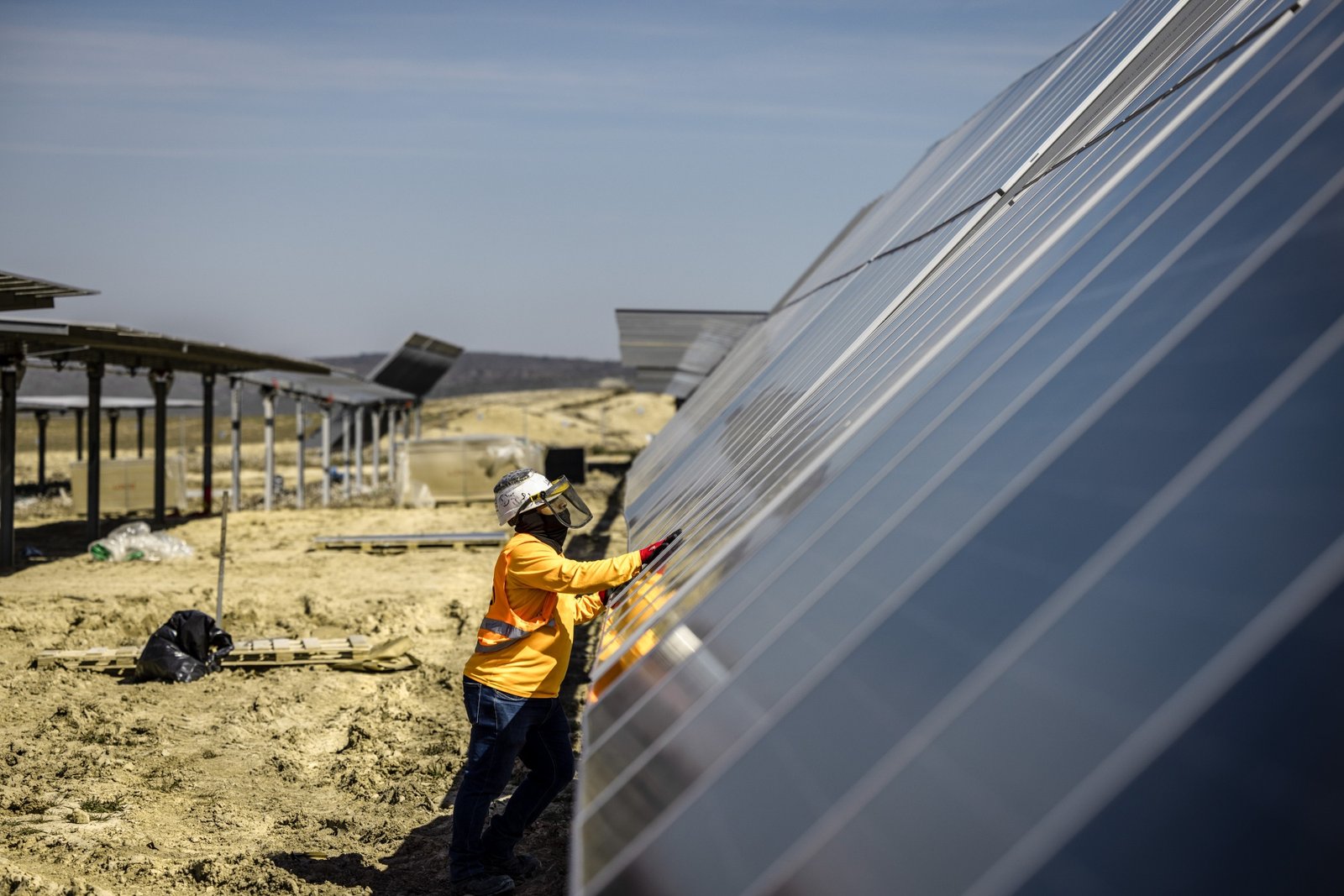
Renewables have helped cushion the impact of higher energy costs. During the summer and early autumn, record solar generation coincided with relatively low electricity demand. But as solar output fades and consumption rises into winter, Europe relies more on wind — a more volatile source of supply that can fall sharply during prolonged periods of still weather.
The growing winter risk is prompting governments to prepare additional backup. Germany is preparing to bring back coal- and oil-fired power plants currently held in its grid reserve in case of a natural gas emergency this winter, according to a draft law seen by Bloomberg News.
German day-ahead prices settled above €300 three times in the past two weeks, while some quarter-hours exceeded €600 as still, cloudy “Dunkelflaute” conditions suppressed renewable generation. Similar price surges have occurred across the continent and in the UK.
For households, wholesale electricity costs typically feed through with a lag because of fixed contracts, utility hedging, regulated tariffs and government protections. Those arrangements differ widely across Europe, meaning consumers will feel the shock at different speeds.
In Britain, the energy price cap is set to surge in January, with the average annual bill forecast to jump 26% to £2,166, according to Cornwall Insight Ltd.
In Germany, the average price of the 10 cheapest electricity plans has risen about 33% since before the outbreak of the Iran war to 34.6 cents a kilowatt-hour, according to comparison site Verivox. “We expect further price increases,” said Energy Expert Thorsten Storck.
©2026 Bloomberg L.P.