

📌 Top story — scroll down for more updates
Today’s Lunchtime News: Lulu Founder Trains the Enemy
2:00 pm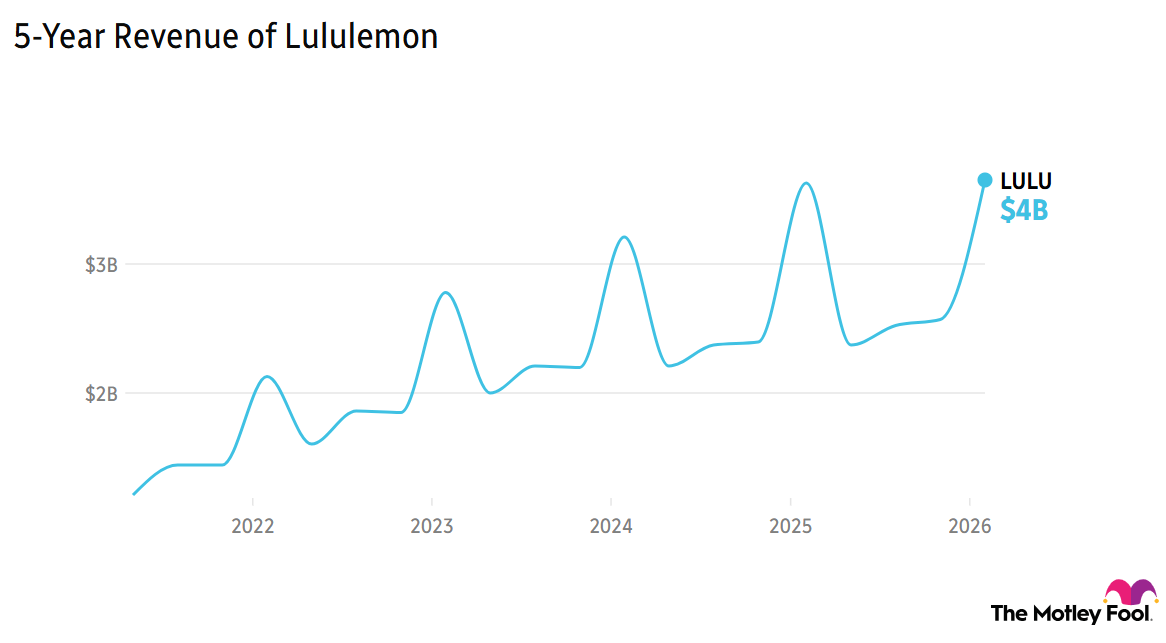
Lululemon Athletica (LULU 2.16%) disclosed in a preliminary proxy filing that founder and major shareholder Chip Wilson has been advising rival athleisure brands Alo and Vuori, deepening the rift between Wilson and the company’s board.
- Activist context: Wilson has been pushing for a shakeup at Lululemon, criticizing management and pitching his own slate of directors. According to the filing, he told the board in February that Alo and Vuori had sought his advice and adopted his playbook, while Lululemon had not. He told Lululemon earlier this month, “I help Alo and Vuori because they ask.”
- Turnaround pressure: Lululemon is losing share to upstart athleisure brands and dealing with product missteps, including see-through leggings. Last week, the company named a Nike (NKE 0.47%) veteran with no prior CEO experience as its next chief, a pick that surprised investors and sent shares to their biggest one-day drop in seven months.

UPS Sinks as Amazon Revenue Fades
1:25 pm — UPS -3.3%
United Parcel Service (UPS 2.42%) shares fell 5% Tuesday as the courier’s strategic “glide down” from Amazon (AMZN 0.72%) volume unnerves investors. Amazon now accounts for just 8.8% of total revenue, down from over 13%, as CFO Brian Dykes prioritizes higher-margin small business shipments. While UPS beat first-quarter estimates, adjusted operating profit plunged to $1.3 billion from $1.8 billion last year. The market remains skeptical of this transition; UPS shares have gained only 6% over the past year, vastly underperforming rival FedEx (FDX +0.28%), which soared 82% through aggressive cost-cutting. Management must now prove that shedding massive volume and 30,000 jobs can actually deliver the promised margin expansion in a soft domestic market.
- Reverse Logistics Lifeline: Despite shrinking outbound deliveries, UPS remains tethered to Amazon through its “boxless” return network, a high-value niche the company expects to grow.
- The FedEx Comparison: Unlike its primary competitor, UPS is struggling to translate restructuring into bottom-line results, leaving the stock trailing the S&P 500 by over 20 percentage points this year.
UPS performance
Today -3.3%
1 Year +7.8%
5 Years -48.7%
FDX performance
Today -0.3%
1 Year +82.8%
5 Years +33.2%
Sportradar Sinks on Revenue Miss, Short Noise
1:10 pm — SRAD -12.1%

By David Meier
Team Rule Breakers
Sportradar (SRAD 12.35%) chose the wrong time to come in a little short on revenue and profit growth, despite all the cash the company continues to generate. Sales and profits came in under expectations as a result of currency exchange changes. However, it reiterated its strong full-year growth in revenue and cash flow. What’s more, management commented that the recent short reports do not reflect how the company runs its business. The stock is down about 15% today, and management continues to buy more.
Could TeraWulf Be the AI Miner to Watch?
12:35 pm — WULF -4.8%
By Preston Freeman
Just started a position in TeraWulf (WULF 4.57%) and the story here is getting a lot more interesting.
This isn’t just a bitcoin miner anymore; the pivot into AI infrastructure feels like the real unlock. Over $12B in contracted HPC revenue with partners tied to Google-backed ecosystems gives this a much different profile than your typical miner. If they can execute on scaling toward 1GW of capacity, this starts to look more like a power/data center play than a crypto trade.
Curious to see what others may make this pivot and how well it plays out.

Today’s Change
(-4.57%) $-0.98
Current Price
$20.45
Key Data Points
Market Cap
$10B
Day’s Range
$20.24 – $21.29
52wk Range
$2.67 – $21.60
Volume
595K
Avg Vol
34M
Gross Margin
-166.51%
Amazon Takes Aim at Salesforce, Microsoft
12:05 pm — AMZN -0.4%
Amazon (AMZN 0.72%) launched “Quick” on Tuesday, a desktop AI agent designed to automate complex workflows across competing platforms like Microsoft (MSFT +0.47%), Google (GOOG 0.38%), and Zoom (ZM +0.54%). By performing proactive actions—such as drafting emails and updating Salesforce (CRM +1.36%) records—Amazon is making an aggressive push into the enterprise software market. This move arrives as the “SaaS-pocalypse” wipes out trillions in market cap for incumbents like ServiceNow (NOW +0.29%), as investors fear AI will render per-seat subscription models obsolete. Amazon is betting its built-in security and deep cross-platform integration will allow it to thrive where legacy software providers are currently faltering.
- Sector-Specific Dominance: Beyond the desktop, Amazon is expanding its agentic AI footprint with “Connect Health,” a specialized tool already saving clinicians one minute per call by automating medical coding and clinical documentation.
- Valuation Collision Course: While Salesforce and ServiceNow shares have plunged over 30% year-to-date, Amazon’s move to bundle AI “actions” directly into its cloud ecosystem could permanently disrupt the high-margin recurring revenue models that once defined the software sector.
Hold Tight: Spotify’s Best Song Is Next
11:25 am — SPOT -13.5%

By Sanmeet Deo
Team Rule Breakers
Yes, Spotify‘s (SPOT 13.26%) stock just dropped 11% on earnings day. Take a few deep breaths. Rule Breaker investors don’t get spooked by big stock declines; we dig deeper.
Here’s what actually happened: The company delivered its second-highest gross margin in history, grew free cash flow 54% year-over-year, and added 10 million new monthly users, then got punished because next quarter’s profit guidance missed Wall Street’s spreadsheet by about 8%. The culprit? Management is deliberately spending more on AI, marketing, and cloud infrastructure right now, at a moment when they believe (and the early data supports) that they’re sitting on the biggest product opportunity since the iPhone App Store in 2009.
UPS Beats Expectations But Volume Dips
10:15 am — UPS -5.3%
United Parcel Service (UPS 2.42%) delivered a first-quarter beat on both revenue and earnings, yet shares tumbled 5% as investors weighed a 2.3% dip in domestic volume. The shipping giant reported adjusted earnings of $1.07 per share on $21.2 billion in revenue, exceeding analyst expectations despite a year-over-year decline. CEO Carol Tomé characterized the quarter as a “critical transition,” reaffirming full-year 2026 guidance and signaling a return to profit growth by the second quarter. While fuel surcharges and Middle East volatility have not yet disrupted operations, the market remains cautious about the pace of the logistics recovery and shifting consumer demand.
- Automation Overdrive: UPS captured $600 million in cost savings this quarter through its efficiency program, staying on track to slash $3 billion from its cost base by year-end.
- Guidance Confidence: Management held the line on a $89.7 billion annual revenue target, betting that network enhancements will offset volume headwinds as the global economy stabilizes.
Incyte Posts Big Profit Beat
10:35 am — INCY flat
Incyte (INCY 1.27%) surpassed first-quarter expectations on Tuesday, fueled by resilient demand for its flagship cancer treatments. The drugmaker reported adjusted earnings of $1.81 per share on revenue of $1.27 billion, comfortably ahead of Wall Street projections. While top-seller Jakafi grew 7% to $757.8 million, investors are closely monitoring Opzelura, which missed sales targets despite a 20% year-over-year increase. The company also tapped industry veteran Suketu Upadhyay as its new CFO. However, a conservative full-year revenue reaffirmation of $4.77 billion to $4.94 billion has some analysts wary of an impending “patent cliff” for core products, suggesting the current momentum may face structural headwinds in the near future.
- Market Skepticism Remains: RBC Capital Markets warned of a muted stock reaction as slower Opzelura adoption and pipeline competitiveness questions continue to cloud the long-term horizon.
- Leadership Transition: Incoming CFO Suketu Upadhyay brings deep experience from Zimmer Biomet (ZBH 10.64%) and Bristol-Myers Squibb (BMY +0.57%), signaling a focus on financial discipline as key exclusivity dates approach.

Today’s Change
(-1.27%) $-1.22
Current Price
$94.50
Key Data Points
Market Cap
$19B
Day’s Range
$92.81 – $97.97
52wk Range
$57.77 – $112.29
Volume
55K
Avg Vol
1.7M
Gross Margin
91.47%
Meta Abandons Open Source for AI Profits
9:20 am — META -0.8% in pre-market trading
Meta (META 1.14%) faces a critical narrative shift during Wednesday’s earnings call as CEO Mark Zuckerberg pivots from open-source altruism to a commercial AI offensive. The company recently debuted Muse Spark, its first closed-source model designed to compete directly with paid services from Google (GOOG 0.38%) and OpenAI. While Meta AI currently trails Anthropic’s Claude in coding, it leads GPT in vision and text performance. Analysts expect Q1 revenue to jump 31% to $55.6 billion, but the spotlight remains on how this new model will monetize beyond advertising. With capital expenditures projected to hit $135 billion, investors are seeking a concrete roadmap to justify Meta’s massive infrastructure spend and recent 10% workforce reduction.
- Top-Tier Talent Raid: Zuckerberg’s $14.3 billion investment in Scale AI and the hiring of former GitHub CEO Nat Friedman signal an aggressive rebuild of the internal AI stack to bridge the gap with market leaders.
- Ad Revenue Multiplier: While vision models are currently secondary to text in hype, analysts believe Meta’s superior image generation tools will unlock near-term ad budgets by automating high-performing creative for millions of advertisers.
Opening Bell
9:35 am — NVDA -2.9%, AVGO -3.9%, ORCL -4.8%, KO +5.2%, SHW +0.3%
Equity futures slipped Tuesday as a report of slowing revenue growth at OpenAI ignited fears of a broader artificial intelligence slowdown. The news hammered chipmakers, sending Nvidia (NVDA 2.17%) and Broadcom (AVGO 4.56%) lower, while Oracle (ORCL 3.82%) dropped 7% on concerns over future computing contract payments. Geopolitical tension added further pressure as President Trump canceled an envoy trip to Pakistan, stalling Iran ceasefire talks and sending Brent crude above $112. Despite the tech rout, the Dow found support from strong earnings beats by Coca-Cola (KO +4.76%) and Sherwin-Williams (SHW 2.75%), highlighting a stark divide between resilient blue-chips and overextended tech valuations ahead of “Magnificent Seven” reports.
OpenAI Miss Sparks Sharpest AI Selloff in Months
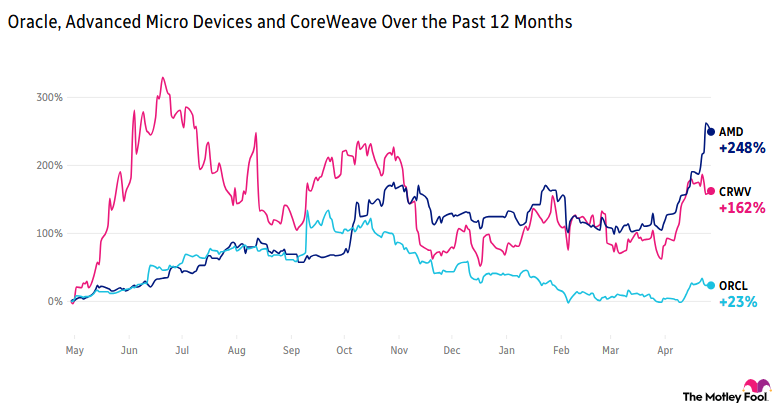
8:05 am — ORCL -7.40%, AMD -6.03%, CRWV -7.51% in pre-market trading
The “AI complex” faced its sharpest sell-off in months Tuesday after a Wall Street Journal report revealed OpenAI missed critical internal targets for revenue and user growth. SoftBank (SFTBY 11.84%) shares plummeted 10% in Tokyo, while Oracle (ORCL 3.82%) and AMD (AMD 2.90%) slid as much as 7% premarket, as investors questioned if AI returns can justify a projected $600 billion in data center commitments. According to the report, OpenAI failed to reach its year-end goal of 1 billion weekly active users for ChatGPT, while CFO Sarah Friar reportedly expressed private concerns that the firm may struggle to fund future computing contracts if sales don’t accelerate.
- The Competitive Squeeze: OpenAI’s market share in generative web traffic reportedly dropped to 64.5% in January, down from over 80% a year ago, as Alphabet‘s (GOOG 0.38%) Gemini and Anthropic’s Claude 3.5 Sonnet dominate the coding and enterprise sectors.
- Capex vs. Cash Burn: Despite internal friction over spending, CEO Sam Altman and CFO Sarah Friar issued a joint statement to Reuters on Tuesday saying they are “totally aligned” on buying as much compute as possible, even as the firm expects to burn through $25 billion in cash this fiscal year.
ARM Holdings Tumbles as AI Rally Cools
8:00 am — ARM -6.92% in pre-market trading
Arm Holdings (ARM 7.57%) shares fell approximately 8% yesterday (and are down again in pre-market trading) as the worst Nasdaq-100 performer, with investors taking profits following a steep AI-driven rally that saw the stock surge over 50% since early April.
- Sectorwide semiconductor pullback: Other AI chip stocks including AMD (AMD 2.90%) and Marvell (MRVL 3.47%) also declined, indicating broad cooling in semiconductor names rather than company-specific issues affecting ARM.
- Valuation concerns amplify selling: ARM’s high earnings multiple after recent gains prompted profit-taking, while investor concerns about competition and rich valuations following the AI rally contributed to the decline.

Today’s Change
(-7.57%) $-16.34
Current Price
$199.53
Key Data Points
Market Cap
$229B
Day’s Range
$195.00 – $204.67
52wk Range
$100.02 – $237.68
Volume
9.6M
Avg Vol
7.4M
Gross Margin
94.84%
This Morning’s Breakfast News
7:30 am — SPOT -7.63% in pre-market trading
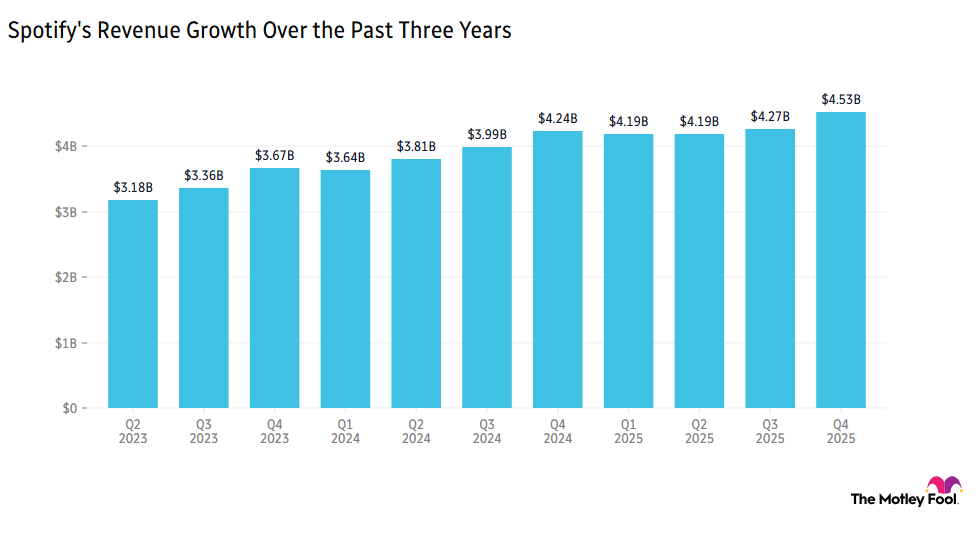
Spotify (SPOT 13.26%) fell over 9% ahead of the market open as results showed ad-supported revenue decreased by 5% year over year, with concerns about growth for the coming quarter. Revenue grew by 10% year over year, reflecting a 9% subscriber growth rate.
- Q2 profit guidance below expectations: The outlook for operating income and premium subscriber growth for the coming quarter disappointed investors, signaling slowing growth in major markets such as the U.S.
- “All of our KPIs met or exceeded guidance”: Headline revenue came in line with guidance, with activation tools including advanced AI-powered personalization in beta launch and mobile free tier enhancements driving accelerated user growth.
Micron, SanDisk Hit Highs on AI Memory Crunch
6:00 am — MU -1.63%, SNDK -1.48% in pre-market trading
The artificial intelligence arms race has triggered a “memory supercycle,” sending shares of Micron (MU 3.56%) and SanDisk (SNDK 4.43%) to historic highs as the industry grapples with a structural shortage. Melius Research analyst Ben Reitzes upgraded Micron on Monday, citing the “unusual durability” of AI-driven demand that could sustain this cycle through 2030. Micron’s market cap is now closing in on $600 billion, while SanDisk has seen an astronomical 3,190% gain over the last 12 months. The frenzy is driven by the extreme requirement for High Bandwidth Memory (HBM) and enterprise-grade NAND storage, which are essential for Nvidia (NVDA 2.17%) and AMD (AMD 2.90%) to power next-generation data centers.
- The Consumer Tax: As manufacturers like Samsung and SK Hynix prioritize high-margin HBM for AI, general-purpose DRAM supply has cratered. Analysts warn this will push PC prices up by 17% this year, with SSDs already costing triple their December 2025 prices.
- Locking in Supply: The supply crunch is so severe that hyperscalers and firms like Broadcom (AVGO 4.56%) are abandoning traditional quarterly deals in favor of 5-year supply agreements to secure their 2028 allocations.

Today’s Change
(-4.43%) $-47.37
Current Price
$1022.83
Key Data Points
Market Cap
$158B
Day’s Range
$980.28 – $1054.22
52wk Range
$31.01 – $1070.66
Volume
10M
Avg Vol
19M
Gross Margin
34.81%
ICYMI: Monday’s Scoreboard
5:15 am — PLTR -0.15% in pre-market trading
Palantir (PLTR 1.04%) was the subject of the latest Scoreboard video.
Bitcoin Surges to $79K on Hormuz Deal News
5:00 am — BTC -4.31%
Bitcoin (BTC 0.70%) hit a 12-week high of $79,488 on Monday as traders reacted to reports that Iran has proposed a new deal to reopen the Strait of Hormuz. The “risk-on” sentiment was short-lived, however, as the token retreated toward $77,000 after President Trump signaled skepticism regarding the offer. Despite the volatility, April has been a landmark month for institutional adoption; Michael Saylor’s Strategy (MSTR 2.32%) has purchased a record $4.1 billion in Bitcoin this month, including a fresh $255 million acquisition last week funded by common stock sales. With spot Bitcoin ETFs on pace to double their March inflows to $5 billion, the market is now testing major technical resistance as it awaits the Federal Reserve’s final rate decision under the Powell era.
- The $80,000 Breakeven: Analyst Rachael Lucas of BTC Markets noted that $80,000 represents a critical psychological level where many recent buyers approach breakeven, leading to significant “profit-taking” sell pressure.
- Corporate Treasury Shift: Strategy now holds 818,334 BTC–valued at over $63 billion–surpassing BlackRock‘s (BLK 0.50%) client holdings and solidifying its position as the world’s largest corporate holder.
AI Brain Drain Hits Google and Meta Hard
4:05 am — META unchanged, GOOG +0.47% in pre-market trading
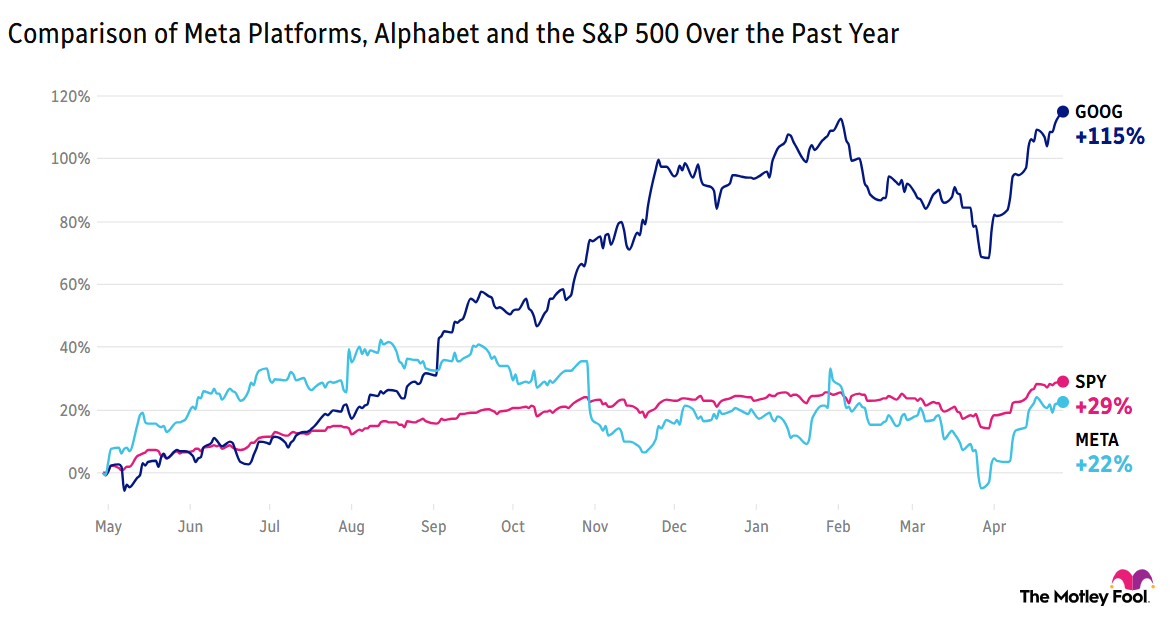
A massive “brain drain” from Silicon Valley titans is minting a new class of AI unicorns as top researchers exit Alphabet (GOOG 0.38%) and Meta (META 1.14%) to launch independent labs. Former Google DeepMind star David Silver just secured a record-breaking $1.1 billion seed round for his start-up, Ineffable Intelligence, while former Meta AI chief Yann LeCun’s AMI Labs recently closed a $1 billion raise. This exodus is creating a vacuum at the tech giants, who are increasingly narrowing their focus to win the immediate LLM race. Investors are aggressively filling that void, funneling hundreds of millions into nimble ventures that deprioritize raw scale in favor of “agentic” architectures and vertical models that Big Tech has sidelined.
- Architectural Arbitrage: Startups like Recursive Superintelligence are attracting capital by exploring non-transformer architectures that Meta and Google have deprioritized to focus on their core Gemini and Llama products.
- The Talent Premium: These new labs are using their massive war chests to poach high-level engineers from OpenAI and Anthropic, offering equity upside that established trillion-dollar companies can no longer match.
Before the Opening Bell
4:00 am
U.S. stock futures were flat Tuesday morning as investors caught their breath after the S&P 500 and Nasdaq Composite both notched fresh record closes on Monday. The “Magnificent Seven” rally, led by Nvidia (NVDA 2.17%) crossing the $5 trillion market cap threshold, has pushed the S&P 500 to 7,173.91, but momentum is slowing ahead of a high-stakes Federal Reserve meeting and a $16 trillion wave of Big Tech earnings. While Tehran proposed reopening the Strait of Hormuz in exchange for ending the U.S. naval blockade, President Trump reportedly dismissed the offer because it postponed nuclear concessions.