
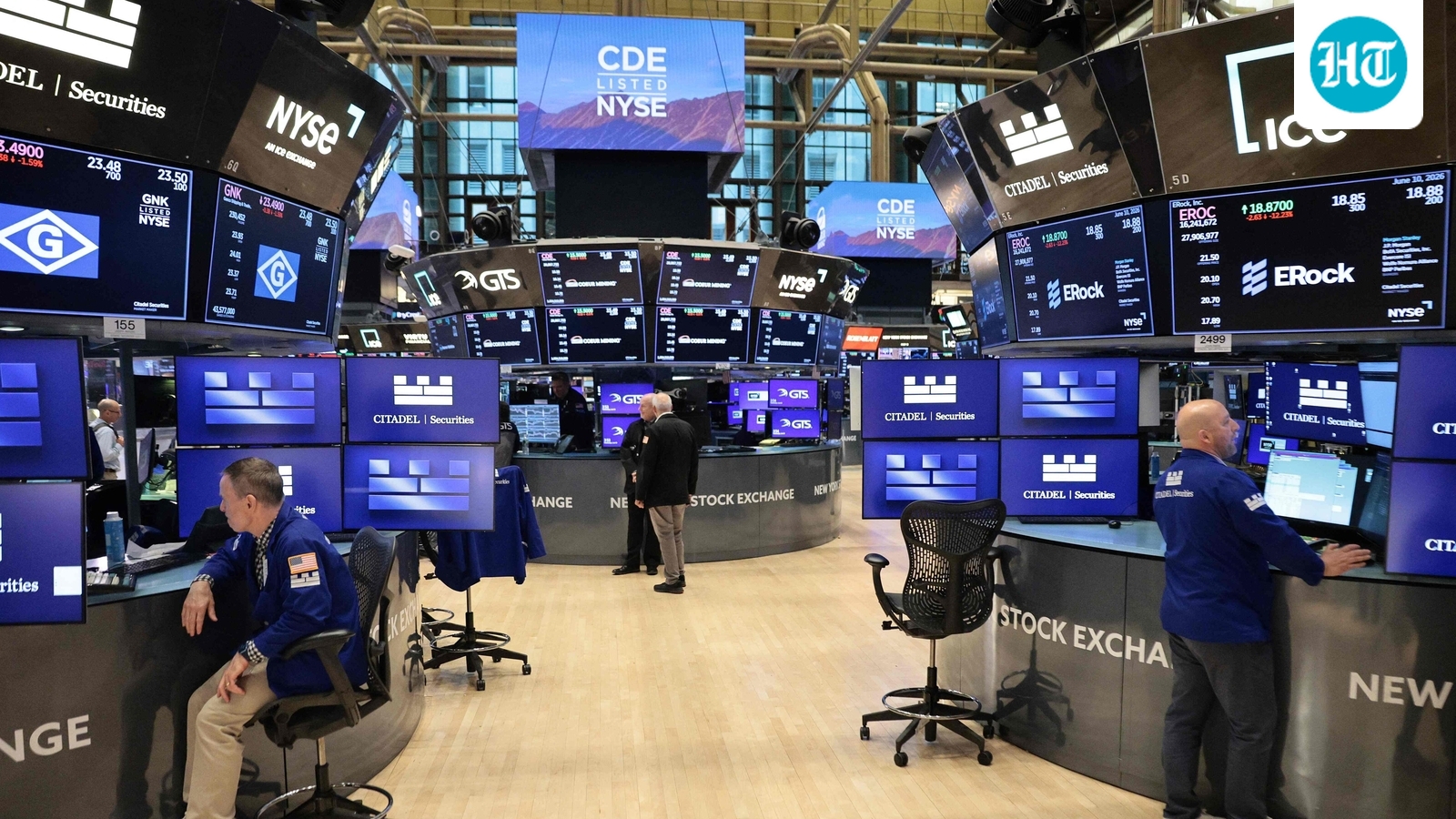
The US stock market has had a very strong run for most of the last four years. The Dow Jones Industrial Average, S&P 500 and Nasdaq Composite have all reached several new highs during this period. The recent rally to the rapid growth of artificial intelligence (AI) and spending on AI infrastructure.

But the strong market rally does not mean Wall Street has no risks. The stock market is historically expensive, while concerns are also growing that an AI bubble could form and eventually burst. However, AI may not be the biggest warning sign for investors right now. Motley Fool pointed to another risk indicator that has a long history of appearing before major stock market declines: margin debt.
What is margin debt?
Margin debt is money that investors borrow from their brokers to buy or short-sell stocks and other securities. Investors pay interest on this borrowed money. Using borrowed money can increase profits if a stock moves in the investor’s favour. But it can also make losses much bigger if the stock price falls. Because of this, the amount of margin debt in the market can give investors an idea of how much risk people are willing to take. Total margin debt as a rough measure of investor risk-taking.
Margin debt hits $1.5 trillion
Rising margin debt by itself is not necessarily a problem. As the overall value of publicly traded companies grows, it is normal for the amount of borrowed money used by investors to increase over time. The bigger warning comes when margin debt rises very quickly in a short period. According to Motley Fool, such a sharp rise can show that investors are taking unusually high risks.
Margin debt reached an all-time high of about $1.502 trillion in June 2026, according to figures reported by FINRA. This was a major jump from the level seen after the stock market’s short-lived tariff-related fall in March 2025. The Motley Fool said margin debt climbed about 77% in 14 months, from around $851 billion in April 2025 to $1.502 trillion in June 2026.
Also read: Scott Bessent warns of new Iran sanctions: Why a ‘large bank’ will be targeted Monday
Why high margin debt matters
A rise of this size and speed is unusual. History shows that similar sharp increases in margin debt have been followed by major stock market declines. There have been four major periods in the last 30 years when margin debt jumped by at least 65% in a relatively short time. The first example came before the dot-com bubble burst. Between March 1999 and March 2000, margin debt increased by 80%, reaching almost $300 billion.
Dot-com crash warning
The dot-com bubble then burst in March 2000. After that, the S&P 500 fell 49%, while the Nasdaq Composite dropped 78%. The second major increase happened before the 2008 financial crisis. Between June 2006 and July 2007, margin debt rose 66% over 13 months, reaching about $416 billion, according to Motley Fool.
2008 market crash
The financial crisis later triggered a huge stock market decline. By March 2009, the S&P 500 had lost 57% from its previous peak. The third major jump happened during the COVID-19 pandemic. Between March 2020 and October 2021, margin debt surged 95% over 19 months. Motley Fool linked this sharp increase to multiple rounds of government fiscal stimulus during the pandemic, which helped fuel heavy risk-taking by investors.
COVID market risk
The stock market later entered a bear market by January 2022. Over the following nine months, the Dow, S&P 500 and Nasdaq lost about 20%, 25% and 33%, respectively. The fourth major increase is the one happening now. From April 2025 to June 2026, margin debt jumped from around $851 billion to $1.502 trillion. This means margin debt increased by roughly $651 billion in 14 months, showing how quickly investor borrowing has grown during the latest market rally.
Margin debt falls in July
There is, however, one important development that could change the picture. FINRA reported that margin debt fell to $1.417 trillion in July 2026. The July figure was lower than the June record of $1.502 trillion. That means margin debt dropped by roughly $85 billion in one month. But one month of falling margin debt does not prove that the risk-taking trend has ended. The Motley Fool noted that a single monthly decline is not enough to establish a clear trend.
Also read: Will Bitcoin rally after Trump’s crypto bill vote? Why September 15 matters
Is the stock market crash warning real?
Still, the July decline could be important because it came after margin debt reached a record high. Motley Fool suggested that the drop could be an early sign that the heavy risk-taking seen on Wall Street may be starting to reverse. The concern is especially important because the current margin-debt increase is similar to patterns seen before previous major market downturns. The earlier periods included the dot-com crash, the financial crisis and the 2022 bear market.
History does not guarantee that the stock market will crash this time. Historical patterns cannot predict exactly what will happen next on Wall Street. But the publication said sharp, almost parabolic increases in margin debt have had a strong record of warning about major market declines over the past three decades.
How long do bear markets last?
A market correction, bear market or even a major crash is eventually possible because stock prices can fall when investor sentiment changes. The good news for long-term investors is that major market declines have generally not lasted forever. According to Motley Fool, large downturns have historically been relatively short compared with bull markets.
In late May, Bespoke Investment Group shared data on X comparing 27 S&P 500 bull and bear markets going back to the start of the Great Depression in September 1929. Bespoke’s data showed that the average S&P 500 bear market lasted 286 calendar days, or about 9.5 months, according to Motley Fool.
Bull markets last longer
The data also showed that no S&P 500 decline of 20% or more had lasted longer than 630 calendar days over the past 97 years. Bull markets, on the other hand, have generally lasted much longer. Bespoke Investment Group calculated that the average S&P 500 bull market lasted 1,023 calendar days, or about 3.6 times longer than the average bear market.
Out of the 27 bull markets studied by Bespoke, 10 lasted at least 1,324 calendar days, according to Motley Fool. This historical data suggests that investors who stay invested for the long term have generally had more time to benefit from rising markets than they have spent dealing with bear markets.
What investors should watch now
So, the $1.5 trillion margin-debt record is a warning sign, not proof of an immediate stock market crash. The biggest concern is the speed at which investors have increased their borrowing.
The July fall in margin debt to $1.417 trillion will be an important figure to watch in the coming months. If margin debt continues to fall, it could suggest that investors are becoming more cautious. If borrowing rises again and moves back toward or above the June record, concerns about excessive risk-taking could become stronger.
For investors, the key takeaway is that a possible market downturn should not automatically mean panic-selling. Motley Fool said historical downturns have also created opportunities for patient, long-term investors to buy assets at lower prices.
In short, Wall Street’s latest warning is the unusually fast rise in margin debt to $1.502 trillion. The record level, combined with the historical link between rapid margin-debt growth and major market declines, is something investors may want to watch closely.
At the same time, there is no certainty that a stock market crash is about to happen. The current situation is only a warning signal based on a historical pattern, while the July decline in margin debt could be the beginning of a change in investor behaviour. The bigger picture remains that US stocks have been supported by a powerful AI-driven rally, but the record use of borrowed money adds another layer of risk if stock prices suddenly turn lower.