
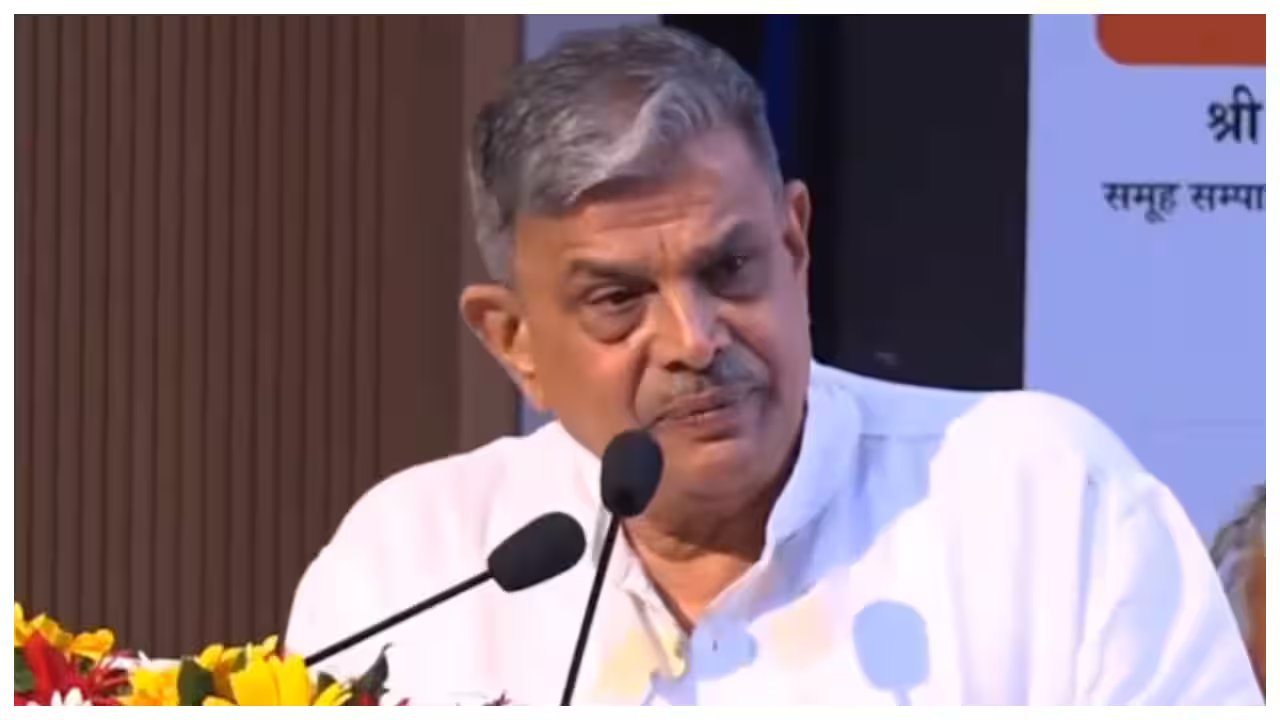
Rashtriya Swayamsevak Sangh (RSS) general secretary Dattatreya Hosabale outlined the grassroots role of the right-wing organisation, describing it as a volunteer-driven movement rooted in India’s cultural and civilisational ethos.
Speaking about the organisation’s activities, Hosabale said the RSS focuses on building individuals with strong character, self-confidence and a commitment to community service. He noted that the group conducts daily and weekly one-hour gatherings aimed at instilling life values and fostering discipline among volunteers.
“RSS is a people’s voluntary movement inspired by cultural ethos and civilisation values of the ancient society of India, which is generally known as Hindu culture… To create volunteers with character, self-confidence, a sense of service to the community and for organising the society, the RSS organises daily assemblies and weekly assemblies for 1 hour. Through these 1 hour gathering, we inculcate values of life… To create human social capital for the purpose of society’s betterment and the nation’s oneness… RSS renders services like relief activities during natural calamities… RSS volunteers have created civic institutions numbering nearly 40…,” he said.
#WATCH | Washington, DC | On what RSS does on the ground, RSS General Secretary Dattatreya Hosabale says, “RSS is a people’s voluntary movement inspired by cultural ethos and civilisation values of the ancient society of India, which is generally known as Hindu culture… To… pic.twitter.com/uWazQ0WXPk
— ANI (@ANI) April 23, 2026
According to him, these interactions are designed to create what he called “human social capital” — individuals who contribute to social cohesion and national unity. He emphasised that the RSS seeks to organise society through a network of committed volunteers working at the local level.
Hosabale also highlighted the organisation’s role in relief and welfare efforts, particularly during natural disasters, where volunteers are often involved in on-ground assistance. In addition, he said RSS members have helped establish numerous civic institutions across the country, with their number nearing 40.
With agency inputs