
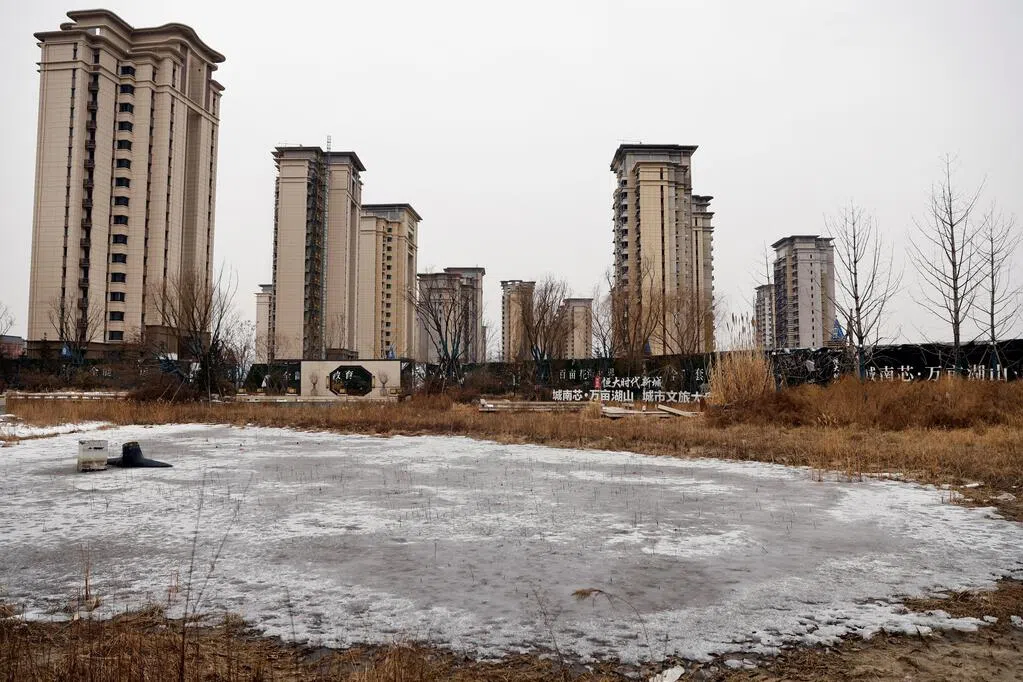
After dismissing claims of consumer downtrading in China as a “false premise”, “Zhejiang Xuanchuan”, a WeChat account run by the Chinese Communist Party’s Zhejiang provincial publicity department, has criticised some overseas media and domestic independent content creators for using the property downturn to talk down China’s economy. It argued that while falling home prices have eroded some households’ wealth, they have also eased the burden on young homebuyers, and that the property market correction should not be used to judge the overall economic outlook.
In an article published on Wednesday (25 November), titled “What is wrong with using the property market to talk down China’s economy?” (《借房地产唱衰中国经济,错在哪》), the account said some overseas media and domestic independent content creators were keen to use falling home prices, property developers’ financial difficulties and rising listings of resale homes to paint a bleak picture of China’s economic prospects.
The article acknowledged that the property market correction had hurt some people’s interests. For many families, their home is their largest asset, and falling prices have reduced their wealth on paper. Some homeowners also face difficulties selling their properties and mounting financial pressure. But turning the plight of some households into evidence of China’s economic collapse was, it said, “a narrative that does not reflect the reality of the national economy and does no individual any good”.
The article noted that while falling home prices had eroded some homeowners’ wealth, they also meant a lower barrier to home ownership and a lighter mortgage burden for young people who had yet to buy a home and were saving for a deposit. “Highlighting the former, cutting out the latter and then declaring that ‘the economy is failing’ is an extremely one-sided view.”
The article also defended China’s policies in recent years to transform the property sector, saying the previous development model, which relied on high leverage and rapid turnover, was unsustainable. Although the property market correction brought short-term pain, it helped curb speculation and defuse financial risks.
Rejecting the use of home price declines as a gauge of economic performance, the article said the health of the property market also had to be assessed against factors including transaction volumes, inventory, affordable housing construction, housing quality and financial risks. Falling prices in individual areas or developments alone were not grounds for declaring the entire market to be in crisis.
The article further criticised some of those talking down China’s economy for drawing negative conclusions whether home prices rose or fell. When prices were high, they criticised the heavy mortgage burden on young people; when prices fell, they played up the erosion of household wealth and a collapse in economic confidence. This showed that they had reached their conclusions first and then sought material to support them, it said.
This was the third consecutive day that “Zhejiang Xuanchuan” had published commentary on China’s economic situation. On Monday (23 November), the account dismissed claims of consumer downtrading in China as a “false premise”, arguing that declining footfall at shopping centres and falling luxury goods sales reflected a shift in consumption patterns rather than a weakening of overall consumer spending momentum.
That article, however, drew a backlash from some internet users, who questioned its portrayal of declining purchasing power as a shift towards higher-quality consumption, saying it ignored the reality of falling incomes and people’s reluctance to spend. Some accused the article of playing “word games” by interpreting “cannot afford to buy” as “do not want to buy”.
On Tuesday (24 November), “Zhejiang Xuanchuan” also published an article examining the gap between macroeconomic data and people’s lived experiences. It acknowledged problems such as falling property investment, the erosion of some households’ wealth and intensifying competition for jobs, but argued that these difficulties did not fully represent the state of China’s overall economy.