
With consumption weakened, China’s factories have developed significant over-capacity, which has led to price wars and a flood of cheap products into export markets that is unnerving China’s trading partners.
The $US1-trillion-plus trade surplus China will record this year, combined with the diversionary effects of Donald Trump’s tariffs on China’s exports to the US, is increasing protectionist sentiments elsewhere and threatening to throttle what has become China’s safety valve and economic lifeline from the property market-induced problems within its domestic economy.
And those problems persist.
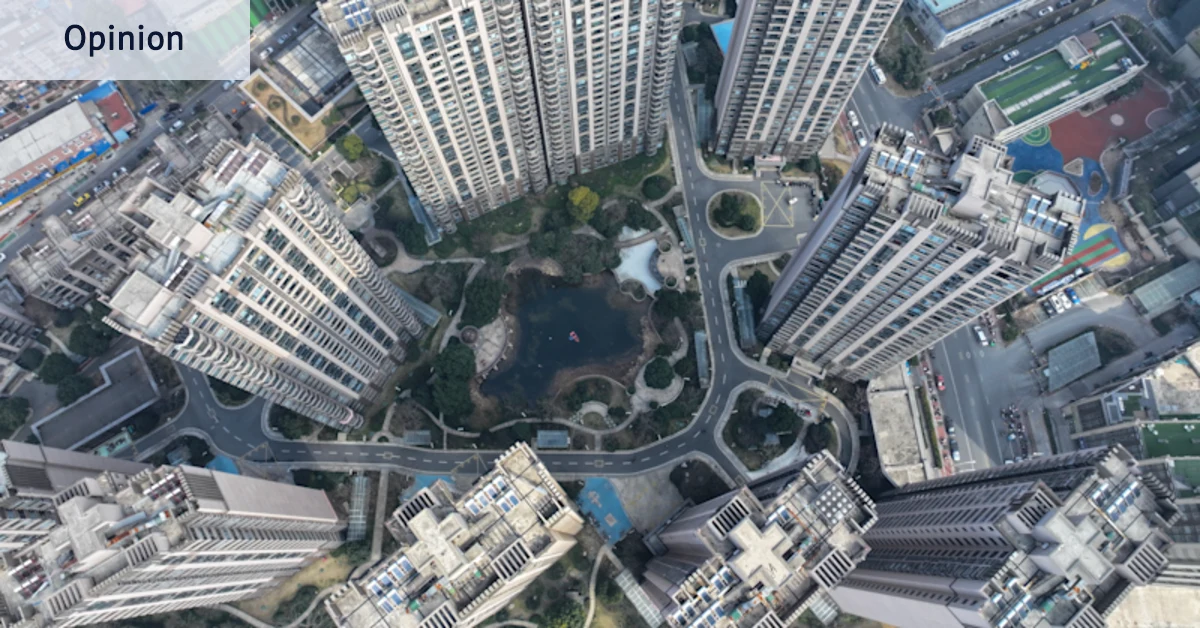
The last of the “big three” Chinese developers still standing, China Vanke, is on the verge of defaulting on its debts. Vanke was, with Evergrande and Country Garden, one of the top three property sales generators at the peak of the country’s property development boom.
The state-backed developer’s plan to defer payments on its debts that were due on Monday for a year was rejected by its bondholders. It will hold a new meeting on Thursday to seek bond-holders’ approval for the rescheduling of the $US283 million payment.
Loading
The inability of authorities to quickly purge the zombie property companies and halt the continuing erosion of property values and household wealth has generated deflation and stagnation in China’s domestic economy.
Beijing’s traditional response to economic downturns – boosting investment in property and infrastructure – isn’t appropriate in the current circumstances, where over-investment has been a major contributing factor in the crisis.
External observers have called for increased social spending and other stimulus measures to boost domestic consumption but, apart from some modest steps, President Xi Jinping has rejected the advice. He has preferred to stick with his strategy of investing in, and subsidising, advanced manufacturing.
Some of those past efforts to stimulate demand via subsidies for trade-ins of appliances and other products showed up in the country’s lower-than-expected retail sales growth.
In the final quarter of last year, concerned about slowing growth, Beijing responded by rolling out the trade-in measures. With their effects fading as the year progressed, appliance sales, for instance, fell nearly 20 per cent in November.

The last of the “big three” Chinese developers still standing, China Vanke, is now on the verge of defaulting on its debts.Credit: Bloomberg
At a central economic work conference last week, party officials promised to strengthen the domestic market to protect against external risks – presumably the risk that China’s major trading partners will start shutting down access to their markets. Boosting domestic demand and doing more to stabilise the property markets would be the obvious priorities.
The officials also want to stop the decline in investment while simultaneously continuing the crackdown on “redundant” investment and “involution,” or the vicious cycle of over-production, excessive competition and price-wars that have resulted in sales below production costs in some industries, notably the auto industry (where the regulators are about to crack down on below-cost pricing), and caused concerns in export markets that Chinese manufactured goods are being “dumped” in their countries.
Trump’s tariffs and their flow-on effects, by shifting China’s exports away from the US to Europe, South-East Asia, Africa and Latin America, are generating increasing resistance.
The European Union, fearing its manufacturing base will be wiped out, has threatened tariffs of its own. Mexico, falling into line with US demands, has slapped tariffs of up to 50 per cent on imports from China. Canada, Brazil, Turkey, India and others have tariffs on at least some products from China.
Loading
Protectionism is spreading and intensifying and represents a significant threat to the economic model to which China has pivoted to sustain growth in the face of its domestic weakness.
To avoid a deflationary spiral and insure against the risk to its export income, Beijing will eventually have to do something about shoring up domestic demand, probably by strengthening its social security net, expanding its services sector and putting a floor under its property market, even though Xi seems to believe stimulus is wasteful.
China will presumably achieve its target of 5 per cent GDP growth this year, largely thanks to its exports and the “rubberiness” of its calculations (it always hits its target, generating considerable cynicism outside China).
Beneath that headline number though, all is not well. As the year is coming to a close, the data is saying that the fissures within China’s domestic economy, and the pressure to respond to them and address the threats to the country’s exports, are growing.
The Market Recap newsletter is a wrap of the day’s trading. Get it each weekday afternoon.