
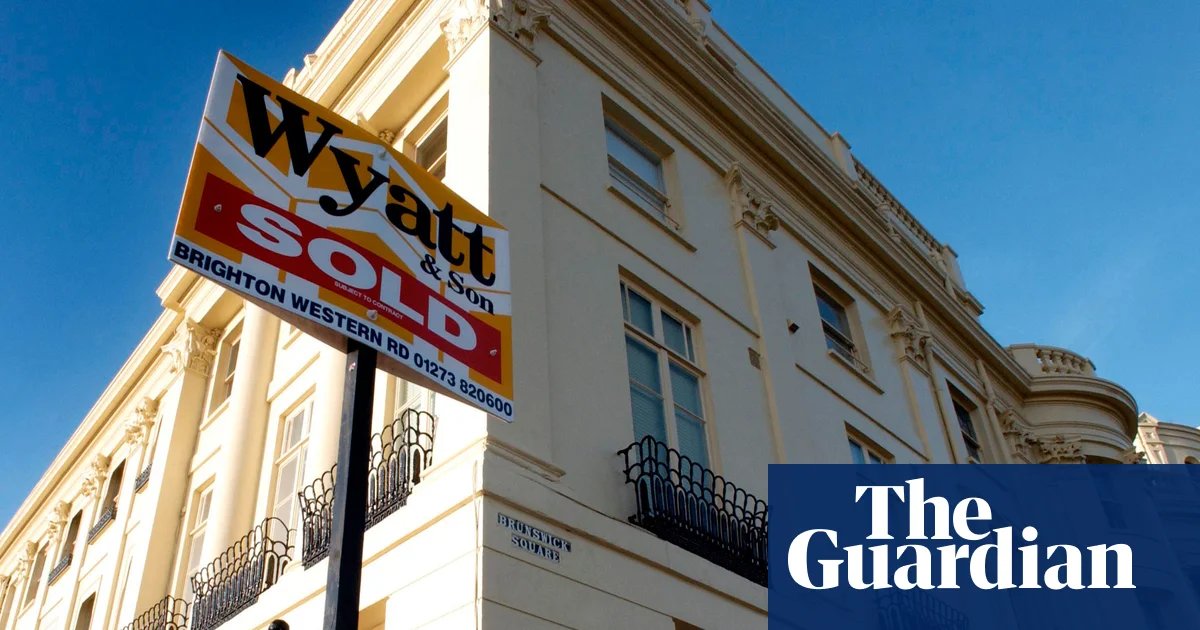
The government is considering a new national property tax as the first step towards a radical shake-up of stamp duty and council tax.
The discussions taking place at the Treasury – revealed by the Guardian on Monday – have already prompted much debate and, perhaps inevitably, led to an outcry in some quarters. Here we consider how the current system works and how it could change.
What, in simple terms, are they considering?
Two things, essentially.
First, sources said Treasury officials were initially examining a potential new tax that would replace stamp duty on owner-occupied homes.
It would be paid by homeowners on properties worth more than £500,000 when they sold them. The amount paid would be determined by a property’s value.
Such a change would be a big deal because under the current system, stamp duty is paid by buyers, not sellers. It could be a bigger concern for some people living in London, the south-east and other areas where property prices are particularly high.
Second, officials are also said to be studying whether, after a national tax was brought in, a local property tax could then replace council tax in the medium term.
While a new national property tax could in theory be implemented during this parliament, overhauling council tax would take longer and would almost certainly require Labour to win a second term in 2029.
How does stamp duty work, and what’s wrong with it?
You must pay stamp duty land tax (SDLT) – to give it its full name – if you buy a property over a certain price in England and Northern Ireland. There are different approaches to some land taxes in Wales and Scotland.
Stamp duty rates vary depending on whether someone is a first-time buyer, and are banded in steps upward depending on the value of the property. They can also vary as a result of stamp duty “holidays” benefiting some buyers that are brought in from time to time.
The rates changed in April this year, and (first-time buyers excepted) where this is the only residential property someone will own, the tax is now zero up to £125,000, then 2% on the portion from £125,001 to £250,000, and 5% on the portion from £250,001 to £925,000. There are then two more bands so that it tops out at 12% on the portion above £1.5m.
However, economists and others have long criticised stamp duty as outdated – SDLT is based on a tax first introduced in England in 1694 – and arguably the biggest barrier to moving house.
Paul Johnson, until recently the director of the Institute for Fiscal Studies, has said that of all the taxes levied at present, stamp duty on homes “has a pretty good claim to be the most damaging and pernicious of the lot”. He added: “The more often you move, the more tax you pay. It gums up the housing market and, by extension, the labour market.”
How much stamp duty do people typically pay? Do most people pay it?
The average stamp duty bill has risen to £9,935, according to research issued earlier this year by Coventry building society. It was £6,235 in 2014, according to its data. But of course, individual amounts vary hugely.
It is estimated that the majority of property transactions – about 60%-plus – are affected by stamp duty.
Tell me more about this stamp duty ‘replacement’
It has been suggested it would be paid by owner-occupiers on houses worth more than £500,000 when they sell up. The rate would be set by central government. This tax would not replace stamp duty on second homes.
On the face of it, and based on current property prices, a £500,000 threshold would mean that the majority of people selling their home would escape the new tax. The average price of a home in the UK is £272,664 or £298,237, depending on whether you believe Nationwide’s or Halifax’s latest data.
after newsletter promotion
But tough luck if you are in London: according to the Halifax’s latest data, the average house price in the capital is £539,000.
The Guardian reported that the new tax (if it happens) would only affect about a fifth of property sales.
Stephen Perkins, the managing director at the home loans broker Yellow Brick Mortgages, said: “Financially, unless the property tax is ridiculously high, this will raise less money than stamp duty, as fewer homes will be affected.”
He claimed: “Initially, sellers will just build this into asking prices, sending [property] prices up.”
Sources said Treasury officials were, in part, drawing on the findings of a 48-page report from the centre-right thinktank Onward, which was published in August last year.
This put forward the idea of a 0.54% annual tax, with a 0.278% supplement on the portion of any value that exceeded £1m, which it said “would raise the same amount as stamp duty”. The tax would be levied only on properties valued at £500,000-plus, and only on the portion of value above £500,000. The thinktank proposed that the overall amount due would be paid when the property is eventually sold, but anyone who had already paid stamp duty when buying their house would not be asked to pay this tax in addition.
What about this idea of getting rid of council tax?
Council tax has been described as “a deeply broken system”, and in its report, Onward said the way it worked meant “an average home in Blackpool contributes more to the public purse than a mansion in Kensington”.
Council tax bands in England are still set using property values from 1 April 1991, ranging from band A, for homes worth up to £40,000, to band H, for those worth £320,001 and above. The system of funding local government is different across the UK.
The average band D council tax set by local authorities in England for 2025-26 was £2,280 – an increase of £109, or 5%, on the 2024-25 figure of £2,171.
The idea of a new local annual property levy to replace council tax was also proposed by Onward. That plan – for a “local proportional property tax” – would result in the owners, rather than the residents, of a property worth up to £500,000 paying varying rates of tax dependent on the value of the home. They would pay a minimum of £800 a year. A rate of 0.44% “would raise the same amount of revenue as council tax”, said the report.
What are people saying about all this?
The TaxPayers’ Alliance was quoted as saying: “If these reports are true, then taxpayers are facing a wealth tax in all but name.”
Craig Fish, the director at the mortgage broker Lodestone, said he was concerned that such a shake-up would stop people selling or moving home, especially in high-value areas. “The result is less income overall,” he said.