
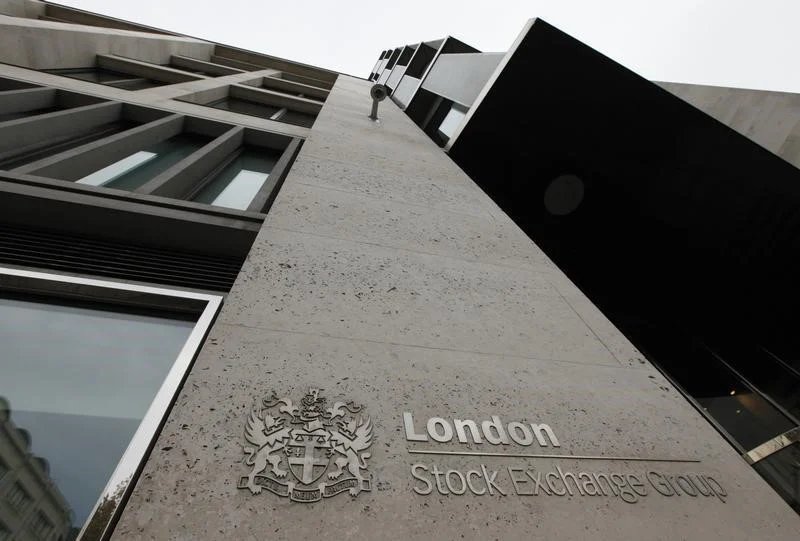
Investing.com — British stocks closed lower on Monday even as the United States and Iran announced a peace deal that declared an immediate end to military operations and the reopening of the Strait of Hormuz, sending oil prices sharply lower.
The dropped 0.4%. Germany’s gained 1.1% and France’s added 0.4%. Sterling rose 0.14% against the dollar to $1.3425.
Pakistani Prime Minister Shehbaz Sharif announced the agreement on X, saying both sides had declared “the immediate and permanent termination of military operations on all fronts, including in Lebanon,” with a formal signing ceremony set for June 19 in Geneva, Switzerland.
U.S. President Donald Trump confirmed the deal on Truth Social, writing, “The Deal with the Islamic Republic of Iran is now complete. Congratulations to all! I hereby fully authorize the toll free opening of the Strait of Hormuz, and, simultaneously herewith, authorize the immediate removal of the United States Naval blockade. Ships of the World, start your engines. Let the oil flow!”
fell 4.3% to $83.07 a barrel, while declined 4.6% to $80.33 a barrel. rose 3% to $4,347.39 a troy ounce.
Pakistani Prime Minister Shehbaz Sharif announced the agreement on X, saying both sides had declared “the immediate and permanent termination of military operations on all fronts, including in Lebanon,” with a formal signing ceremony set for June 19 in Geneva.
President Donald Trump confirmed the deal on Truth Social, writing, “Ships of the World, start your engines. Let the oil flow!”
Vice President JD Vance told CNBC the deal’s two major objectives were reopening the Strait of Hormuz and securing a long-term commitment that Iran will never develop a nuclear weapon.
Vance said there were “a lot” of details still to be resolved but expressed confidence the U.S. held the stronger hand in subsequent talks, adding that ship traffic through Hormuz had already increased over the past 24 hours. He said Washington expected the strait to reopen on a toll-free basis for the long term.
Iran’s Supreme National Security Council confirmed the memorandum of understanding, saying military operations on all fronts would end “immediately and permanently.”
The council said the deal would be formally signed June 19 and that negotiations on a final agreement would begin only after the other side implements its commitments.
Iran’s Deputy Foreign Minister Kazem Gharibabadi said the 60-day negotiations would begin only after the U.S. releases frozen funds, lifts the blockade and formally ends the war.
A senior U.S. official rejected the characterization, telling Axios, “This is completely not true. This is a pay-for-performance deal and no frozen funds will be released without the Iranians implementing their commitments.”
Iran’s state-affiliated Mehr News published what it said were details of a 14-point draft memorandum, including the release of $24 billion in frozen Iranian assets during the 60-day talks, with half available before negotiations begin. Neither Iranian nor U.S. officials publicly confirmed the contents.
Complicating the announcement, Israel struck a Hezbollah command center in Beirut’s southern suburbs hours before the deal was confirmed, drawing a sharp rebuke from Trump. “This morning’s attack on Beirut should not have happened,” he wrote on Truth Social.
Israeli Prime Minister Benjamin Netanyahu told Trump that Israel would not withdraw from Lebanon and did not consider itself bound by the Lebanese clause, according to Israeli news service Ynet.
UK round up
withdrew from the bidding for Boots Group, saying the acquisition would not meet its strategic and capital investment objectives, according to a stock exchange announcement on Monday.
BBC is set to cut hundreds of jobs across its core news division next week as part of wider plans expected to result in about 2,000 total job losses and save hundreds of millions of pounds, the Financial Times reported Monday, citing people close to the situation.