
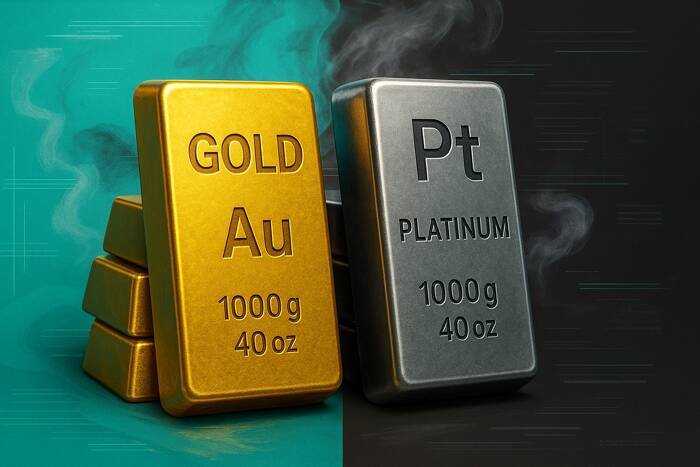
Oil and Gas are once again central to geopolitical leverage. Critical minerals have become essential to industrial policy, defence and next-generation manufacturing. Gold has re-emerged as a reserve asset of choice for central banks seeking insulation from financial and geopolitical risk.
The implications are enormous.
When nations begin hoarding resources, restricting exports, subsidising domestic production and weaponising trade flows, Commodities develop scarcity premiums that traditional valuation models often underestimate. Supply no longer needs to disappear entirely for prices to move sharply higher. It only needs to become less secure, less efficient or more politically controlled.
That is how structural bull markets begin.
Inflation, Rearmament and Resource Competition
A multipolar world is also inherently more inflationary.
Fragmented trade, military rearmament, energy insecurity, fiscal expansion and industrial subsidies all push costs higher. Unlike the disinflationary era of peak globalisation, the next phase is likely to be defined by persistent input pressure across energy, transport, metals and food systems.
For investors and traders alike, that changes the hierarchy of assets.
The winners of the last cycle were long-duration financial assets. The winners of the next may well be the real Hard Assets the world cannot function without.
Lars Hansen puts it plainly: “The market is still underestimating how powerful this regime shift could become. Multi-polarity does not just create volatility – it creates a sustained bid for Hard Assets. The countries, institutions and investors who understand that early will be best positioned for what comes next.”
The Repricing May Only Be Beginning
That is the real opportunity here.
By the time supply shocks are fully visible, by the time reserve diversification is obvious, by the time governments have fully locked in strategic stockpiles, much of the upside may already be gone.
This is why the case for Commodities is becoming harder to ignore.
In a world moving from cooperation to competition, from efficiency to redundancy and from financial confidence to resource security, Hard Assets stand to become some of the most valuable assets on the planet.
The great repricing may not happen all at once.
But it has already begun.
The question is no longer whether Commodities matter in a multipolar world. The question is whether you are positioned before the rest of the market fully understands just how bullish that world could become.