
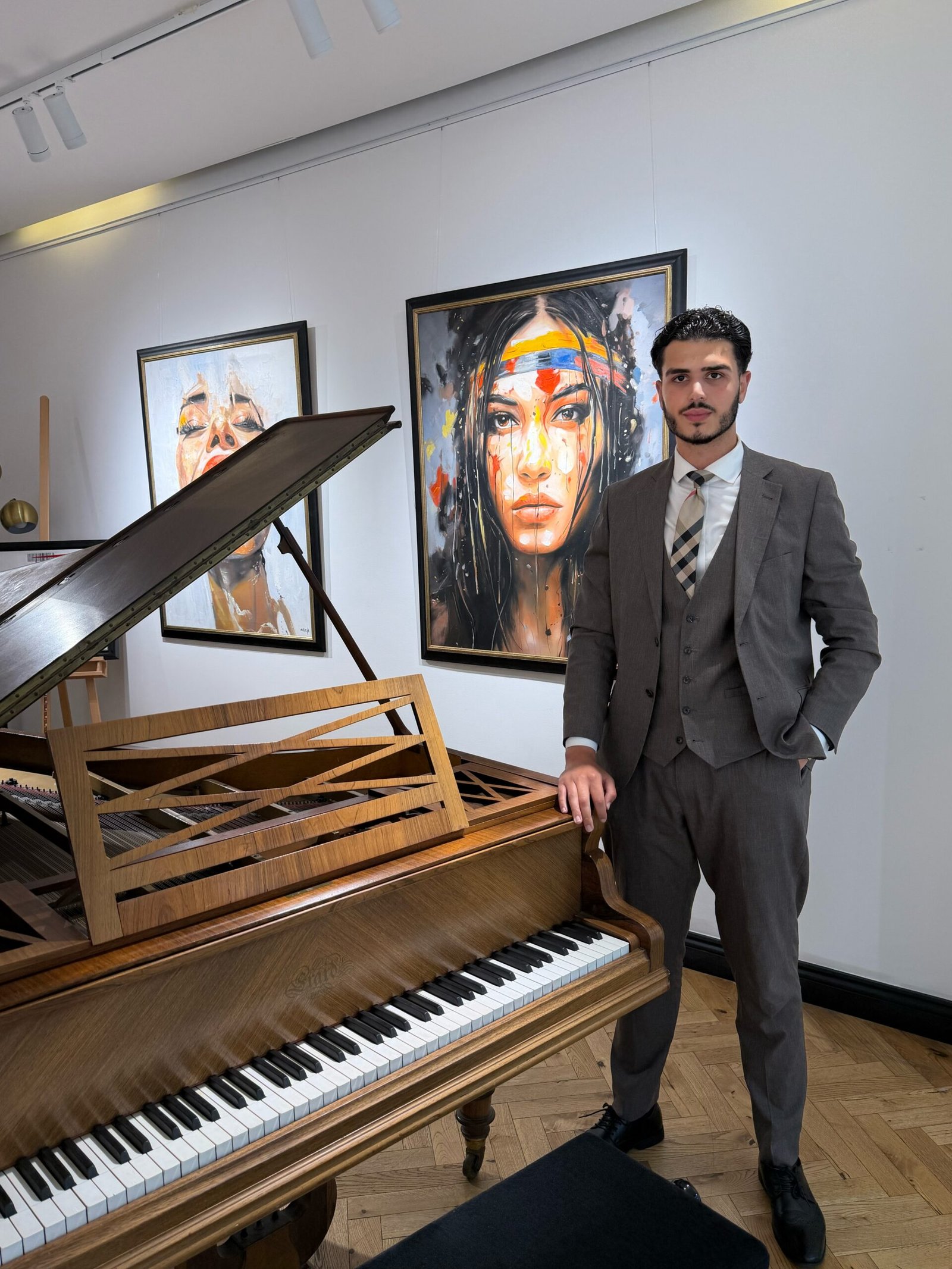
Sebastian Clarke: The Art Broker Bringing Investment Energy to the Contemporary Market
There is a new type of art broker emerging in London. Less old-world gallery gatekeeper, more cultural strategist. Less hushed private viewing, more informed access. At London Art Exchange, now operating across Marylebone and Bloomsbury, Sebastian Clarke is becoming part of that shift.
Clarke is not the stereotypical art-world figure. His background sits somewhere between high-net-worth client advisory, alternative investment products and contemporary culture. He grew up just outside London and moved into sales and client relations early in his career, working with clients who understood the language of assets, growth and timing. That experience has given him a commercial sharpness that now translates directly into the art market.
But what separates Clarke is not simply that he understands investors. It is that he understands why investors are increasingly looking at art differently.
For years, traditional tangible assets such as gold have dominated conversations around wealth preservation. Gold is familiar, defensive and liquid. But for a new generation of collectors and investors, the conversation is expanding. Contemporary art is no longer being viewed only as something beautiful to own. It is being studied as a serious alternative asset, capable of delivering cultural value, personal enjoyment and long-term financial potential.
For Clarke, that crossover is exactly where the opportunity lies.
Q: Sebastian, your background began outside the traditional gallery world. How has that shaped the way you work today?
Sebastian Clarke: My background is a mix of client advisory and the art world. I moved into sales and client relations quite early on, mainly working with high-net-worth clients and alternative investment products. That taught me a lot about how clients approach opportunity, risk and long-term value.
When I became more interested in contemporary art, especially the emerging market, I started to see a real crossover between culture, investing and collecting. Art has emotion attached to it, but it also has structure. Artists develop, demand builds, collectors move, and markets form over time. That is what interested me.
At London Art Exchange, Clarke has found a platform that reflects that same crossover. The business is not simply operating as a traditional gallery. Through LAX.art, it offers a curated environment for clients to discover and acquire contemporary works. Through LAX.BID, it adds the energy and transparency of an auction platform, creating a more complete ecosystem for collectors, investors and sellers.
That combination matters. In a market where access and timing can define value, London Art Exchange is positioning itself as more than a place to buy art. It is becoming an infrastructure for the modern collector.
The inclusion of names and markets connected to artists such as Mr Phantom and globally recognised figures like Banksy gives the platform a cultural relevance that speaks directly to today’s collector base. This is not art as a distant institution. It is art as something alive, competitive and increasingly connected to luxury investment.
Q: What makes the combination of LAX.art and LAX.BID so important?
Sebastian Clarke: The strength is in the fact that clients are not limited to one route into the market. LAX.art gives people access to a curated gallery experience, where they can learn, ask questions and understand the artists properly. LAX.BID brings in the auction element, which adds transparency, competition and liquidity.
Together, they create a much stronger platform. You have education, acquisition, market visibility and potential resale all sitting under one wider structure. For clients, especially those coming from investment backgrounds, that is very powerful because it makes the market easier to understand.
Clarke’s role is to translate that world. Many of his clients are used to assets such as gold, property or other alternative investments. They understand value, but they may not yet understand what creates value in art. That is where Clarke’s advisory approach becomes important.
Gold has always had a clear role. It is priced daily, traded globally and widely viewed as a safe-haven asset. But gold’s growth profile is often more conservative, commonly discussed around the 5–7% range depending on timing and market conditions. Contemporary art, by contrast, can offer a more dynamic return profile, with selected works and artists sometimes positioned around 15–25% ROI over the right holding period.
The difference is that art is not standardised. It is not a commodity in the purest sense. Every piece has its own story, scarcity, provenance and collector demand. That makes guidance essential.
Q: How do you explain the difference between buying gold and buying art?
Sebastian Clarke: Gold is simple. It is liquid, globally recognised and easy to price. That is why investors like it. But gold does not have the same individuality or cultural upside as art.
Art is different because every work is unique. The value comes from the artist, the demand, the scarcity, the story and where that artist is heading. If you acquire the right work at the right stage, the growth potential can be far stronger than traditional assets. But it has to be done properly. You need research, timing and an understanding of the market.
That ability to guide clients through complexity is where Clarke is making his name. He is not positioning art as a quick trade or a speculative gamble. Instead, he speaks about building collections with discipline: understanding which artists are gaining traction, where collector appetite is moving and how a client can own something they genuinely enjoy while remaining mindful of long-term value.
The presence of artists like Mr Phantom within the London Art Exchange story also reflects the changing appetite of collectors. Street-influenced, contemporary and culturally recognisable work has become increasingly important to a younger, sharper collector base. Banksy’s global impact has helped shift the perception of urban and contemporary art from outsider culture into blue-chip conversation. Platforms such as LAX.BID now give that world a more formal auction structure.
Q: Why do you think collectors are drawn to artists like Mr Phantom and Banksy?
Sebastian Clarke: There is a cultural immediacy to that type of work. Collectors understand it. It speaks to the world they live in. Artists connected to street culture, contemporary commentary and strong visual identity often have a direct relationship with the public, and that can create powerful demand.
Banksy changed the way many people looked at contemporary and urban art. Artists like Mr Phantom sit within that wider conversation because collectors are looking for work that feels current, recognisable and culturally relevant. That relevance can become a major driver of value.
What makes Clarke’s position compelling is the blend of old and new. He brings the discipline of investment advisory into a market often driven by taste, instinct and emotion. He understands that clients want more than a beautiful object. They want context. They want confidence. They want to know why one artist may have stronger long-term prospects than another.
And yet, he is careful not to strip the romance out of the process. For Clarke, the strongest collections are not built purely on numbers. They are built on a combination of enjoyment and intelligence.
Q: What should a first-time art investor focus on?
Sebastian Clarke: Education first. That is always the starting point. You need to understand the artist, the market, the demand and the reason behind the recommendation. I always want clients to feel confident in what they are buying.
The best approach is to build a collection that has both personal and financial strength. You should enjoy owning the work, but you should also understand why it has long-term potential. When those two things come together, that is when art becomes really exciting.
In many ways, Sebastian Clarke represents where the market is heading. He is part broker, part adviser, part cultural interpreter. His work at London Art Exchange sits at the intersection of luxury, finance and contemporary taste.
With LAX.art and LAX.BID working together, London Art Exchange is building one of the most interesting platforms in the industry: a place where gallery access, auction opportunity and investment-led advisory can exist side by side.
For investors used to the steady security of gold, Clarke offers a different proposition. Art may not move like a traditional liquid commodity, but when selected properly, it can offer something gold never will: cultural relevance, emotional ownership, scarcity and the potential for significantly stronger growth.
Q: Final question — where do you see the future of art investment going?
Sebastian Clarke: I think the future is about access and education. More people want to understand art as an asset, but they do not want to feel intimidated by the market. That is what London Art Exchange does well. It opens the door and gives people the information they need.
Art will always be about passion, but it is also becoming a much more serious part of the alternative investment conversation. With the right platform, the right advice and the right artists, I think it can become one of the strongest sectors in the luxury asset space.