

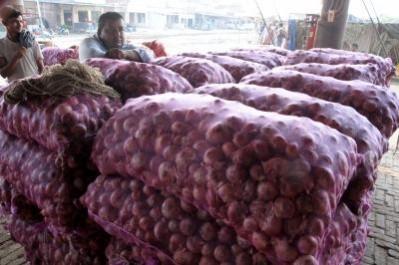
The Indian government is set to release onions from its substantial buffer stock next month, a strategic move aimed at stabilizing food prices. This initiative is part of a broader effort to maintain price stability for essential commodities such as onions, potatoes, and tomatoes.
The Ministry of Consumer Affairs, Food & Public Distribution has confirmed the procurement of 3 lakh tonnes of onions this year, specifically for price stabilization purposes. The release of these stocks is scheduled to begin in September, with the goal of keeping onion prices under control.
This year’s monsoon season has seen a notable stability in the prices of major vegetables, including potatoes, onions, and tomatoes. This stability is largely due to higher production levels in the 2024-25 period compared to the previous year, ensuring a sufficient supply and significantly lower retail prices than those observed last year.
The Ministry’s statement highlighted that “food commodity prices have largely remained stable and well-contained throughout the current calendar year.” Additionally, a 14 percent decrease in the cost of a homemade thali in July 2025 reflects the continued moderation of food inflation during the month.
Retail prices of tomatoes, however, have been influenced by temporary localized factors rather than any fundamental demand-supply imbalance or production shortfall. The National Cooperative Consumers’ Federation of India (NCCF) has been actively procuring tomatoes from Azadpur Mandi since August 4, selling them to consumers at prices with minimal margins.
This initiative is not new, as the NCCF has undertaken similar efforts in previous years. To date, the NCCF has sold 27,307 kilograms of tomatoes at retail prices ranging from Rs 47 to Rs 60 per kilogram, depending on the procurement cost.
Weather Impact on Tomato Prices
The current average retail price of tomatoes in Delhi stands at Rs 73 per kilogram, primarily due to heavy rainfall in the northern and north-western regions of the country since the last week of July. This weather-related disruption caused prices to spike to as high as Rs 85 per kilogram by the end of July. However, with the recovery and stabilization of daily arrivals at the Azadpur mandi over the past week, both mandi and retail prices have begun to decline.
In contrast, major cities such as Chennai and Mumbai, which have not experienced abnormal weather conditions in recent weeks, have not witnessed a similar price surge. The current average retail prices of tomatoes in Chennai and Mumbai are Rs 50 per kilogram and Rs 58 per kilogram, respectively, substantially lower than the prevailing price in Delhi.
The Central government has attributed the temporary spike in tomato prices in Delhi to heavy rain in North and Northwest India. The Department of Consumer Affairs stated, “It is primarily the result of heavy rainfall in the northern and northwestern regions of the country since the last week of July.” This weather-related disruption led to a price surge, but with the recovery and stabilization of daily arrivals at the Azadpur mandi, both wholesale and retail tomato prices have started to decline.
The government’s decision to release onions from the buffer stock is timely, as domestic food prices have largely remained stable and well-contained in 2025 so far. The Ministry of Consumer Affairs reported a 14 percent year-on-year fall in the cost of a homemade thali in July 2025, reflecting the continued moderation of food inflation. As of Friday, the prices of most commodities monitored by the consumer affairs department are either stable or declining compared to the previous year.
Government Measures and Historical Context
The department emphasized that retail tomato prices in various centers are influenced by temporary localized factors instead of any fundamental shift or imbalance in demand-supply dynamics or production shortfall. The recovery and stabilization of daily arrivals at Azadpur over the past week have played a crucial role in cooling wholesale and retail tomato prices.
Other metros, like Chennai and Mumbai, saw no such disruption thanks to normal weather conditions during this period. The government’s proactive measures, including the release of onions from the buffer stock and the subsidized sale of tomatoes, demonstrate a commitment to ensuring food price stability and addressing temporary disruptions caused by weather-related factors.
Historically, India has faced similar challenges with food price volatility, particularly during monsoon seasons. In previous years, the government has implemented various strategies to stabilize prices, such as increasing buffer stocks, enhancing supply chain efficiency, and promoting alternative crops. These measures have been instrumental in mitigating the impact of adverse weather conditions and ensuring a steady supply of essential commodities.
The government’s decision to release onions from the buffer stock and the ongoing efforts to stabilize tomato prices reflect a comprehensive approach to managing food price volatility. By addressing both supply-side and demand-side factors, the government aims to maintain price stability and ensure the availability of essential commodities for consumers across the country. As the monsoon season progresses, continued monitoring and timely interventions will be crucial in sustaining this stability and preventing any further disruptions in the food supply chain.
In conclusion, the government’s strategic release of onion stocks and the measures to stabilize tomato prices underscore a proactive approach to managing food price fluctuations. These efforts are aimed at ensuring the availability and affordability of essential commodities, thereby safeguarding consumer interests and maintaining market stability.
The focus on both immediate and long-term solutions highlights the government’s commitment to addressing the challenges posed by weather-related disruptions and ensuring a resilient food supply system.