

Radar chat logo with IOS application
Radar Chat
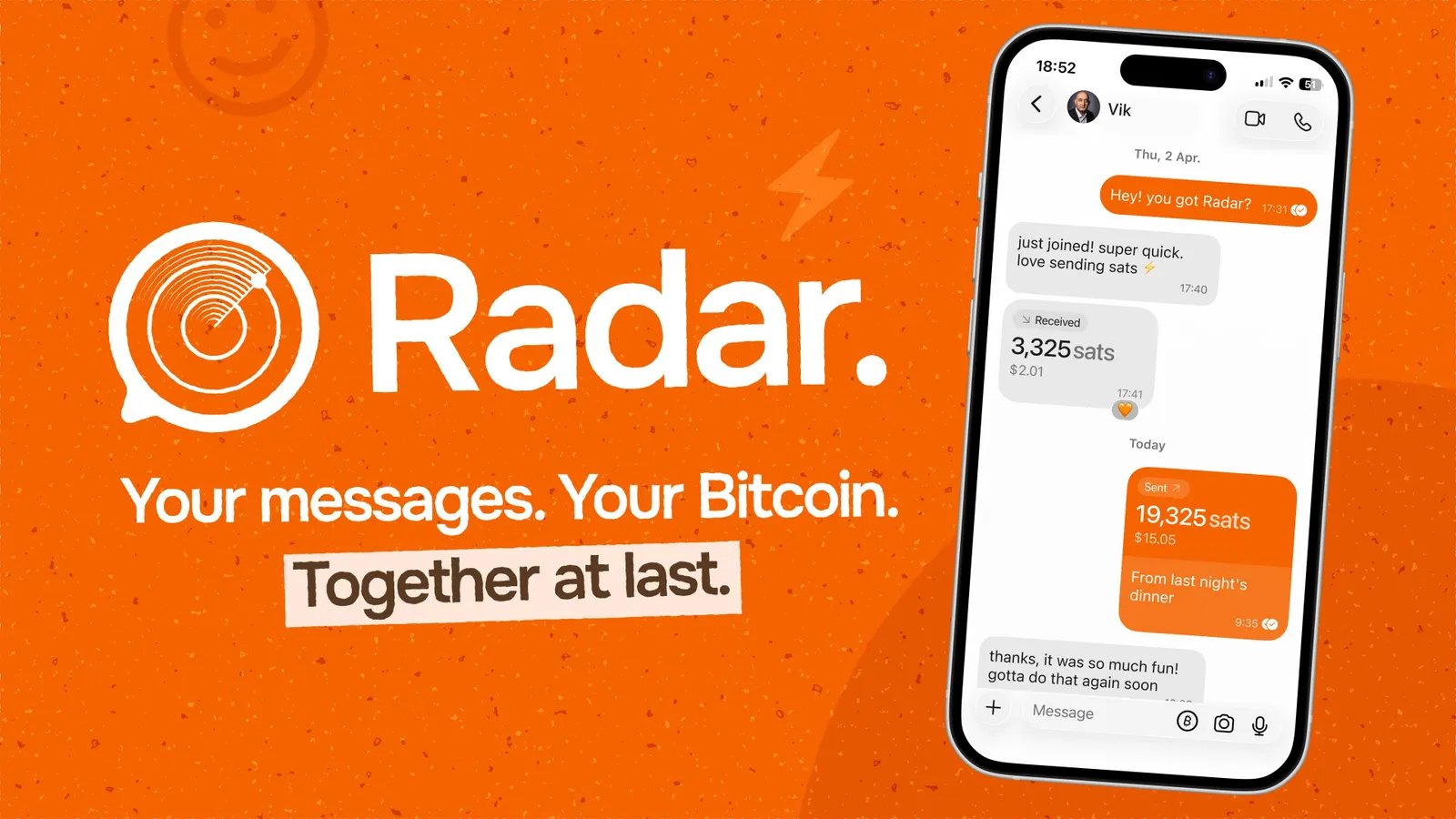
On July 7, the team behind Cake Wallet announced Radar Chat, a fork of Signal that allows users to send and receive bitcoin instantly in a non-custodial fashion. The new Radar Chat, Inc. team raised an undisclosed amount from angel investors and venture capital fund Ego Death Capital.
The project comes at a time when bitcoin payments are gaining traction globally for average users in developing markets, dissidents, and those locked out of the traditional banking system and in need of critical aid.
A Brief History of The Bitcoin For Signal Campaign
While the 501(c)(3) nonprofit behind the Signal app currently accepts donations in bitcoin, over the years there have been calls for Signal to add bitcoin support in the app to let users send bitcoin as messages. The major hurdle has been the difficulty in tooling to do it in a way that does not negatively impact the user interface or, worse, make Signal operate as a financial institution, a change the Signal Foundation is understandably not comfortable pursuing.
The Signal team still pursued this idea of integrating digital payments in Signal through its 2021 integration of MobileCoin, which remains on the platform to this day. This hasn’t stopped the resurgence in the campaign to integrate bitcoin into Signal, with the most recent push seeking to do so via Cashu to combine private messages with private payments.
Radar Chat
Following years of maturation in bitcoin’s Lightning infrastructure, a team of bitcoin builders from the popular digital assets wallet, Cake Wallet, decided to take it upon themselves to create Radar Chat to integrate bitcoin in Signal.
The app relies on Signal’s existing user base instead of competing with it, as users with existing Signal accounts can download Radar and use it as they would the regular Signal app, with the added advantage of being able to send and receive bitcoin.
This reliance extends to Signal’s servers, meaning there is a risk the Signal Foundation could block third-party forks like Radar by their client signatures. Other long-running Signal forks like Molly haven’t faced this issue, however—a precedent Radar hopes to follow, aided by its monthly donations to the Foundation.
Under The Hood
Signal’s underlying protocol and code, which reportedly between 70 and 100 million people use monthly, is open source, meaning anyone can audit the code and—more importantly for the Radar team—“fork” (essentially copy), modify, and extend it to include new features and distribute it as its own separate version. This is what the Radar team decided to do to build Radar Chat.
Radar COO Seth For Privacy explained that Signal’s integration of MobileCoin made it relatively easier to integrate bitcoin. He added that, for example, “within the [Signal] protocol, there are specific ways to handle the metadata around payments within a message.”
To make the payments work given the foundations in Signal’s codebase, the bitcoin integration needed to be simple and fast, not invasive and complex. The team settled on integrating bitcoin’s Lightning Network, specifically in a non-custodial way to avoid turning users’ devices into nodes or Radar as a payment processor or custodian.
Rather than use the Cashu protocol and deal with mints and possible bitcoin custody, they opted for the Breez Spark SDK. The SDK lets developers use Lightspark’s Bitcoin layer-2, Spark, which is interoperable with bitcoin’s Lightning Network.
Radar Chat app interface showing bitcoin send in chat
Radar Chat
Radar’s user interface flow resembles how Apple implemented sending money over iMessage using Apple Cash. Users can send and receive bitcoin without running a bitcoin or Lightning node. The tradeoff is Radar encrypts the user’s seed phrase into the Signal profile backup. Users recover funds even if they never wrote the phrase down, but it also means anyone who controls both their phone number and Signal PIN could access their bitcoin. So the team treats these backups as a convenience; the seed phrase remains what users should actually safeguard.
Future Plans for Radar Chat
Over the coming months and years, the team intends to add features like privacy-preserving cloud backups, a desktop app, bill splitting for users in a group, payment requests, and stablecoin support.
While the team doesn’t explicitly intend to use this to convince the Signal Foundation to adopt bitcoin, they envision their project as another tool in the toolkit of those seeking to use freedom tools without sacrificing their privacy.
As Radar marketing manager Lea Thompson put it, their goal is “[getting] bitcoin in the hands of people who don’t necessarily realize they need bitcoin yet and showing them how well it can work and how frictionless it can be [to use].”
Radar may well be a long-term answer to years of calls to bring bitcoin payments to Signal—or an experiment that Signal could still pull the plug on.