
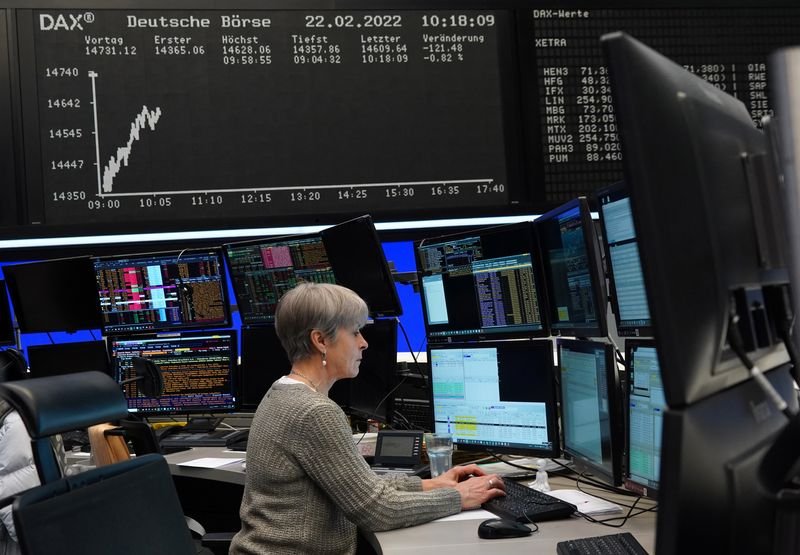
Investing.com — Inclusion in Germany’s blue-chip DAX index may not provide the boost investors expect, according to Deutsche Bank, its analysts said ahead of the index’s September review.
STOXX is scheduled to review the DAX on September 3, with changes taking effect September 21. , which has repeatedly come close to rejoining the index since 2020, is again a candidate this year, though Deutsche analysts led by Carolin Raab said its prospects “have weakened in recent days.”
The airline’s ranking slipped after DAX member saw an increase in free float, pushing it above Lufthansa on the list. Deutsche Bank estimates Lufthansa now sits slightly below the threshold for fast entry, with the outcome likely to hinge on share price moves before the August 31 cut-off.
and , the two lowest-ranked current DAX members, are at risk of dropping into the if Lufthansa qualifies. Deutsche analysts said both stocks rank closely together and remain well above the threshold for automatic exclusion.
Looking at 20 years of index history, the analysts found that stocks joining the DAX have typically underperformed on the day the change takes effect, while stocks leaving the index have typically outperformed. On median, joiners underperformed the index by 2% on rebalance day, while leavers outperformed by 2%.
The underperformance for new entrants persists over the following year. Analysts said new joiners underperformed the DAX by 8% on median a year after inclusion, with only 16 of 41 new entrants, or 39%, beating the index in their first year as members.
“DAX inclusion is not as beneficial for stock price performance as one might expect,” the analysts wrote. “As companies tend to rally ahead of index inclusion, their shares tend to underperform once index inclusion is achieved.” Deutsche found that stocks had outperformed the DAX by 20% on median in the year before inclusion, suggesting profit-taking may follow once the shares officially join.
The pattern doesn’t reverse for companies leaving the index either. Stocks that dropped out of the DAX underperformed by 33% on median in the year before exclusion and continued to underperform by another 14% in the year after leaving.
One clear benefit of DAX membership is liquidity. Trading volumes for companies joining the index rose by 15% on median, while volumes for companies leaving fell by 15%. “While DAX inclusion helps in terms of liquidity, it is usually not a trigger for outperformance,” the analysts concluded.