
The writer is chief executive officer of DIFC Authority
For decades, global trade and finance were concentrated within a relatively small number of established centres – their scale, institutional maturity and long-standing networks enabling them to play a defining role in the global economy. Today, however, a combination of forces including digitisation, geoeconomic shifts, the growth of emerging markets and rapid advances in financial technology are reshaping that landscape.
As a result, the future is likely to be defined by an interconnected network of global hubs that combine talent, technology, regulatory clarity and international connectivity. These centres will increasingly play a central role in directing capital towards the industries that will drive tomorrow’s economy.
Dubai has emerged as one of the leading cities driving that future. In March, the emirate rose to seventh place in the Global Financial Centre Index rankings, reflecting not only ambition but a model designed for a rapidly changing world. Today, Dubai stands as the leading financial centre for the Middle East, Africa and South Asia region, which represents 77 fast-growing economies and some of the most dynamic markets globally.
The next phase of global growth will be driven by the intersection of trade, technology –including Artificial Intelligence – and capital.
With finance becoming programmable, commerce going digital and supply chains becoming intelligent, financial centres must evolve from being places where capital is stored to ecosystems where capital is mobilised and technology is deployed to support long-term prosperity.
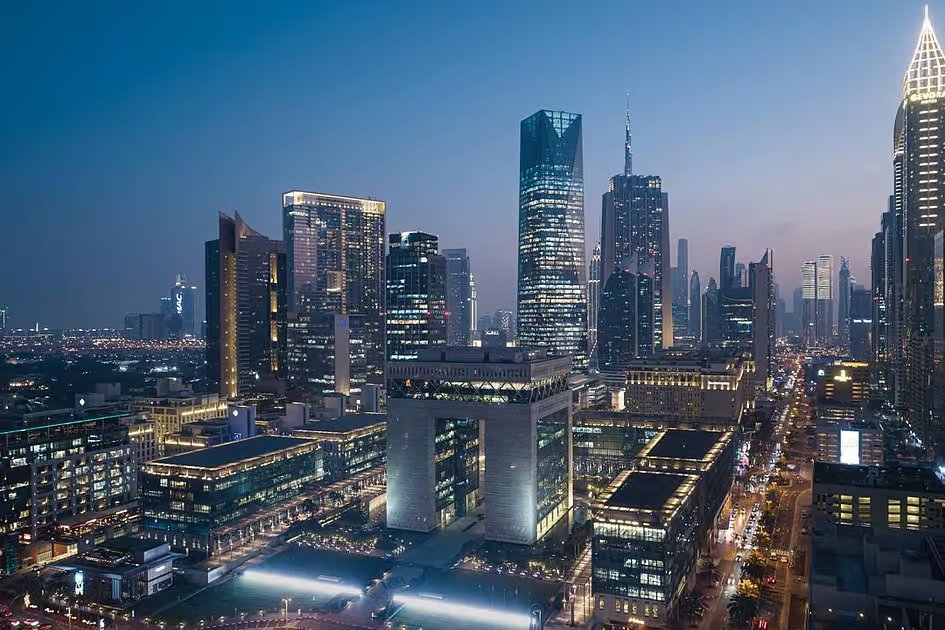
Dubai’s approach has been to create exactly that environment and the Dubai International Financial Centre (DIFC) is a key pillar of this strategy. DIFC provides a platform that combines world-class infrastructure, international legal standards, regulatory innovation and deep financial expertise with unparalleled access to one of the world’s most dynamic regions.
The ingredients that define next-generation financial hubs are increasingly clear. Our research, as part of DIFC’s flagship Future of Finance report series, highlights the four factors that matter most – talent, infrastructure, governance and connectivity. Dubai has invested deliberately in each, creating an environment that enables businesses, capital and ideas to move seamlessly across international markets.
These foundations are now enabling Dubai to play a defining role in one of the most transformative shifts underway in global finance – the rise of digital assets and blockchain-based financial infrastructure. As institutional adoption grows, investors are increasingly seeking jurisdictions that combine innovation with regulatory clarity, strong investor protection and established financial ecosystems.

DIFC has positioned itself as a global hub for institutional digital finance by combining these elements. Through the Dubai Financial Services Authority (DFSA), we have established one of the world’s most comprehensive regulatory frameworks for crypto tokens and digital asset activity. Recent reforms have further strengthened investor safeguards while allowing firms greater flexibility to innovate.
Digital assets, tokenisation and new forms of programmable finance will reshape how capital is raised and deployed across borders. The cities that succeed must integrate these technologies into the broader financial system rather than treating them as separate ecosystems. Dubai is setting a global benchmark on this front by building the infrastructure where traditional finance and digital finance converge.
The future of the global economy will depend on governments that are willing to act boldly by investing in talent, building modern infrastructure, enabling responsible innovation and creating regulatory frameworks that balance trust with flexibility. In a more complex and interconnected world, economic leadership will belong not only to those with the largest markets, but to those who can build the most effective platforms for global collaboration.
As the world enters a new era of trade, technology and finance, our objective is to help build the bridges – financial, digital and institutional – that enable access to opportunities within tomorrow’s global economy.