

Increasingly severe weather demands faster preparation, stronger resource coordination, and integrated emergency response operations across the storm lifecycle
Severe weather has become one of the greatest threats to utility performance, financial stability, and public trust. Severe weather events are becoming more frequent, more costly, and more disruptive for utilities and their customers across the globe.
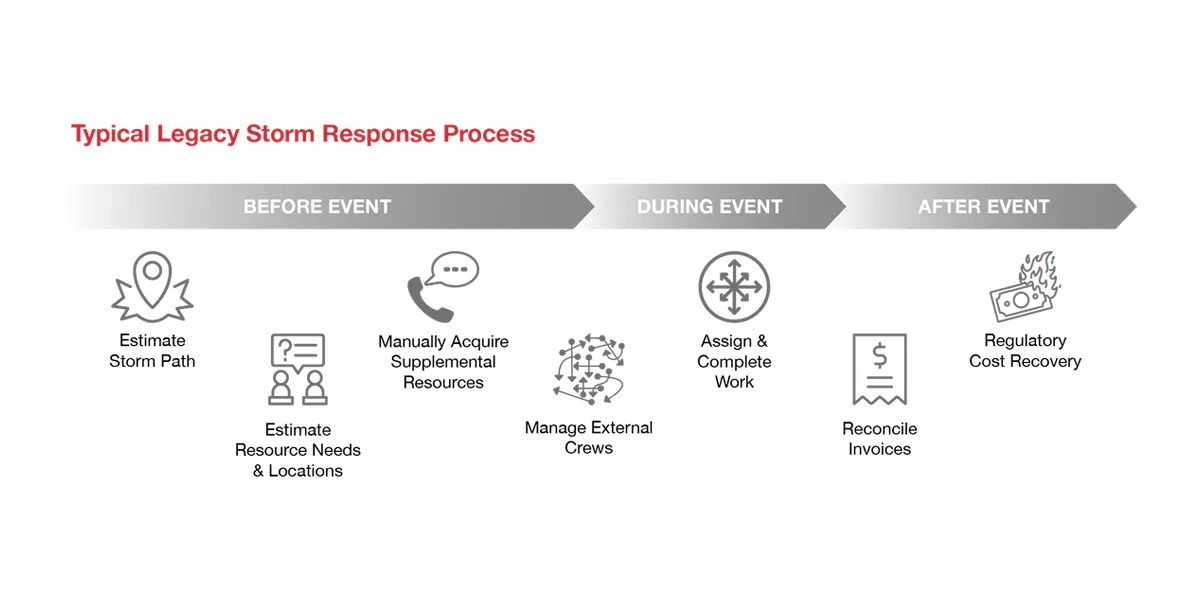
At the same time, expectations continue to rise; customers expect faster restoration, regulators demand greater transparency, and executives face growing accountability for storm response performance and cost. Despite these pressures, many utility emergency response operating models remain fragmented across forecasting, resource planning, restoration, and financial recovery.
Critical storm response activities are often managed in separate systems and coordinated through manual processes, limiting visibility across the storm lifecycle while resource competition continues to intensify. As utilities compete for contractors, mutual assistance crews, and specialized equipment during major weather events, traditional approaches are becoming increasingly impossible to sustain.
The consequences of fragmented storm operations extend far beyond restoration timelines:
- Delays in preparation, resource acquisition, and decision-making can significantly increase storm-related costs. Ineffective coordination creates operational, regulatory, and financial risk during major events.
- Utilities face growing scrutiny from customers, regulators, and public officials who expect storm response decisions to be timely, effective, and well documented.
- Storm cost recovery often requires detailed justification of expenditures through regulatory proceedings.
- Executive accountability has increased, with leadership teams expected to explain operational decisions and demonstrate responsible stewardship of resources.
CenterPoint Energy’s experience during Hurricane Beryl underscores the growing expectations placed on utilities to demonstrate preparedness, communicate effectively, and execute restoration efforts under intense public and regulatory scrutiny.

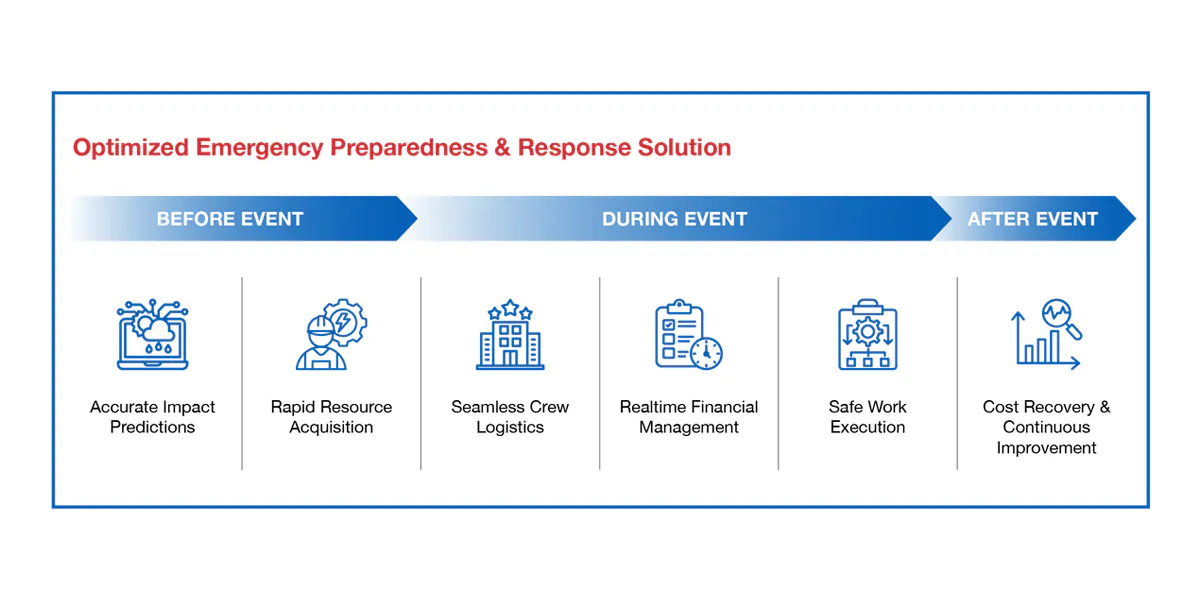
As the complexity of emergency response grows, leading utilities are demonstrating that a better approach is possible. These organizations have shown how early storm impact prediction can improve planning, strengthen resource readiness, and support more effective execution.
Their experiences reinforce an important reality: better storm outcomes are not driven by a single technology or process improvement, but by an operating model built around three core capabilities: preparing earlier, securing resources faster, and coordinating the entire storm lifecycle. Together, these capabilities create the foundation for a more proactive and resilient approach to emergency response.

Prepare earlier
Preparation is often the most important determinant of storm response success because it provides more time to assess impacts, coordinate resources, and make informed decisions.
When utilities gain early visibility, they begin evaluating potential impacts, estimating restoration requirements, identifying resource gaps, and aligning stakeholders before conditions deteriorate. Earlier preparation reduces uncertainty and allows decision-makers to move from reactive planning to proactive response.
AEP has demonstrated how improved planning and situational awareness can support more effective restoration execution by enabling teams to anticipate needs before impacts occur. They use a Storm Outage Prediction Model (SOPM) to analyze historical storm data and current forecasts to estimate potential outage locations, customer impacts, and likely damage to utility infrastructure, allowing teams to position resources, coordinate stakeholders, and prepare restoration strategies before the storm arrives.
The ability to prepare earlier creates a stronger foundation for every activity that follows during a storm response.
Secure resources faster
The competition for crews, contractors, specialized equipment, and mutual assistance resources continues to intensify across the utility industry. During large-scale events, organizations find themselves competing for the same limited pool of support. Utilities that identify resource requirements earlier gain a significant advantage because they can secure assistance before demand peaks.
Early identification of resource needs improves procurement timelines, strengthens coordination with mutual assistance partners, and reduces the risk of resource shortages during restoration activities.
National Grid demonstrated the value of this approach during Winter Storm Finn, securing 200 line crews in just 19 minutes after evaluating more than 800 available crews. By accelerating resource identification, evaluation, and securement, utilities can improve preparedness, strengthen operational readiness, and reduce delays that can increase storm costs and prolong customer outages. National Grid’s storm response program has earned 11 EEI Emergency Response Awards, reinforcing how effective planning and resource coordination can contribute to best-in-class restoration performance.
Coordinate the entire storm lifecycle
Storm response touches every part of a utility. When these functions operate in silos, visibility becomes fragmented and decision-making slows. Teams may work from different assumptions, maintain separate information sources, and struggle to provide leaders with a consistent view of storm status and operational priorities. End-to-end coordination improves operational alignment by connecting activities across the entire storm lifecycle and providing executives with the situational awareness needed to make informed decisions.
By establishing a single source of truth across operations, planning, and reporting functions, utilities reduce information gaps, reporting errors, and miscommunications while ensuring stakeholders are working from consistent, up-to-date information. It also strengthens financial reporting, regulatory engagement, and cost recovery efforts by ensuring that critical information is captured, shared, and maintained throughout the response process.
There is no silver bullet for storm response excellence – preparing earlier, securing resources faster, and coordinating the entire storm lifecycle are interconnected capabilities that reinforce one another. Weakness in any one area can limit performance across the entire response effort, regardless of strengths elsewhere. The highest-performing utilities consistently invest in all three because they understand that storm response is a system rather than a collection of isolated activities.
Utilities that continue to rely on fragmented emergency response operating models will find it increasingly difficult to meet rising expectations for restoration performance, transparency, and cost control. As severe weather becomes more frequent and resource competition intensifies, utilities that prepare earlier, secure resources faster, and coordinate the entire storm lifecycle will be better positioned to respond effectively, recover costs, and maintain stakeholder confidence.
To learn how utilities are transforming storm response through integrated emergency management and resource coordination, visit: itron.com