

Weighing the expense of burying power lines against the risks
of aboveground weather-related damage
Power lines are safer from weather and physical damage
underground, but when does it make sense to spend the time and
money to bury them?
Many utilities across the U.S. are asking this question as
above-ground power lines are increasingly threatened by extreme weather events, wildfires, and
physical damage. Utilities often determine how to prioritize
undergrounding efforts before they spend time and money on
extensive — and expensive — projects. With enough data
and climate-informed grid modeling down to individual towers,
poles, and components, utilities can locate the most at-risk
sections of their above-ground power lines and decide which ones
warrant the expense and time of undergrounding projects.
Above ground or underground?
In the rush to electrify the world, millions of miles of power lines were strung
above ground. In many existing cities there was no other choice
— pre-existing buildings necessitated above-ground power
lines. Above-ground lines are also relatively inexpensive and fast
to install. Consequently, most of the U.S. power grid —
amounting to 5.5 million miles of distribution lines and
over 180 million power poles — is above ground.
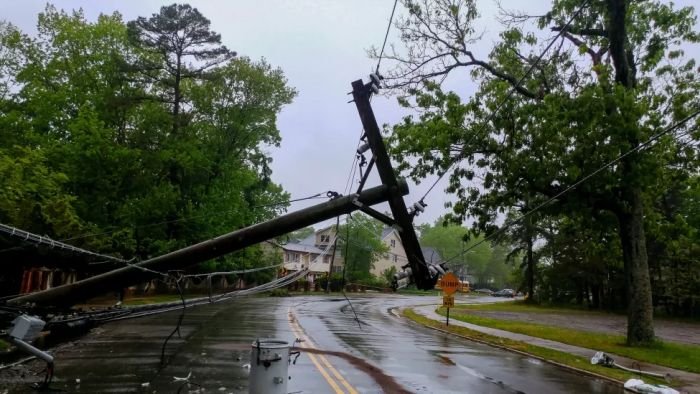
In colder climates ice can accumulate on power lines, causing
them to snap under load or from “galloping” caused by
high winds. This can leave people without power and possibly heat
in potentially dangerous freezing conditions. In dry climates or
mountainous regions, wildfires pose a significant risk to overhead
power lines, and fallen lines can ignite wildfires, causing
significant environmental and property damage.
Many U.S. suburbs built after 1950 have underground power lines,
which are nearly immune to ice and extreme weather events and are
more resistant to fires. Underground power lines are also protected
from falling tree limbs, automotive accidents, and many other
physical incidents.
However, underground power lines are expensive to install,
especially in developed cities and areas where digging is a
challenge due to poor soil condition, bedrock, frequent flooding,
etc. According to the California Public Utilities Commission, the
costs for undergrounding existing overhead distribution
infrastructure in the state can range anywhere from $350 per foot
to $1,150 per foot, or $1.85 million to $6.072 million per mile. In
2012 the Edison Electric Institute conducted a nationwide survey of
undergrounding projects. Its report, “Out of Sight, Out of Mind,” states that
conversion costs ranged from around $150,000 to $3.5 million per
mile between 2009 and 2012. Conversion costs have only risen since,
and the cost to underground significant portions of power grids
could now cost billions.
Additionally, underground lines can be susceptible to moisture
damage from flooding and can be more difficult to repair. Given the
costs and other difficulties of undergrounding, utility providers
typically only convert overhead power lines to underground lines
when the costs of power outages or other damages over time outweigh
the cost of undergrounding projects.
Risks versus benefits of undergrounding
Risk models support informed decision-making processes, such as
how to allocate limited resources to undertake mitigation
activities. Risk models rely on an assortment of detailed data used
to characterize asset conditions, operation, and maintenance;
threats to the assets; and the potential outcomes and consequences
of asset failure. By integrating these factors into an analytical
framework, the current risks to the assets can be systematically
evaluated. However, to be effective in today’s world, the data
must also account for changing climate factors and extreme weather
threats, often on the micro-climate scale. In addition to natural
forces (e.g., wind, snow, lightning), utilities can also benefit
from considering contact from objects (e.g., vegetation, animals,
vehicles), and equipment failures, as additional risk inputs.
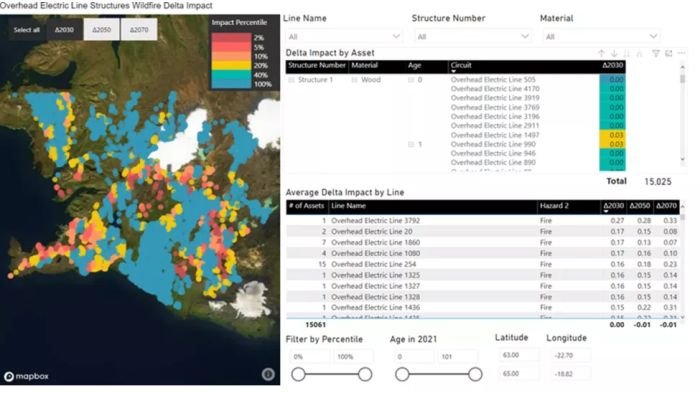
Risk models can help utilities decide when undergrounding is
warranted for parts of their infrastructure (see Figure 1). For
instance, the risks and costs of potential outages due to freezing
rain or wildfires over the next 15 years may be great enough to
justify undergrounding the most vulnerable sections of power
infrastructure as soon as possible.
Wind & Climate Impacts on Sub-Transmission
Structures — An Example
Results from these risk models can provide insight into the
development of mitigation activities to address the current risks.
The results highlight which threats, system vulnerabilities, and
outcomes are the greatest contributors. Next, “what-if”
scenario analyses can estimate the residual risks following
mitigation efforts and repairs. The effectiveness of an activity
can then be measured by the amount of risk reduction it achieved,
and, similarly, the cost efficiency of a mitigation/repair activity
can be measured as the risk reduction achieved per dollar spent.
Together, these measures can be used to identify effective and
efficient combinations of activities to reduce risk in the utility
grid. The risks associated with certain sections of power
infrastructure may justify undergrounding, whereas others may
justify above-ground modifications or repairs.
The risks and costs of potential outages due to freezing
rain or wildfires over the next 15 years may be great enough to
justify undergrounding the most vulnerable sections of power
infrastructure as soon as possible.
Undergrounding strategy and execution
Once the decision has been made to bury power lines, utilities
can start developing strategies for their undergrounding projects.
Undergrounding is complex and can take years to complete,
especially in developed areas. There can be many physical obstacles
to undergrounding, including existing developments, sewer/drain
systems, other utilities like gas lines or data cables, poor soil
quality, bedrock, and more. There can also be regulatory or
permitting, sourcing/supply chain hurdles, and construction safety
considerations to undergrounding projects, such as:
- Sourcing and supply chain — Some
electric utilities may not have the civil construction experience
required to undertake an undergrounding program. Similarly, they
may not have the volume of new underground electric equipment and
materials immediately available. A robust sourcing and supply chain
procurement strategy can help streamline the process of a new
undergrounding program. - Regulatory and permitting issues —
Construction projects require permitting and regulatory adherence.
Depending on location, utilities undergrounding projects may also
require land rights reviews, environmental damage assessments,
wildlife studies, and more. Utilities will need to work with
federal, state, and local government agencies to determine
permitting requirements. Additionally, starting construction will
require reaching agreements with various landowners (public and
private). Ideally, these engagements would start at the earliest
stage of the project, as they can influence its final scope. - Other utilities — Utilities
undergrounding projects face the same challenges as any projects
that involve tunneling. In developed areas, utilities may encounter
other underground utilities like water, gas, and telecommunication
lines. This often requires coordination with other utilities to
acquire maps and guides for “safe digging.” In some
cases, other utilities may not have accurate maps for their
existing infrastructure, which could create complications during
the undergrounding project. Utilities can reduce the chances of
running into other underground utilities by communicating with them
early and often. Utilities may also need to participate in mapping
efforts to help reduce the risk of running into other underground
lines. Planning is crucial and may span months before any ground is
broken. - Physical obstacles — In developed areas,
undergrounding projects may encounter forgotten municipal or
commercial projects like drainage ditches, sewer lines, waste
dumps, etc. Again, utilities can work with cities and local
governments to obtain historical maps and survey results. In
developed or undeveloped areas, undergrounding projects can also
encounter other natural physical objects like boulders, bedrock, or
soil with high rock content. In these cases, utilities can find
existing geological survey data from government agencies or other
utilities that have conducted surveys for their own projects. It
can also be necessary to conduct additional geological surveys
through third-party construction and excavation experts. The
construction methodology (e.g., trenching versus boring) will be
guided by these analyses. - Construction Safety — Undergrounding
construction and field activities present their own unique
challenges compared to overhead electric work. Since undergrounding
projects typically follow roadways, there could be more impact to
traffic control. The safety plans for civil works (trenching and
boring) will differ compared to overhead work like pole
replacements or re-conductoring. Additionally, the excavated soils
or spoils will need to be managed to meet environmental guidelines.
Overall, electric utilities that do not have extensive
undergrounding experience must ensure they address all construction
safety and regulation requirements.
With detailed data, thoughtful analytics, and solid strategy,
utilities can confidently decide when undergrounding is right.
Moving portions of the U.S. power grid underground will ensure its
continued and reliable operation in the face of increasing extreme
weather events.
The content of this article is intended to provide a general
guide to the subject matter. Specialist advice should be sought
about your specific circumstances.