
Critical Infrastructure Security
Water Attacks Show Why Electric and Water Utilities Need Controlled Remote Access
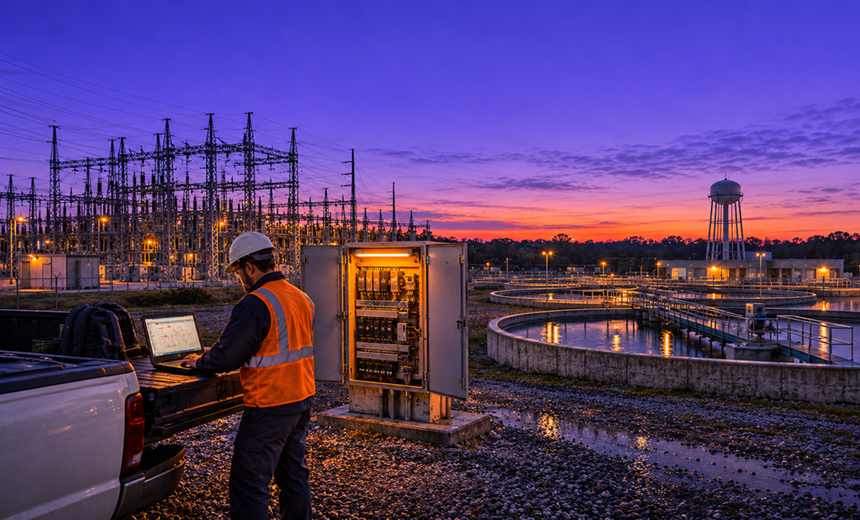
It’s 2 a.m. A pump station or substation is misbehaving, and the vendor that supports it needs access now. A healthy system enables the right person access to the right machine at the right time within minutes. Meanwhile, the inverse must also be true: Everyone else must be shut out. That fundamental litmus test sets a practical standard to build toward.
See Also: EU AI Act: Implementation Guide
Electric and water systems operate under very different rulebooks. In North America, electric utilities have operated under the North American Electric Reliability Corporation’s mandatory Critical Infrastructure Protection standards for nearly two decades. Water is looking at a proposed federal baseline and a patchwork of voluntary frameworks. Yet both depend on similar paths into the control system, including zone boundary controllers, intermediate systems, vendor sessions, always-on tunnels, remote access to human-machine interfaces and shared credentials.
This summer the risks of immature process got real. Over about 48 hours in late July, more than 30 Minnesota community water systems were attacked, and by August the tally had reached 12 states. The FBI and EPA described attackers reaching internet-facing controllers remotely and changing IP addresses and passwords, leaving operators without monitoring and control, and reported effects included loss of pressure and flooding.
Too Slow or Too Open
At Dispel, we’ve seen the full spectrum in our customers’ existing remote access setups. At one end, some very large organizations took four weeks on average to onboard a vendor because the process had been outsourced, and another four weeks to remove one, with a firewall rule open throughout. At the other end, vendors have free rein and the owner can’t see what they’re doing. We’ve also found environments still running Windows XP or Vista with default passwords.
You may already have a virtual private network in place. Better options exist now, and they’re easier to use.
A Tool Is Not a Framework
“We have a VPN” tends to end the conversation when it should start one. A VPN covers encryption in transit and some authentication, only a handful of controls out of many. It leaves the rest unseen, like who approved the access, who reviews the recording, and who responds when something looks wrong. Perimeter entries also include system-to-system links, access appliances and third-party connections. Dragos’ 2026 Year in Review found that 73% of its all-time incident response cases involved a compromised VPN or jump-host credential.
Start with a framework such as National Institute of Standards and Technology Special Publication 1800-45 for water remote access, the SANS Institute’s industrial control systems critical controls or the American Water Works Association’s guidance, then measure your remote access against it. Frameworks offer comprehensive guidance on what to implement. NIST frameworks are industry standard, freely available and recommended. Modern platforms are built around these frameworks, and the right platform helps you monitor for framework adherence with compliance mapping built in for frameworks such as NIST, NERC CIP and International Electrotechnical Commission 62443.
Frameworks can’t be met with products alone. They also need procedures for how access is requested, approved and documented. Those steps land on teams already juggling 40 other jobs. A modern platform keeps them quick and makes audit readiness automatic, so the secure path is the fastest path and the team can get back to everything else.
Why Modern OT Remote Access Is the Better Option
A VPN is a key you hand out and never take back. Just-in-time access works the other way. A vendor requests a session to a specific asset for a specific task, the asset owner approves it before anyone enters, and the path closes when the work ends. The session belongs to a named person, not a shared login, and the owner can isolate and disconnect it if it behaves unexpectedly.
At 2 a.m., the person approving is rarely a security specialist and won’t wait for the security operations center to analyze the request. Our traffic light dashboard gives operators enough context to decide. Green, approve. Yellow, it’s their call or your policy’s. Red, the policy denies it or requires steps that lower the risk first. The dashboard combines risk signals from different tools for the approver, while raw logs still flow to the SOC.
Picture the same 2 a.m. call with this in place. The vendor requests access to the one failing pump controller. The operator on shift sees a green light and approves it. The vendor fixes the problem, the session closes on its own, and the record is already there for the audit.
For seven years, a large municipal water utility in the U.S. Southwest has run a single access layer under close oversight and an internal mandate to keep IT and OT segmented, and that layer has grown from a vendor tool into the platform the team leans on every day. Outside vendors connect through Dispel’s disposable virtual desktops instead of the corporate VPN, the same layer covers every unmanaged device, and self-service MFA reset lets users recover their own access without a ticket, work its administrator estimates is roughly 90 percent of the team’s recurring support burden.
Two habits make it durable. Know who has access today, because continuous monitoring and a physical walk of the plant tend to turn up cellular modems in cabinets and cables bypassing hardened boundaries. And know you can pull back. Well-prepared utilities can cut external access in minutes and keep treating water on local controls, so the platform has to fail to a safe state and do no harm, and it should sit in the OT demilitarized zone, at the boundary between IT and OT, not down at the controllers.
Where the Gap Is Widest
The standard worth building toward is simple to state. You control who can reach your OT, you can let the right person in within minutes, and you can shut everyone else out just as fast. But whether you’re compliant or not, the phone will ring at 2 a.m.
The communities that can least afford a cyberattack are too often the most exposed to one. Dispel launched its Community Power & Water Program to close that gap. It brings the secure remote access large utilities rely on to small water and electric utilities, deployable by existing staff without an infrastructure overhaul, with special pricing for approved applicants. Find the details at go.dispel.com/dispel-community-power-water-program.
Larger utilities can see the same approval flow in a demo at dispel.com/book.