
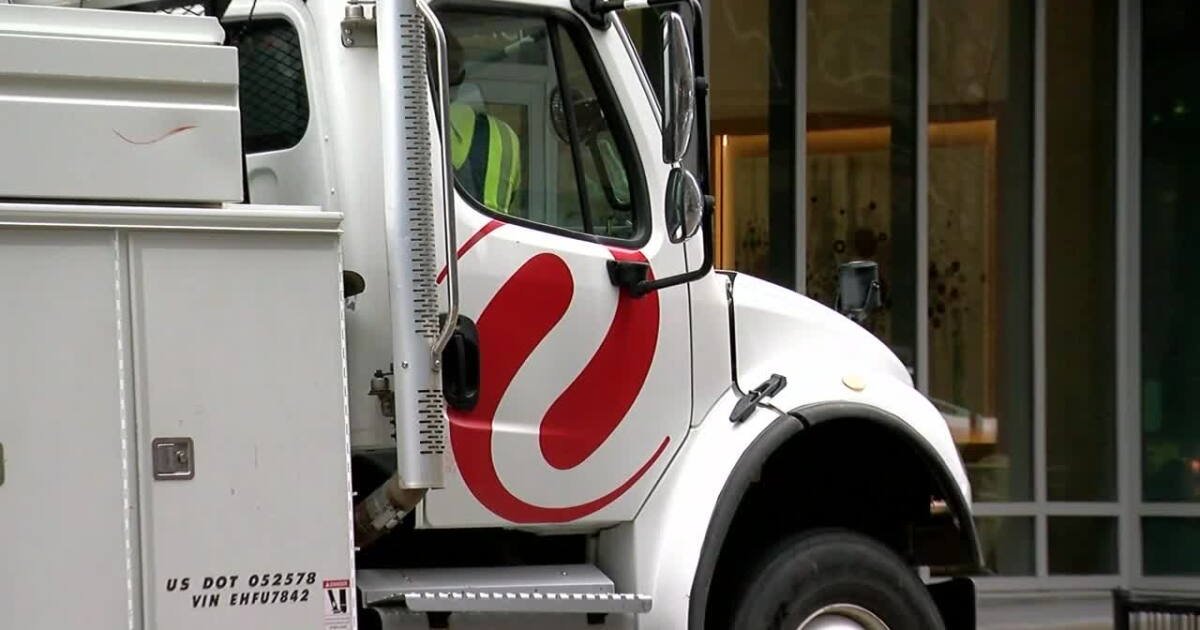
Colorado regulators are considering new rules that could change how utility companies handle wildfire prevention and planned power shutoffs.
On Monday, the public will have a chance to weigh in on those proposed rules.
“I really hope that the Public Utilities Commission takes into consideration that these are, you know, real people and businesses that are being really affected by these decisions,” Jamestown Mercantile Café owner Rainbow Shultz said.
Under the proposed rules, utility companies would be required to establish clearer criteria for power shutoffs, provide advance customer notifications, and explain their decisions.
They would also have to report how many customers are impacted, how long outages last, and whether notifications actually reach people.
“The Colorado Public Utility Commission rulemaking process is in its early stages. We have filed initial and reply comments, and we intend to participate to promote rules that advance safety, accountability, comparability, and continuous improvement for the betterment of Colorado,” an Xcel Energy spokesperson told Denver7.
Xcel told Denver7 that proactively shutting off power is a tool used only when extreme weather conditions exist in order to protect public safety, and one they do not use lightly.
“We consider weather, wind speeds, relative humidity, fuel moisture and temperature as well as critical customers and infrastructure before deciding to implement a Public Safety Power Shutoff (PSPS),” an Xcel Energy spokesperson told Denver7.
For some customers, including small business owners, these shutoffs have meant days without electricity and thousands of dollars in lost inventory.
“For a business this small to lose that much money is, it was very critical. It’s very touch and go if we’re going to be able to make it. For the employees, it was really hard. We were in here with lanterns and lamps in case people in town wanted to come in, but we didn’t have heat because we didn’t have power. It was a dark little place,” Jamestown Mercantile Café owner Rainbow Shultz said.
According to Xcel’s website, the company does not reimburse customers for spoiled food caused by outages. Xcel Energy also does not compensate businesses for lost revenue during a power outage.
“This is true for outages caused by storms and includes Public Safety Power Shutoffs, which we may carry out in periods of high wildfire risk to help keep the public and our communities safe,” the utility said.
Xcel Energy said it has invested nearly $1.5 billion since 2020 in wildfire mitigation across Colorado, including enhanced system inspections, vegetation management, advanced weather monitoring, early wildfire detection cameras and Enhanced Powerline Safety Settings.
“Our 2025-2027 Wildfire Mitigation Plan integrates industry experience, incorporates evolving risk assessment tools, and leverages new technologies to build and improve upon existing efforts to reduce wildfire risk,” the utility said.
Xcel said it’s focused on making future Public Safety Power Shutoffs events smaller, more targeted and shorter in duration.
“A PSPS is used when our other wildfire mitigation methods like our Enhanced Powerline Safety Settings (EPSS), are not enough to sufficiently protect public safety,” Xcel said. “The electric grid is a large, complex system that has been built and expanded over the past century. Electric lines serving one neighborhood may connect to the system differently than those serving a nearby neighborhood.”
Xcel added utilities also divide the power grid into smaller sections or circuits so they can control and isolate parts of the system independently, also known as segmentation.
“During a PSPS, utilities turn off power to entire segments that pose wildfire risk rather than individual homes. This means two nearby houses may have different outcomes if they’re on separate lines or on opposite sides of sectionalizing equipment,” Xcel added. “Factors like overhead lines in high-risk areas, underground lines or proximity to critical infrastructure influence which segments stay energized, so even homes just a few hundred feet apart can experience different outcomes during a PSPS.”
Xcel told Denver7 that even though an area may be served by underground lines, additional power lines serving that area may travel through areas exposed to more extreme weather conditions and higher levels of wildfire risk and may need to be de-energized.
“Following past PSPS events and as part of our ongoing work of implementing our Wildfire Mitigation Plan, we have reviewed each PSPS event in Colorado and identified opportunities to reduce the number of customers affected, strengthen parts of the grid that are exposed to wildfire risk and restore power more quickly when conditions are safe. This includes evaluating additional grid upgrades, targeted system improvements and new planning tools to help limit the scope and duration of future PSPS events,” Xcel Energy said.
Xcel added they contact potentially impacted customers directly via phone calls, emails and text messages. If weather forecasts change and customers are no longer expected to be impacted by a potential event, they contact them directly.
“Whenever possible, we start informing critical infrastructure customers, emergency managers and customers with medical needs 48 to 72 hours before a potential PSPS event and start communicating with all customers up to 48 hours before a potential event. We will decide whether a PSPS is needed up to four hours (or more if possible) before an event and send an updated phone call and/or email. We repeat direct communications at least once per day until all customers have their power restored,” Xcel said.
The proposed rules would apply to Xcel Energy and Black Hills Energy and are not yet in effect.
Xcel Energy said it recognizes the significant impacts Public Safety Power Shutoffs have on residents, businesses and municipal operations, and it takes the decision to implement a PSPS very seriously.
“We appreciate the ongoing feedback from customers, local governments and community partners, and we will continue working together to improve preparedness, strengthen grid resilience and help keep Colorado communities safe,” Xcel told Denver7.
The public comment hearing is Monday at 9 a.m. on Zoom.
“Of course, I don’t want there to be a fire, and I’d rather lose my inventory every year than have a wildfire, but I do think there’s a way for it to be fairer for everyone involved,” Shultz added.
Colorado customers in medium and high wildfire risk areas who are enrolled in one of Xcel’s medical assistance programs can apply for a rebate of up to $10,000 for a whole home or portable battery energy storage system.
“This system can help provide power for medical equipment during a PSPS and give customers more time to plan to get to safety when a PSPS is required,” the utility said.
Coloradans making a difference | Denver7 featured videos
Denver7 is committed to making a difference in our community by standing up for what’s right, listening, lending a helping hand and following through on promises. See that work in action, in the videos above.