
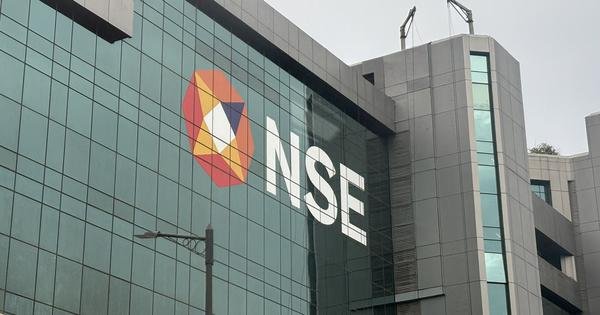
The Indian stock market fell about 1.5% on Monday amid higher global oil prices and concerns about the economic impact of the conflict in West Asia on India.
The benchmark Sensex had fallen more than 1,300 points, or nearly 1.7%, at the end of the session. The Nifty had fallen 360 points, or nearly 1.5%. Investors had lost more than Rs 6.1 lakh crore during the day.
The India VIX index, which measures volatility in the market, spiked nearly 10% on Monday.
The benchmark indices fell for the third consecutive trading session. The stock market had recovered marginally in April after a steep fall in March.
The Indian rupee also weakened on Monday to 95.3 against the US dollar. It had fallen to a record low of 95.4 against the US currency on May 5, before recovering.
Major Asian stock indices had a mixed session on Monday. Hong Kong’s Hang Seng index was up 0.02%, South Korea’s Kospi 4.3% and China’s Shanghai Composite 1%. However, Japan’s Nikkei fell 0.4%.
Energy concerns, economic headwinds
The plunge in the Indian stock indices was seen a day after Prime Minister Narendra Modi urged citizens to revive some work-from-home practices adopted during the Covid-19 pandemic to reduce fuel consumption.
The prime minister’s remark came as oil marketing companies face mounting pressure with global crude prices continuing to rise amid the war in West Asia.
The price of benchmark Brent crude was trading at nearly $104 per barrel on Monday. The price of Brent was $78 per barrel on February 27, a day before the conflict started.
The crude prices jumped on Monday after United States President Donald Trump rejected Iran’s latest proposal to end the conflict, amid a fragile ceasefire.
Petrol in Delhi is currently priced at Rs 94.7 per litre, diesel at Rs 87.6 per litre and domestic liquified petroleum gas at Rs 913 per 14.2-kg cylinder.
On Sunday, Modi also urged citizens to avoid non-essential foreign travel for a year as among the measures he proposed to help the country withstand global economic uncertainties and supply chain disruptions amid the conflict.
Referring to the disruption around the Strait of Hormuz and rising energy prices, Modi said that imported petroleum products should be used “only as per need” to lessen the impact of the conflict on India’s economy.
India imports 88% of its crude oil needs and about half of its natural gas requirement. This mostly comes through the strait, which has been effectively blocked due to the conflict in West Asia.
Modi also appealed to citizens to avoid destination weddings abroad for one year, saying that conserving foreign exchange reserves was “an act of patriotism”. He also advised avoiding non-essential gold purchases during the same period to reduce pressure on foreign exchange outflows.
Written by Nachiket Deuskar. Edited by Sneha