

The stock market has been on a winning streak for almost four straight years. The S&P 500 hit a low of 3,577 on Oct. 12, 2022. Since then, it’s more than doubled to around 7,750 today. The tech-heavy Nasdaq Composite has performed even better, up 155% during the same time period.
But all bull markets come to an end eventually. In fact, three of the most ominous warning signs that preceded the biggest market crashes in history have been flashing red for months. Here’s why history says a market crash might be in store for us, and how investors should react.

Image source: Getty Images.
1. Sky-high valuations
Three of the biggest market crashes in history — the 1929 crash that started the Great Depression, the early 2000s dot-com crash, and the Great Recession crash of 2008-2009 — were preceded by skyrocketing market valuations. When those valuations were suddenly exposed as unsustainable, the market tumbled.
One easy way to measure the valuation of the market as a whole is to use the so-called “Buffett indicator,” named after legendary investor Warren Buffett of Berkshire Hathaway. This is the ratio of the total U.S. stock market value to gross domestic product (GDP), and Buffett himself once called it “the best single measure of where valuations stand at any given moment.”
The Buffett indicator has only been above 100% three times in recent history: It reached almost 150% in 2000, right before the dot-com crash, and it went above 100% right before the Great Recession.
The third time? Right now. The Buffett indicator currently sits above 200%, indicating that the stock market as a whole is severely overvalued.
Today’s Change
(0.38%) +29.35
Index Level
7,757.55
Key Data Points
Day’s Range
7,737.95 – 7,766.01
52wk Range
6,316.91 – 7,793.68
2. High debt levels
Just before the 1929 crash, the number of stocks purchased on margin — that is, with borrowed money — rose to an all-time high.
Before the Great Recession, consumer debt levels soared as real estate investors took out subprime mortgages on houses they intended to “flip” for a quick profit. The nation’s total household debt level in the third quarter of 2008 — right before the stock-market crash — had hit a record $12.7 trillion. When the housing market collapsed, borrowers couldn’t repay their loans, resulting in an economic catastrophe.
In the first quarter of this year (the most recent quarter for which data is available), household debt hit a record $18.8 trillion. Meanwhile, the private credit industry is also facing rising defaults.
3. A bursting bubble
In all three historical cases, the actual catalyst for the stock-market crash was the bursting of a bubble. In 2008, it was the housing bubble; in 2000, it was the dot-com bubble; in 1929, rampant speculation and margin buying had essentially turned the entire stock market into a bubble. Of course, the thing about a market bubble is that you don’t find out it’s a bubble until it pops.
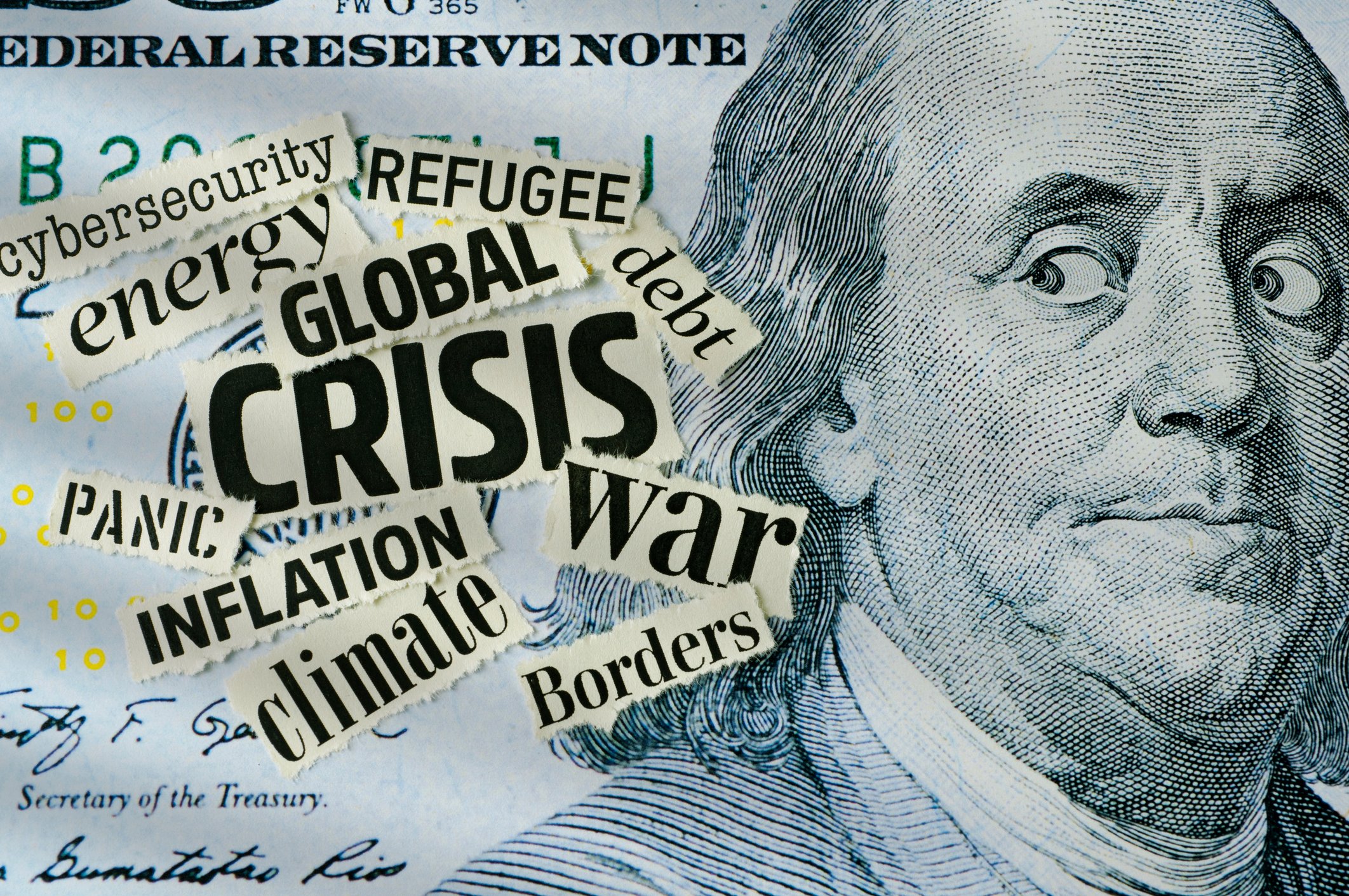
Image source: Getty Images.
Currently, there’s a lot of concern that the high level of artificial intelligence (AI) spending driving the market to new heights is a bubble about to burst. Indeed, the Shiller CAPE (cyclically adjusted price-to-earnings) ratio, which measures the valuation of the S&P 500, has risen above 30, which it has only done twice before; once was just before the stock market crash in 1929, and the other was just before the bursting of the dot-com bubble in the late 1990s. It’s currently at 41, the second-highest valuation on record.
What should investors do?
When so many warning signs are flashing bright red, it’s tempting to pull all your money out of the market and hide it under your mattress. But history shows that investors who keep their money in the stock market during a recession fare much better.
That’s because in most cases, according to research by The Motley Fool, the stock market at least partially recovers before the recession ends. So investors who wait for the economy to improve miss out on some of those gains.
Even if they know the warning signs, nobody can predict exactly when a crash will occur. For example, many people were convinced that a major crash would occur in 2020 due to the COVID-19 pandemic. But while stocks did drop by about 28% in the short term, they rebounded within three months and rose an additional 52% by the end of 2021. Investors who sold at the onset of the pandemic missed out.
While you should be aware of short-term warning signs of a crash, it is usually wiser to stay in the market to maximize your odds of achieving the best long-term financial returns.