

Sharp rebound after the long holiday and recovery to the 66,000 yen level; US tech gains and dividend/share buyback market overcoming high interest rates
1. Weekly Market Overview: Japanese market closes with a strong, broad-based rally following the holiday break
The Japanese market for the fourth week of September 2026 (September 21-25) had an irregular schedule due to the autumn long holiday (Silver Week), with the first three days of the week being market holidays and trading limited to just two days: Thursday, the 24th, and Friday, the 25th.
During this short trading period, Japanese stocks showed an extremely strong upward trend. The Nikkei Stock Average continued to rise after the holiday, following the gains in US high-tech stocks during the break, and successfully reclaimed the 66,000 yen level on a closing basis for the first time since September 7.
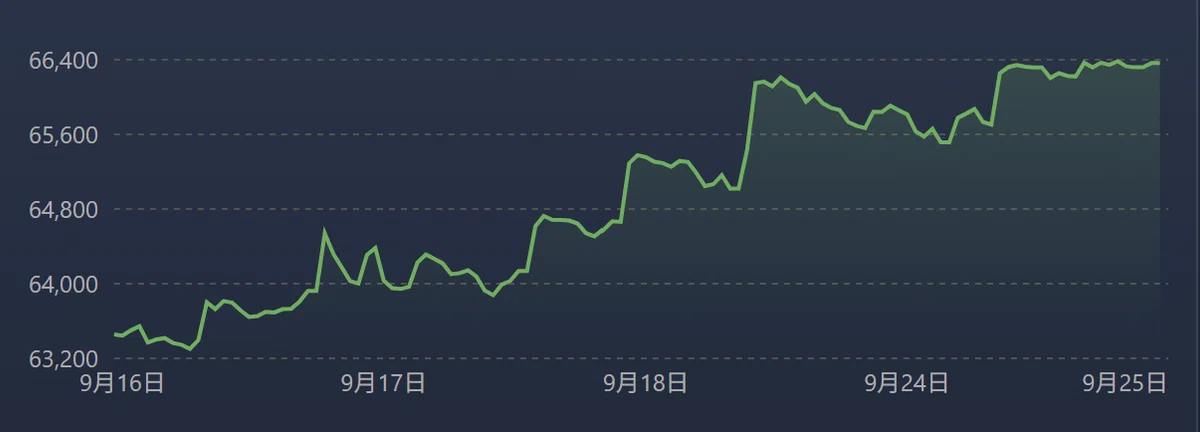
What is particularly noteworthy about this week’s market environment is that despite the strong headwinds of a sharp global rise in long-term interest rates—which, according to conventional market theory, should have triggered a sharp drop in growth stocks—the US market saw the Nasdaq Composite Index hit a record high, and in the Japanese market, semiconductor and banking stocks both surged, revealing an ‘extremely unique and robust market structure’ point.
The ‘stagflation (inflation during a recession) concerns’ stemming from persistent global inflation and high oil prices were dispelled by extremely strong US economic indicators (PMI), and the aspect of an ‘earnings-driven market’ supported by the resilience of the economy became even stronger. Furthermore, toward the weekend, the easing of geopolitical risks, such as reports of a conciliatory mood at the US-China summit and efforts by the US and Iran to seek a phased end to hostilities, strongly boosted investors’ risk-on stance.
2. Deep Analysis of Weekly US-Japan Stock Market Movements and Macro Environment
The most important starting point for interpreting this week’s US-Japan market was the macroeconomic indicators announced in the US on Tuesday, September 22, while Japan was on holiday.
[The Paradox of Soaring US Interest Rates and the Nasdaq Hitting Record Highs]
In the Purchasing Managers’ Index (PMI) announced in the US on the 22nd, the manufacturing data was extremely strong, significantly exceeding market expectations.
In response to this, concerns about monetary tightening rapidly emerged in the US bond market, with the view that ‘the Fed (Federal Open Market Committee) may have no choice but to suppress the economy through interest rate hikes to cool down an economy that is performing too well.’
US long-term interest rates (10-year Treasury yield) rose steadily from the 23rd to the 24th, reaching a high level of ‘5.2%’ at one point. With long-term interest rates, which were previously expected to peak around 5%, easily breaking through that threshold, European interest rates also rose in tandem, and Japanese market interest rates were also forced to rise through the 24th.
Normally, a sharp rise in interest rates increases the discount rate for future cash flows, directly hitting high-PER (price-to-earnings ratio) growth stocks and high-tech stocks. However, the US market this time showed a completely different reaction.
While the NY Dow had many down days and struggled to gain upward momentum, the decline itself was extremely limited. And above all, the high-tech-heavy Nasdaq Composite Index was bought on both the 23rd and 24th, showing an otherworldly strength by updating its ‘market record high’.
This is because the ‘risk of stagflation, where inflation remains high while the economy cools,’ which had long plagued the market, was completely denied by the strong PMI. The conviction that ‘even if interest rates are raised, the US real economy and corporate business sentiment are strong enough to easily absorb it’ spread through the market, creating a powerful market development where growth stocks were confidently bought despite high interest rates.
[Japanese Market After the Holiday: Semiconductor-Led Gains on Thursday and Broad-Based Gains on Friday]
Following this trend of high-tech gains in the US, the Tokyo Stock Market, which resumed on Thursday the 24th, started with buying leading the way.
The Nikkei Stock Average rose by more than 400 yen on the 24th, but the characteristic of this day was ‘extreme concentration on a very small number of major high-tech stocks.’ Localized buying of AI semiconductors drove the market to such an extent that the upward effect of just three major semiconductor stocks with high contribution to the Nikkei Average exceeded the total gain of the Nikkei Average itself.
However, when the next day, Friday the 25th, arrived, the quality of the market changed dramatically.
The Nikkei Stock Average surged by over 800 yen from the previous day, resulting in a “nearly across-the-board gain” with approximately 1,100 stocks rising on the Tokyo Stock Exchange Prime Market.
The factors that completely changed the market sentiment are the following combined supporting materials.
-
Rapid easing of geopolitical risks: The fact that the US-China summit was held in an extremely friendly and conciliatory mood, and reports that the US and Iran are avoiding military clashes and have begun exploring a phased end to hostilities, have eased global concerns over high oil prices and inflation, providing investors with a strong sense of relief.
-
Fierce buying of financial stocks, centered on regional banks: Following the sharp rise in long-term interest rates in the US and Europe on the 24th, the market view that “the rise in domestic and international interest rates will further expand banks’ deposit-loan interest margins” became definitive. Although domestic long-term interest rates did not jump significantly on this day, fierce capital inflows occurred in the financial sector, mainly into lagging regional bank stocks, pushing up the entire market.
[TOPIX’s Phenomenal Rebound and Closing in on 4,200 Points]
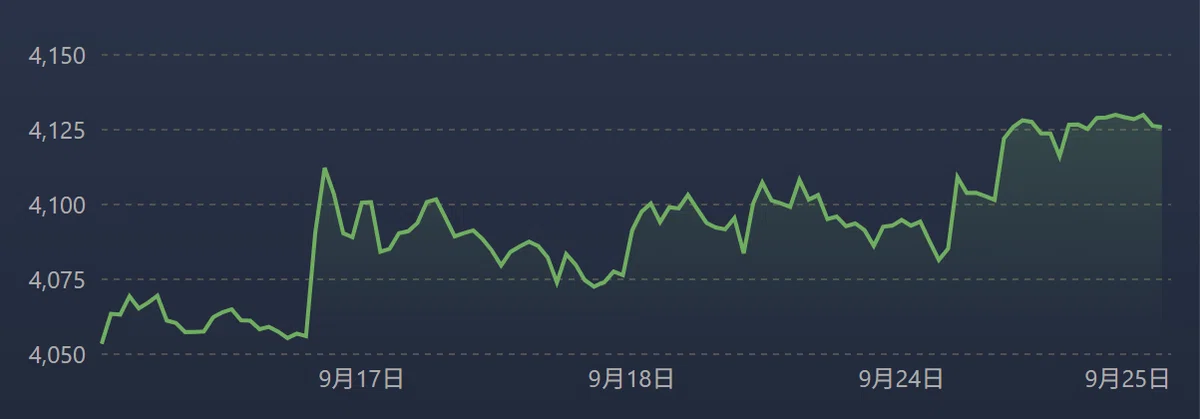
While the Nikkei Stock Average achieved a five-day winning streak due to gains on Thursday and Friday, the movement of the TOPIX (Tokyo Stock Price Index) was even more suggestive.
The TOPIX fell on the 18th before the long weekend and on the 24th after the long weekend, rebounding on the 25th for the first time in three days. However, the single-day rise on the 25th reached a staggering scale of “over 50 points.”
As a result, the TOPIX has suddenly closed in on the “4,200 point” level, which is its all-time high. Compared to the Nikkei Stock Average, the TOPIX is positioned closer to its all-time high, highlighting once again that the current rise in Japanese stocks is not dependent on a few stocks, but is supported by broad-based corporate value improvement across Japanese companies as a whole.
3. Thorough Explanation of Major Market-Moving Factors and Notable Sectors/Individual Stocks
This week, an extremely wide range of materials flew about, including Big Tech’s AI strategy, supply-demand tightness for semiconductor packages, undersea communication infrastructure, historic domestic interest rate hikes, and the vitality of newly listed stocks.
① AI Infrastructure/Semiconductor Package Related: Ibiden as the Protagonist
The most vivid rise in the stock market this week was performed by IC package substrate major Ibiden.
Behind Ibiden’s surge are multiple powerful combined factors.
The first trigger was news from US Meta Platforms. During Japan’s long weekend, it was reported that the new “Agent AI” feature, which automatically handles shopping and was launched by Meta for general consumers, is operating extremely well. The spread of Agent AI will explosively boost demand for CPUs (Central Processing Units) that perform advanced computational processing in servers. In response, CPU giants Intel and semiconductor design major Arm Holdings rose significantly in the US market. Ibiden has long been known as a major supplier of advanced package substrates for Intel, and the benefits of Intel’s surge spilled over directly.
The second factor is bullish remarks by US Nvidia CEO Jensen Huang. CEO Huang presented a phenomenal outlook last week that “total semiconductor demand in 2027 could double from current levels (in monetary terms, etc.).”
Currently, both in cutting-edge AI semiconductors (GPUs) and the CPUs that support Agent AI, the biggest bottleneck globally is “a shortage of package substrates”. In an environment where demand significantly exceeds supply, the structure where demand must concentrate on Ibiden, which has world-class technical capabilities, was reaffirmed, and strong buying gathered.
In the semiconductor sector, Socionext was also bought heavily, but there is a possibility that the “short covering” (short squeeze) against the accumulation of short selling by foreign institutional investors played a stronger role than actual demand buying based on fundamentals.
② Explosion in Undersea Fiber Optic Demand: Sumitomo Electric Industries
In the non-ferrous metal and electric wire sector, a large-scale project announced by Sumitomo Electric Industries on the 22nd attracted the market’s attention.
The company officially announced its participation in the “Transatlantic Optical Submarine Cable Project” planned by Meta Platforms of the U.S., which will connect the United States and France. Sumitomo Electric Industries will be solely responsible for supplying the optical fibers, which are the core components. This is expected to contribute directly to future earnings growth, attracting buying interest. Following the major contract between Corning and Verizon last week, this confirms the reality that direct investment in communication infrastructure by giant hyperscalers is accelerating.
③ Domestic interest rates at a “30-year high” and the broad-based rally in regional bank stocks
This week, a historic milestone was marked in the domestic bond market.
The yield on Japan’s long-term government bonds surged to “3.115%” at one point, reaching a historic high not seen in approximately 30 years, since August 1996.
In this environment of rising interest rates, the stars of the show on the 25th were the banking sector, led by regional bank stocks.
Following the rise in long-term interest rates and the sharp spike in U.S. and European rates, market sentiment shifted rapidly toward the view that “the expansion of interest margins (spreads) due to banks raising lending rates will begin in earnest.” Many regional bank stocks had been left undervalued, leading to a festive atmosphere as one stock after another hit new highs.
④ Sectors with exposed structural difficulties: The ripple effects of power/gas and Oracle
On the other hand, the power and gas sector and some construction-related stocks were forced to trend lower this week.
In a phase where growth stocks like AI semiconductor stocks were surging, there was an aspect of these being targeted for “cash-out selling” to generate funds for those purchases.
Furthermore, what raised market concerns was news surrounding Oracle in the U.S.. Word reached the market that Oracle was “slow to pay” regarding data center construction projects. In response, the stock prices of power and gas suppliers for data centers, as well as some general contractors handling communication construction and contract work, weakened.
This Oracle issue involves the structural power dynamics of the IT industry.
-
Companies like Meta and Alphabet (Google) are positioned closest to general consumers and end-users. Therefore, by providing innovative, high-value-added services such as agent AI, they can directly “raise usage fees (pass on costs)” and generate enormous profits.
-
In contrast, Oracle remains in the position of a “middleware/network operator” that provides the foundation for data centers and the cloud. In other words, it is positioned in the B2B middle ground where it is most difficult to capture added value, and in order for the company to increase its own earnings, it must negotiate price hikes with its incomparably powerful customers, Meta and Google.
-
Therefore, Oracle’s position is extremely difficult, creating a structure where it is forced to exert cost-cutting pressure on the data center construction supply chain.
Conversely, the giant hyperscalers that can actually sell AI as a service to end-users are in an environment where they can raise unit prices without any impact and enjoy high profitability. This “gap in added value” is the essential driving force behind the U.S. Nasdaq market continuing to hit new highs.
⑤ Trends in the growth market and the boom in new listings (IPO)
-
Recruit Holdings: The stock price fell on a weekly basis. Although the U.S. business climate itself is not bad, the jump in U.S. long-term interest rates to 5.2% triggered a valuation adjustment as a growth stock. However, if the U.S. real economy maintains its strength, it is expected to eventually reflect in the profit growth of its core business in the form of an increase in the number of job postings on its subsidiary job search site “Indeed,” so the stock price is seen as likely to rebound quickly as the interest rate hike is digested.
-
Boom in newly listed stocks: On the Tokyo Stock Exchange Standard Market, akippa, which operates a parking lot sharing service, attracted active trading and continued to push its price higher even after listing. Also, Layered, which supports DX (digital transformation) in medical settings and newly listed on the same market on the 25th, also had an extremely smooth initial price formation and a strong start, leaving an impression of improved sentiment in the small-to-mid-cap stock market.
4. Important events and notable indicators for next week
Next week will be an extremely important week spanning “the end of September to the beginning of October.” Domestically, there are dividend rights acquisition and the Tankan survey, while in the U.S., earnings reports that hold the fate of memory semiconductors and employment statistics are pending, with a series of important catalysts that will move the market.
[Key Schedule for Next Week]
Focus Point 1: Capturing end-of-September dividends and the re-acceleration of “share buybacks”
Next Monday, the 28th, is the “final trading day with rights” to receive interim dividends and shareholder benefits for the end of September.
The total amount of dividends for Japanese companies as a whole has been increasing year by year, and it is expected to reach a record high in fiscal year 2026 as well. The last-minute buying demand targeting these massive dividend yields will be a factor that strongly pushes up value stocks like TOPIX from the beginning of the week.
Furthermore, what cannot be overlooked is the rush of “share buyback” announcements ahead of the interim earnings season, which will be in full swing from October to November.
Looking at past statistical data, there is a very prominent trend for Japanese companies to announce large-scale share buybacks in the early autumn when interim earnings are concentrated. Kioxia and others already stunned the market by announcing massive share buybacks during the August earnings announcements, but starting with Kioxia’s earnings scheduled for the end of October, it is considered highly likely that companies with abundant surplus cash due to strong first-half performance will announce large-scale additional share buybacks aimed at improving ROE (return on equity) and capital efficiency. Not only dividend capture, but the expectation of these share buybacks will firmly support the downside of stock prices.
Focus Point 2: The “BOJ Tankan” released on October 1st and corporate assumed exchange rates
The “BOJ Tankan (September survey)” released on Thursday is the greatest litmus test for measuring the true strength of the Japanese economy.
Looking at data such as the leading indicator QUICK Tankan, the business sentiment DI for large manufacturers is rising toward the highest level since the survey began, and business sentiment among domestic companies is extremely good.
The biggest focus here is the “corporate assumed exchange rate”.
The current foreign exchange market temporarily shifted toward a stronger yen following meetings between Japanese and US leaders and financial authorities, as well as remarks by former President Trump. However, the assumed rate for the current fiscal year set by large manufacturers in the previous Tankan survey was in the “151 yen to the dollar” range. The actual current exchange rate is still hovering in the high 150s, maintaining a “still yen-weak level” compared to the assumptions in corporate business plans.
Therefore, there is still plenty of room for full-year earnings to be revised upward, especially for export-oriented companies. Furthermore, the steady progress of “price pass-through” accompanying domestic price increases is also enhancing corporate profitability. If an improvement in the business sentiment DI is confirmed in the Tankan, it will prove to the world the image of “strong Japanese stocks that do not fall even when interest rates rise”.
Focus Point 3: Micron Technology earnings and the “prolongation of memory shortages”
The June-August earnings of US semiconductor giant Micron Technology, to be announced on the 30th (Wednesday), is the biggest event that will determine the global high-tech market.
Micron is one of the world’s top five memory semiconductor companies, alongside Samsung Electronics, SK Hynix, and Kioxia. Looking at the latest data from each company, profits are expanding at a furious pace due to the explosion in demand for high-bandwidth memory (HBM) for AI servers.
If Micron’s earnings and future outlook (guidance) are strong enough to exceed market expectations, expectations for the earnings of South Korea’s Samsung, SK Hynix, and Japan’s Kioxia, which are coming up in about a month, will jump all at once.
It is certain that a positive chain reaction will occur in US SOX index stocks and Japanese semiconductor manufacturing equipment stocks through the rise of the Korean KOSPI index. As Nvidia asserts, “whether the memory supply shortage and high-profit environment will continue beyond 2027”, Micron’s earnings announcement is absolutely unmissable for verifying the truth of this.
Focus Point 4: US September Employment Report and Assessing the “Economic Overheating Risk”
On the weekend of the 2nd (Friday), the US September Employment Report will be released (as a prelude, the ADP employment report and job opening data will also be published).
Looking at current US employment data, the number of job openings is steadily bottoming out and recovering, and non-farm payrolls have also escaped the risk of falling into negative territory, which was a concern at one point, and are maintaining solid growth.
The risk factor sounding an alarm here is “an extreme upside in employment (economic overheating)”.
-
If the number of employed persons remains at a moderate level in line with market expectations, it will be perceived as “employment is stable but not excessively accelerating,” and the market will react favorably and calmly without triggering concerns about rapid additional interest rate hikes by the Fed.
-
However, if the number of employed persons surges significantly above market expectations, the concern that “the US economy is overheating and must be slammed on the brakes through interest rate hikes” will reignite all at once, creating a risk that long-term US interest rates will jump further from 5.2%.
-
In the current market environment, it is necessary to be aware that “economic overheating that invites a sharp rise in interest rates” is more likely to be a risk factor for the stock market than an economic slowdown.
5. Medium- to Long-Term Market Outlook and Investment Strategy
Beyond overcoming short-term interest rate fluctuations lies “a full-scale bull market driven by corporate earnings.”
Structural Reform of the Japanese Economy Embracing Rising Interest Rates
The fact that Japan’s long-term interest rate has exceeded 3.1%, reaching its highest level in about 30 years, is not a temporary shock but means that the Japanese economy has completely transitioned to a “normal economy (a world with interest rates)”.
Unlike the deflationary period of the past, current Japanese companies have acquired the ability to pass on costs under inflation, and as indicated by the Tankan survey’s business condition judgment, they are steadily increasing their earning power.
Rising interest rates not only bring direct profits through the expansion of interest margins in the banking sector, but also function as pressure that strongly encourages companies to efficiently utilize surplus cash (growth investment, share buybacks, and dividend increases). As long as this cycle of dramatic improvement in capital efficiency is turning, rising interest rates are not a factor for a decline in Japanese stocks, but rather an engine for medium- to long-term PBR (price-to-book ratio) improvement.
Practical Portfolio Investment Strategy
In approaching the market from next week onwards, the practical strategies that investors should be aware of are the following two approaches.
-
Making “Large-cap Value and Financial Stocks” the Core to Enjoy Dividends and Share Buybacks: In addition to dividend-capturing movements toward the final day with rights on the 28th, and looking ahead to the rush of share buybacks from October onwards, a strategy of centering on mega-banks and leading regional bank stocks that directly benefit from margin expansion, as well as high-dividend value stocks with abundant cash on hand, is extremely effective. This will be the driving force for the TOPIX to break through its all-time high (4,200 points).
-
Selective Investment in “Genuine AI Growth Stocks” with Pricing Power: The criterion for selecting growth stocks in a high-interest-rate environment is “whether they are in a position to raise prices for customers.” Avoiding companies like Oracle that are sandwiched in the middle and find it difficult to capture added value, and narrowing investment targets to hyperscalers like Meta that can directly raise unit prices for end-users, or exclusive advanced suppliers like Ibiden that hold pricing power amidst a global supply shortage (package substrate shortage), is the key to generating high returns.
6. Summary
In the fourth week of September 2026, the stock market showed extremely strong underlying strength, with the Nikkei Stock Average recovering to the 66,000 yen level and the TOPIX approaching an all-time high, even while facing a historic upheaval in the financial environment where US long-term interest rates jumped to 5.2% and domestic long-term interest rates recorded 3.1% for the first time in 30 years.
The market is now entering a new stage, moving past the ‘fear of high interest rates’ and straightforwardly buying into ‘resilient real economy and corporate profit growth’.
The October market, starting next week, is packed with powerful catalysts to drive stock prices higher: dividend rights acquisition, confirmation of favorable fundamentals through the Bank of Japan’s Tankan survey, expectations for strong earnings from Micron Technology, and the autumn rush of share buybacks. While calmly assessing interest rate fluctuations caused by the upcoming U.S. employment report, continuing to firmly capture the ‘two major trends’—banking and value stocks that leverage rising interest rates, and cutting-edge AI technology stocks with overwhelming pricing power—will serve as a reliable guide to winning in the autumn harvest market.