
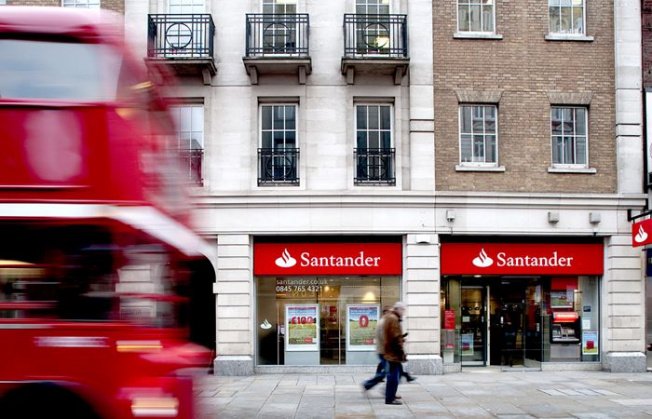
The UK’s housing system costs the economy at least £1.5 billion every year, research by Santander UK reveals.
The research is based on independent economic analysis from WPI Economics and a survey of over 2,000 consumers by JL Partners.
It highlights that nearly one in four (23%) will have experienced a property chain fail, which is costing consumers £560m each year, with a further £950m lost to the wider economy, alongside additional consequences caused by a complex and slow process.
There are over half a million (530,000) failed housing transactions each year in England and Wales.
The economic analysis shows that the direct cost to consumers of this through expenditure on elements such as mortgage and solicitors’ fees that consumers cannot recoup, is £560 million annually.
It shows that this is 40% higher than the £400 million estimate used by the Government earlier this year.
The research reveals that approximately 85% of people who experienced a transaction reported some sort of financial loss. While the average cost stands at £1,240 per failed recent transaction, one in five people reported losses in excess of £2,000.
There are also repercussions on the broader economy, which include the loss of work output due to stress and the time taken to buy a property within work hours (£380m per year), the cost of people’s reduced wellbeing (£400m) and wasted leisure time (£170m).
Beyond failed transactions and the very real costs associated with them, it found that difficult and stressful processes deter activity has also caused housing misallocation and a reduction in the liquidity of the property market.
It reveals that 28% of respondents said they are less likely to move again. By contrast, a more streamlined process would make 88% of people who moved recently more likely to move again in the future.
Misallocation of housing brings considerable socio-economic effects, reducing workforce mobility, fewer larger homes for growing families and slowing housing chains.
Santander UK head of homes David Morris says: “Buying a home should be a moment of excitement and hope, but for too many people, it’s an uncertain and exhausting process, that drains their mental, emotional and physical health.”
“The homebuying journey is still operating in the confines of a framework that was established a century ago. This antiquated system is an increasingly heavy anchor weighing on the economy and fixing it must be key.”
“While the Government has put the housing market firmly on its agenda – as this research shows – the scale of the challenge remains largely underappreciated, and that’s why we’re calling for powerful reforms to give buyers and sellers more confidence, ease the financial and emotional strain and create a housing system fit for the needs of today’s consumers and economy.”
Also commenting on Santander’s research, PEXA UK chief executive officer Joe Pepper adds: “We have a government that is putting the housing market at the centre of its economic growth plans, and steps are being made to address some of the pain points at the front end, but these figures from Santander are a sobering reality check.”
“The fact that over half a million transactions fall through every single year at a cost of £950M is proof that we really do need to solve the issue at its core – something that simply building more stock cannot do on its own.”
“When transactions cause more stress to borrowers than deemed worth it and they start to give up, as this research shows, we need to find a way to put more certainty and security into the process.”
“The reality is the back-end infrastructure lets conveyancers down, causing over half a million transactions to fall through. We need greater digitisation to facilitate more seamless transactions. That means industry wide standards for data to flow between all parties to increase security and reduce fraud risk, and urgent reform of the way settlement and lodgement happens.”
“As it stands, this can take weeks with all parties left vulnerable, but automation of this process could mean that a title is lodged almost instantly when the funds are released.”
“This is exactly why we have launched PEXA in the UK, with the Sale & Purchase solution aiming to do just that via the use of PEXA Pay, the seventh net settlement payment system in the UK, with the Bank of England acting as the settlement service provider. It is designed especially for property transactions.”
“We need strong investment in technology that innovates the UK property market, not only for the sake of everyone’s sanity, but also to help the market realise its economic potential.”