
The UK’s accelerating defence investment is creating a new source of demand for commercial property, with the sector potentially requiring up to 3 million m² of additional industrial and logistics space, alongside almost 250,000m² of offices and research facilities.
The new figures – initially reported by Reuters and based on analysis by the UK-based property consultancy firm, Savills – underline how the UK’s rearmament drive is extending beyond traditional manufacturing sites. Defence firms are increasingly seeking offices, laboratories and high-specification facilities that are capable of supporting emerging technologies, such as drones, cybersecurity and artificial intelligence (AI).
Savills estimates that increased defence spending across Europe could generate demand for up to 37 million m² of property over the next seven years. In the UK, meanwhile, up to 3 million m² could be required for industrial and logistics operations, with an additional 250,000m² for offices and research and development (R&D) facilities.
Growing defence demands are reshaping the domestic property market
This shift is prompting property companies to actively target defence occupiers for sites that might previously have been marketed towards life sciences, technology or financial services businesses.
Jennifer Townsend, a partner at the London-based Knight Frank Estate Agents, told Reuters that the defence sector was no longer solely focused on munitions and that companies were increasingly looking to locate close to research universities to access specialist talent. The so-called ‘Golden Triangle’ between London, Oxford and Cambridge is therefore emerging as one area benefitting from the trend.
In London’s Canary Wharf, for example, property developer LS Estates is sounding out defence and AI companies for 17 Columbus Courtyard – a newly refurbished nine-floor office building. The £100m-plus refurbishment had originally been aimed at life sciences companies, with as much as 60% of the building being earmarked for laboratory space.

However, interest from the life sciences sector has been weaker than expected in the short term, while the changing requirements of defence and technology companies have created a potential alternative market.
The building includes reinforced floors, backup power capabilities and advanced ventilation, while Canary Wharf’s managed estate and security infrastructure could also appeal to defence organisations that are handling sensitive work. Reuters reports that some defence firms are also looking towards Westminster due to its close proximity to the UK’s political decision-makers.
Industrial property demand follows UK expansion of defence manufacturing
For industrial property providers, this opportunity is more closely tied to the physical expansion of the UK’s defence manufacturing base.
The UK’s largest investor in large-scale logistics and warehouse real estate investment trust (REIT), Tritax Big Box, has identified defence as a potential growth sector and is exploring demand from prospective occupiers.
Meanwhile, the world’s largest privately owned industrial and logistics real estate developer, Panattoni, is in discussions with defence firms about space near its ongoing redevelopment of the former Honda factory in Swindon, Wiltshire.
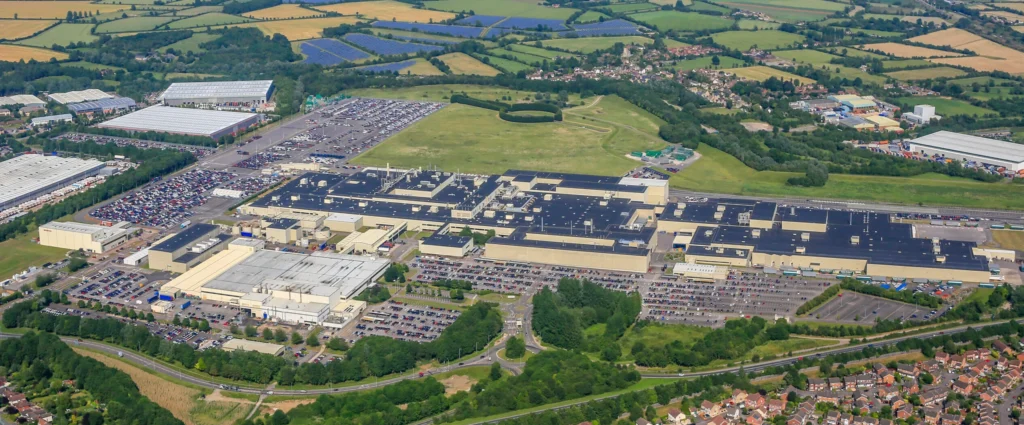
The clustering of suppliers is also becoming an important consideration. Panattoni said defence companies, like firms in the Formula One and wider automotive sectors, tend to locate close to one another, creating potential demand for further industrial capacity around established clusters.
This trend reflects the wider expansion of UK defence manufacturing, as was initially reported by ADS Advance on 29 September. Research conducted by Cushman & Wakefield found that the UK accounted for 34 of 197 new defence manufacturing investments announced or opened across Europe between January 2024 and August 2026 – the largest national share across the continent.
This investment spans the development and manufacturing of munitions, combat aircraft, drones, autonomous systems and naval shipbuilding.
With defence investment increasingly covering both advanced technologies and production capacity, the property market is becoming another part of the infrastructure supporting the UK’s expanding defence industrial base.