
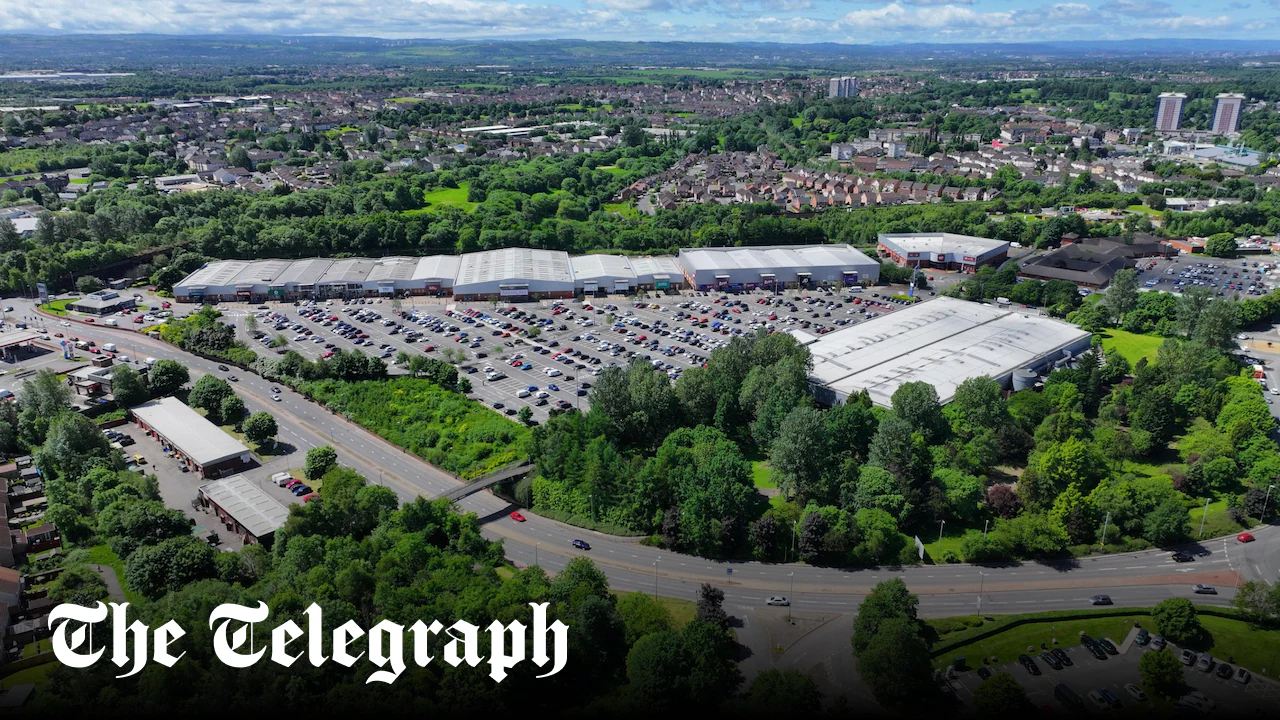
But the booming demand is running up against a supply shortage – potentially leading to a crunch for retailers.
Knight Frank research suggests just 21 retail warehouse schemes are likely to be delivered before 2033, adding about 2.7 million sq ft of space over eight years.
Retailers, by contrast, took on roughly 7.5 million sq ft of retail warehouse space in 2025 alone.
“Land is finite,” says Springham. “The UK is a pretty small island at the end of the day. There is still strong occupational demand and frankly, we’re not building much more.
“The audience in terms of tenants for retail warehousing is far broader than people maybe realise. You’ve got a lot of demand from a lot of players.”
With so little space available, retailers are becoming increasingly competitive in their attempts to secure sites, paying premiums for future space or even trying to buy properties years before they become vacant.
“We’re seeing retailers trying to buy units so they can secure that space several years down the line,” says Reed. “Competition for larger stores has become particularly fierce.”
Yet there is little prospect of a wave of new developments.
Planning restrictions designed to protect town centres, together with higher construction and borrowing costs, have made new schemes difficult to justify.
“It is, at the moment, cheaper to buy a retail park than it is to build one,” says Reed.
Retailers say the planning system itself has become a significant obstacle.
One senior retail source says applications that once took around 13 weeks can now take more than twice as long and up to two years in some cases.
Where development does happen, it is more likely to involve a handful of units anchored by a supermarket than the sprawling retail parks built during the 90s boom.
Existing sites are also increasingly under pressure from housing developers.
In London in particular, where Knight Frank argues retail warehousing is already in short supply, residential values often make redevelopment attractive.
“We’ve got to stop thinking of out of town and high street as binary forces,” says Springham. “You don’t want a robbing Peter to pay Paul situation whereby you penalise retail warehousing in an effort to get things going back into town centres.”
If current trends continue, retailers may well find themselves with no retail park space left.
“If we are sleepwalking towards a supply crisis,” Knight Frank warns. “This should be the wake-up call.”