
-
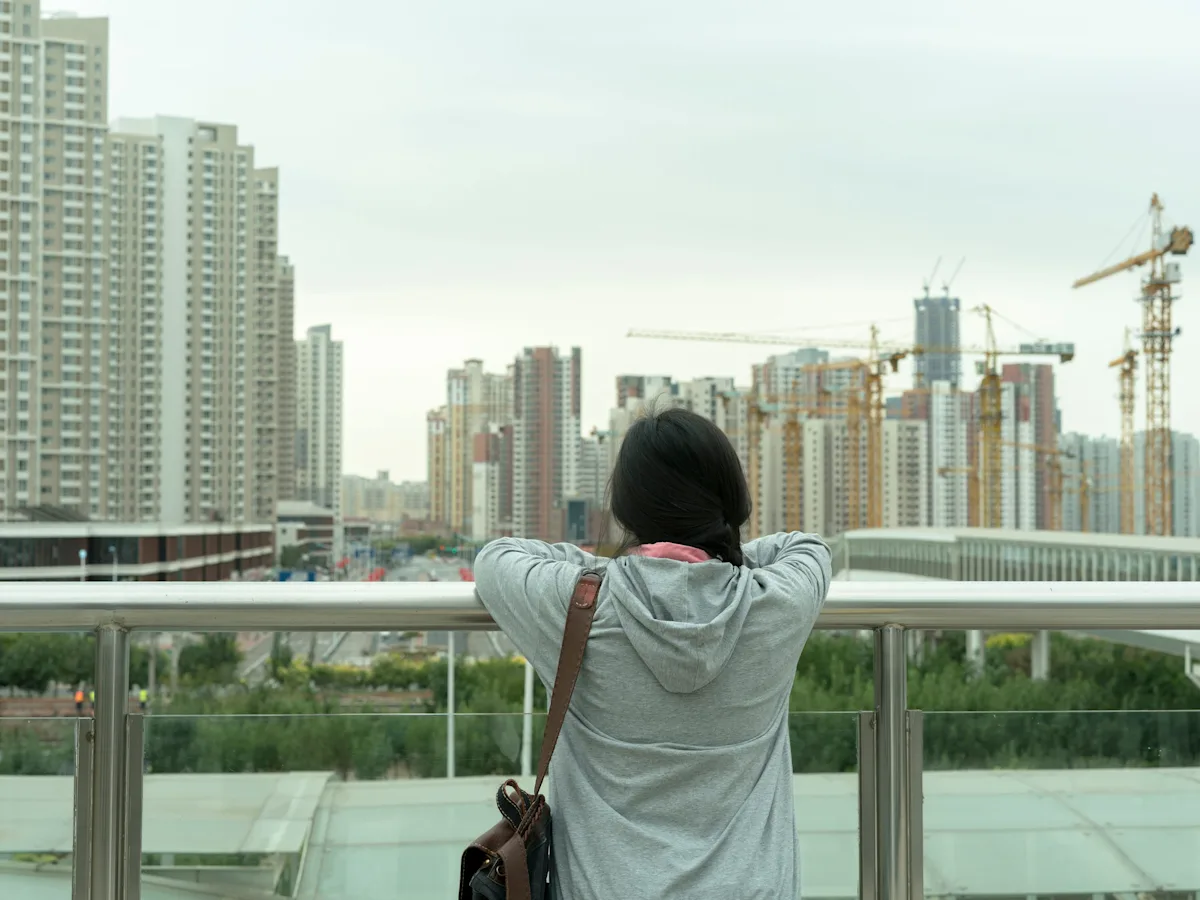
Tens of thousands of people in China are refusing to pay their mortgages for uncompleted apartments.
-
It’s adding to market concerns that the country’s real-estate debt crisis could get worse.
-
The mortgage boycott is a protest, not an inability to pay, and it raises the risk of social unrest.
China’s property market is under duress.
Property construction in China has slowed over the last two years for reasons including COVID-19 movement restrictions and a cash crunch that constrained the financing of construction activities.
Now, tens of thousands of homebuyers — as estimated by Bloomberg — in China are refusing to pay their mortgages for uncompleted apartments. More than 320 projects in the world’s second-largest economy are at risk of boycotts, according to crowdsourced data on GitHub account “WeNeedHome.”
The halt in construction activity could impact 4.7 trillion Chinese yuan, or $696 billion, worth of homes in China. It would take 1.4 trillion yuan, or 1.3% of the country’s GDP, to complete the construction projects, Bloomberg Intelligence analyst Kristy Hung estimated.
It’s all contributing to concerns that the country’s real-estate debt crisis could get even worse. And, as property and related sectors account for roughly one-third of China’s $18 trillion GDP, there are fears the fallout from the mortgage boycotts could spill over into the global economy.
Here’s what China’s mortgage boycotts are about and why they matter.
Why are people protesting in China right now?
In China, property developers can start collecting mortgage payments before apartments are completed — which, like in many other countries, has been taking a longer time than expected due to the pandemic.
However, Beijing started clamping down on excessive borrowing in 2020, leading to last year’s Evergrande debt crisis. The industry-wide cash crunch has since spilled over to other developers and led to even more stalled projects, spurring concerns that buyers may never see apartments they have been paying for.
China’s once red-hot property market has continued to slump. As of June, home prices in China had been falling for 10 straight months, while disposable income was down for the fifth consecutive quarter, so households are feeling the financial squeeze as well.
Homebuyers of stalled projects are, in short, very unhappy.
“Many pre-sale homebuyers have become disgruntled with developers who have run out of cash to complete the projects they have already paid for,” wrote Andrew Lawrence, an Asia property analyst at TS Lombard, a London-based consultancy.
“Many prospective buyers will be watching to see how the authorities react to this mortgage boycott, which in the short term is spilling over into non-payment of loans and non-delivery of materials by suppliers and lower-level developer sales,” Lawrence added in the note, written Thursday.
Despite pandemic curbs, in-person demonstrations have sprung up in various cities, such as a 200-strong protest in the central Chinese province of Hubei on Wednesday, The Wall Street Journal reported. Groups of buyers have also banded together to send letters threatening to stop paying mortgages until construction resumes.
It’s unclear how widespread these protests are, as censors are clamping down on information about the mortgage boycotts.
Why did people stop paying their mortgages in China?
The slow progress — if any at all — on construction projects over the past two years has irked and spooked buyers who just want their homes, Bo Zhuang, a senior sovereign analyst with Boston-based investment management firm Loomis Sayles, told Insider.
“It’s not because they can’t or don’t want to pay, it’s a protest rather than an intentional default,” Zhuang said of the mortgage boycotts.
Those refusing to pay mortgages are trying to get the central and local governments’ attention — and they got it, Zhuang added. Because developers use mortgage payments to finance new property projects, the fallout from non-payments is adding to the existing cash crunch.
Regulators are mulling a mortgage holiday proposal that will allow homebuyers of stalled projects to suspend payments without penalties, Bloomberg News reported Monday, citing people familiar with the matter.
The central government will also likely prod local governments to look for solutions instead of intervening directly, said Zhuang. “You can’t roll out one model to fit each project because each project has different problems on the ground,” he added.
Solutions could include the takeovers of projects by state-owned developers, or technical solutions like adjusting the specifications of land use, said Zhuang.
What’s the big deal with real estate in China?
Authorities are concerned about the situation because real estate accounts for up to 30% of the country’s economy and up to 70% of middle-class household wealth.
Even so, China’s mortgage boycotts are unlikely to cause an immediate implosion in the Chinese banking system as the institutions’ exposures to pre-sale mortgages are small, said Zhuang.
Financial services firm Morningstar estimates a 2.4% hit to the profits of China’s 16 major commercial banks even in a scenario where authorities do not step in to ensure buyers get their apartments.
“We believe the mortgage issues will be small in scale and not post significant threats to the financial system, as the root cause of this problem is not a sharp deterioration in households’ balance sheets, but fear over developers’ liquidity,” Iris Tan, a senior equity analyst at Morningstar, said last week.
However, a prolonged cash crunch spanning three to five years could strain the financial system and hit external debt payments, Zhuang added.
Why are the protests in China so significant — and what are the potential dangers?
Since pre-sales made up 90% of all property sales in China in 2021, there are concerns the mortgage boycotts could further erode confidence in the country’s real-estate sector.
“If end-buyers step back from pre-sale contracts, preferring instead to acquire completed projects or wait for lower prices, then the wholesale liquidation or reorganization of developers will be required. How the authorities respond to this boycott is therefore of great significance,” wrote TS Lombard’s Lawrence.
The boycotts are also more than a financial event. They are bad for optics and raise the risk of social unrest at a sensitive time for the Chinese Communist Party, which will be holding its 20th national congress in the fall when President Xi Jinping is expected to secure his third term in office.
After all, as Zhuang said, “this year is supposed to be about stability, but it has turned out to be not a year of stability.”
Read the original article on Business Insider