
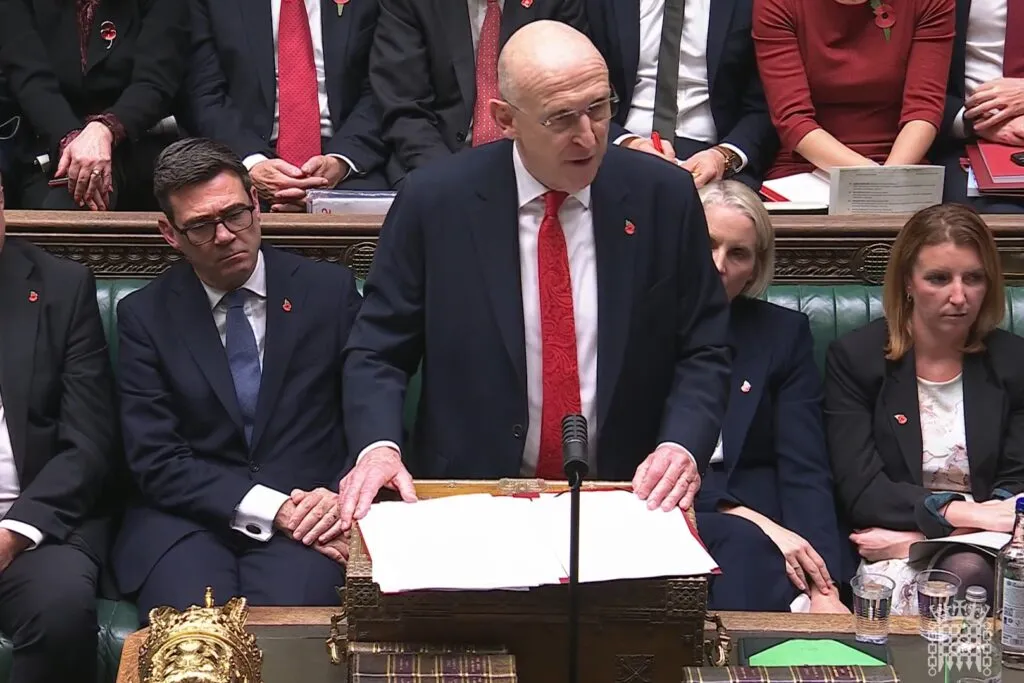
Housebuilders have branded the Autumn Budget “disappointing” and “lunacy” after chancellor John Healey failed to address viability challenges and raised tax rates on rental income by an extra 2%.
Landlords in England, Wales and Northern Ireland will face higher income tax rates on property income from April 2027, with the additional rate rising to 49% in a bid to raise an extra £1bn a year for the Treasury.
Healey also revealed that he was “drawing the line on constant changes to building regulations”, with no more major changes planned in this parliament, except where safety-critical.
He also said government would remove biodiversity requirements for brownfield sites in a bit get more council homes built.
Additionally, Healey promised to make all land sold to social landlords VAT-free, and committed an extra £1.5bn for social and affordable housing, as reported on Monday.
Absent from the Budget was mention of stamp duty or any measures to address the viability crisis in the sector.
The Office for Budget Responsibility’s (OBR) Budget response included a sharp downgrade for growth, cutting its estimate for next year from 1.5% to 1%. It has lowered its five-year forecast of net additions to housing stock by 190,000 compared with its March forecast and expects the Your First Home scheme to “only have a marginal impact on housing supply given, its limited overall size”.
Vanessa Hale, chief executive of Real Estate:UK, said: “This Budget fell short of what’s needed to address the viability crisis blocking the renewal of cities and towns, which has seen property development largely cease in much of the UK. It needs urgent and bold intervention and sadly, this Budget did not deliver
She said RE:UK supported “the positive measures around accessibility to homeownership, increased funding for affordable housing, accelerating devolution where real estate has an integral role to play, and the qualified ban on new building regulations.”
But she added that these gains “are rapidly being offset by other regulatory burdens, additional taxes, and rising construction and operational costs, all of which the government needs to urgently address over the coming months”.
The decision to add a further 2% tax to property income, on top of a previously announced 2%, sparked a strong backlash, with Andrew Lloyd, managing director at property data firm Search Acumen, stating that landlords “will feel an underhand blow from the chancellor today”.
He added that the move was “a concern for small and accidental landlords whose margins have already been eroded this year and we will undoubtedly see this impact in supply and rents over the next year”.
Greg Tsuman, managing director for lettings at London estate agent Martyn Gerrard, said the tax rise for landlords would “finish off” the sector and that the government “may as well criminalise renting out a property”.
Tsuman added: “The OBR was already warning that the level of tax being imposed on landlords was likely to drive up rents and reduce rental property supply. This is lunacy and I fear that the government is actively trying to dismantle the PRS.”
Catherine Williams, head of living at Addleshaw Goddard, said the housing sector “needed something more” from the chancellor to boost investor confidence.
“This was a steady-as-you-go Budget for housing,” she added. “But the bigger issue remains. If we want to see more homes built, we need to create the right conditions for private sector investment alongside continued support for affordable housing.
“Nothing jumps out as helping them do that, so some London sites particularly will fail to cross the viability thresholds needed to get on site and start building.”
Meanwhile, the chancellor also confirmed that the Your First Home scheme will be launched next spring, with the Treasury providing £4.7bn in funding. It will help first-time buyers by supporting a 2.5% deposit with a government equity loan to purchase new-build homes, with income caps confirmed as £110,000 per household, or £140,000 inside London.
The government also confirmed the level of fees to be paid by developers, starting at 1% for the first 100 homes sold; rising to 3% between 101 to 250 homes; and 4% for more than 250 homes.