
Investing.com — U.S. President Donald Trump warned Iran against further retaliation as the joint U.S.–Israeli military campaign entered its second day, with Tehran vowing a “painful” response and fresh strikes reported across the region.
Trump told CNBC that ongoing U.S. military operations against Iran are “moving along very well — ahead of schedule,” as the conflict between Washington, Israel and Tehran intensifies.
Iran’s Islamic Revolutionary Guard Corps (IRGC) said it would deliver harsh retribution for the killing of Supreme Leader Ayatollah Ali Khamenei, while Iran’s military launched new attacks on U.S. bases in the Middle East. Eight people were killed after a missile struck the central Israeli city of Beit Shemesh, Israel’s emergency service Magen David Adom said.
U.S. Central Command said three American service members were killed and five seriously wounded during Operation Epic Fury, with major combat operations ongoing.
Trump cautioned that any escalation would be met with overwhelming force and said the bombing campaign would continue “uninterrupted throughout the week or as long as necessary.”
Explosions were reported again in Tehran after hundreds of Iranian targets were struck Saturday. Iran also hit a port in Oman and continued attacks on the United Arab Emirates and other neighboring states, in what analysts see as an effort to widen the conflict and raise costs for Washington and Israel.
Several senior Iranian leaders were killed in the strikes, including IRGC Commander Mohammad Pakpour, Defense Council Secretary Ali Shamkhani, Defense Minister Aziz Nasirzadeh and Armed Forces Chief of Staff Abdolrahim Mousavi.
Iran has entered what state media described as a “transitional period,” with a three-man council set to run the country until a new supreme leader is chosen. Crowds in parts of Iran have both mourned and protested following Khamenei’s death.
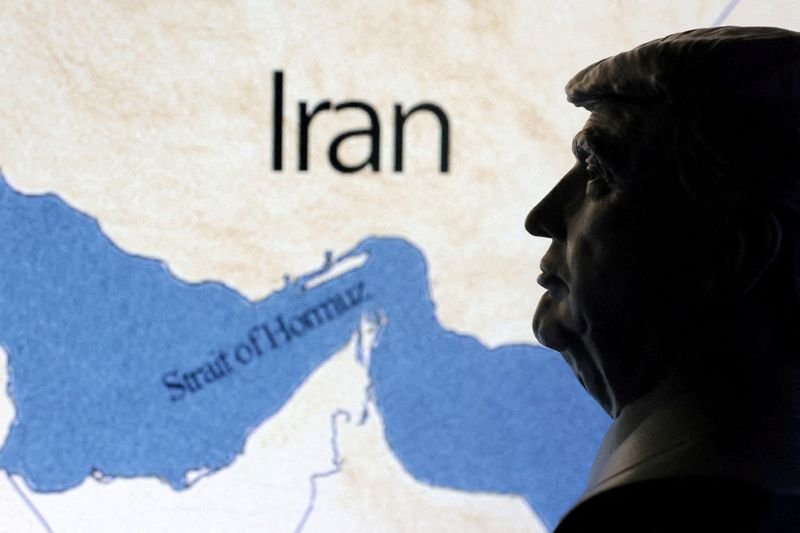
The conflict is already rippling through energy markets, with an oil tanker struck and others diverted from the Strait of Hormuz, raising concerns about supply disruptions. Despite the escalation, Vital Knowledge analyst Adam Crisafulli said markets may ultimately absorb the shock.
“The consensus view is that this latest attack will be similar to the Maduro seizure in Venezuela and the previous round of strikes against Iran: a relatively quick and precise ‘shock and awe’ campaign conducted mostly in the air … that doesn’t last more than a couple of weeks,” he said.
Barclays’ Ajay Rajadhyaksha struck a more cautious tone. Iran “may lack the ability to sustain a military campaign,” he said, suggesting the missile strikes could be aimed largely at domestic audiences. Still, he warned the tail risk of a wider conflict has risen and advised investors not to be “too early to buy any dip.”
“It remains to be seen” whether Trump’s latest warning will deter further Iranian escalation as the situation continues to evolve.
Impact of the conflict on global markets and the energy sector
Earlier today, the abrupt shutdown of Dubai’s International Airport had led to massive flight cancellations, given its strategic role as a critical transit point connecting international flights. Major Gulf carriers, including Emirates, Qatar Airways, and Etihad, have suspended their operations indefinitely.
Analysts are broadly expecting volatility across equities, currencies and commodities but stopping short of calling for a lasting dislocation. According to Crisafulli, history suggests geopolitical shocks tend to have only fleeting effects on U.S. stocks. Past episodes of heightened geopolitical tension have typically produced “ephemeral” market impacts.
Still, Barclays’ Ajay Rajadhyaksha warned investors not to rush into dip buying, arguing the risk-reward is not yet compelling and that markets may be underpricing the chance of further escalation. He suggested a more attractive entry point could emerge if the S&P 500 were to fall by more than 10%.
It is very likely that will gap higher at today’s open as investors de-risk and move into safe-haven assets following this weekend’s geopolitical developments.
“Trying to gauge the extent of that move is obviously pretty difficult, though I’d flag $5,400/oz followed by the late-Jan record high at $5,595/oz as the key levels to watch to the upside,” Michael Brown, senior research strategist at Pepperstone, told Investing.com.
“I’d not be at all surprised to see some degree of any initial spike higher fade as trade progresses. Markets are notoriously terrible at accurately pricing geopolitical risk, with participants tending to flip to an extreme view, before more rational heads slowly but surely prevail,” he added.
Heightened Middle East tensions have disrupted tanker traffic through the Strait of Hormuz, a key oil chokepoint. Analysts warn oil could spike toward $100 if risks escalate, while limited OPEC spare capacity and potential shipping disruptions leave energy markets vulnerable to further volatility.
RBC’s Helima Croft warned the IRGC could disrupt Strait of Hormuz traffic without formally closing it by using asymmetric tactics that deter shippers and insurers. She added regional leaders had cautioned Washington about contagion risks, flagging $100+ oil as a “clear and present danger” if tensions escalate.
In foreign exchange, HSBC expects the U.S. dollar to hold the upper hand in the near term as geopolitical risk rises. Strategist David May said the greenback’s haven appeal remains intact, even though its initial strength during the 2025 Iran conflict faded quickly.
Additional reporting by Simon Mugo and Tanay Dhumal