
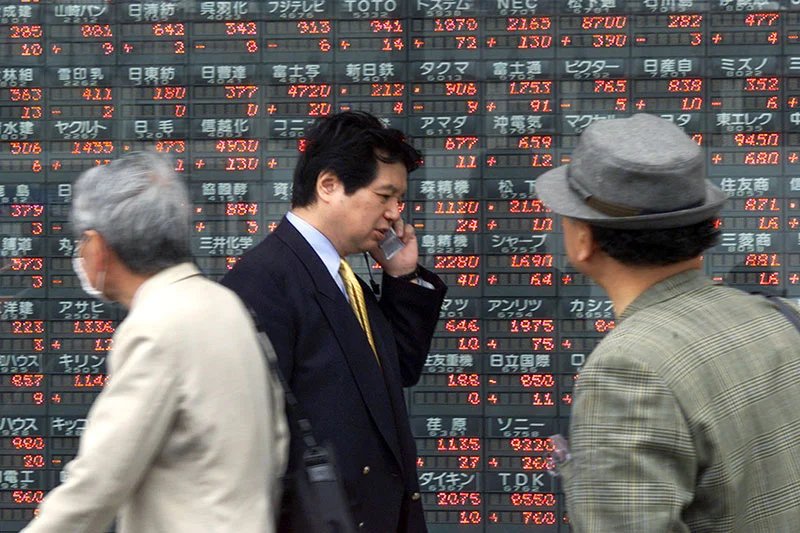
Investing.com — Asian stocks edged higher on Wednesday as investors awaited the Federal Reserve’s interest-rate decision, with gains in South Korea and Japan helping the region recover from recent losses.
The index rose about 0.2%, while South Korea’s gained 0.9% and Japan’s rose 0.6%. Hong Kong’s { slipped 0.2%.
U.S. equity futures were also modestly higher, with andS&P 500 Futures gaining 0.2%, each. Markets are pricing a 92.4% probability of a 25-basis-point Fed hike on Wednesday, up sharply from 59.4% a week earlier, which would mark the first increase since 2023.
The Bank of England follows Thursday and the Bank of Japan on Friday, making this a pivotal stretch for global monetary policy.
Bond markets have been under pressure ahead of the decision. The briefly topped 5% on Tuesday, its highest since 2007, before easing to around 4.99% in Asian trade. The move reflected weaker Treasury buybacks and concerns over fiscal deficits, heavy debt issuance and AI-related financing needs.
Chip stocks rebound as AI debate shifts toward economics
Asian technology shares were mixed. rose 2.3% and gained 1.5%, while fell 4%. gained 1.6%, rose 4.6%, and slipped 0.2%.
OCBC Head of Wealth Advisory Chez Anbu said markets remain resilient but could trade sideways until there is greater clarity on Fed policy, inflation and September seasonality.
OCBC remains constructive on equities while advocating diversification, lower-volatility and income-generating assets, selective participation in the long-term AI theme and broader exposure across the technology value chain.
Oil offered some relief, with down about 0.6% around $108 a barrel after a roughly 20% gain this month.
Supply concerns remain tied to the war involving Iran and disruptions around the Strait of Hormuz, while Saudi Arabia’s East-West pipeline remains affected by attacks. U.S. crude inventories also rose unexpectedly, helping temper the rally.
China data highlight uneven recovery; Indonesia gets policy boost
Mainland China’s rose 0.6% and the gained 0.5%. August industrial output rose 5.2%, but retail sales grew just 0.4%, while fixed-asset investment fell 7.2% in the first eight months and property investment dropped 19.9%, highlighting weak domestic demand despite resilient factory activity.
Hong Kong technology shares were mixed, with falling 0.5%, 1.3%, 1.22% and 1%, while MiniMax jumped 5.2% and Z.AI gained 6%.
Maybank analysts said the AI slowdown debate reflects concerns over monetization as model prices fall and capex rises, rather than a halt in spending. For Hong Kong and China, they favor chip and infrastructure beneficiaries of cheaper open-weight AI, while pure-model and capex-heavy platforms face greater scrutiny.
Meanwhile, data showed Japan’s August exports rose 19.3%, while imports jumped 28%, leaving a ¥1.106 trillion trade deficit; exports to the U.S. and China rose 24.9% and 20.6%, respectively.
Indonesia’s rose 0.7% after President Prabowo Subianto appointed Suahasil Nazara as finance minister. Maybank analysts said his appointment could reduce risk premia and benefit large banks and rate-sensitive sectors including property, cement and towers.
Elsewhere, Australia’s S&P/ASX 200 gained 0.3%, New Zealand’s rose 0.8%, Singapore’s added 0.2%, while India’s Nifty 50 futures rose 0.4%.