
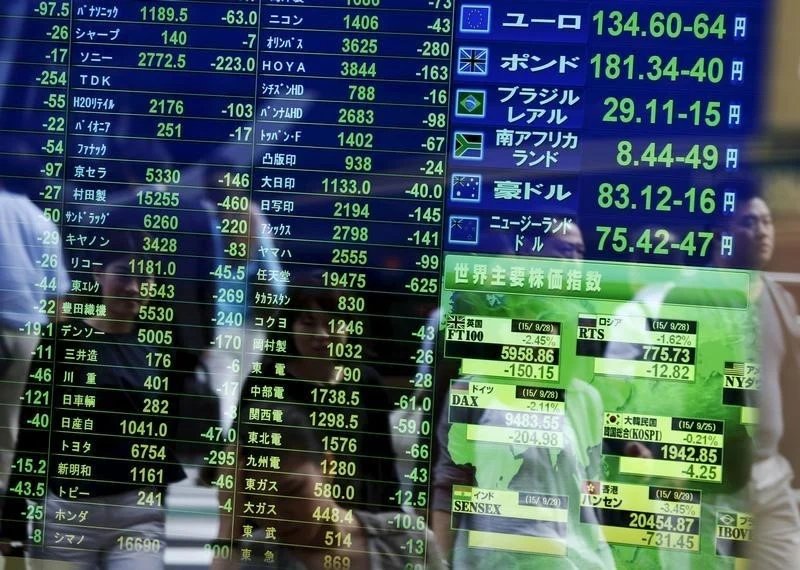
Investing.com — Asian stocks rallied on Friday, led by a sharp rebound in semiconductor shares, as investors looked past renewed Middle East tensions to refocus on the long-term artificial intelligence investment theme following fresh signs that chipmakers are preparing for another wave of spending.
The gains came despite another escalation in the Middle East after fresh U.S. strikes on Iran drew retaliatory missile and drone attacks against U.S.-aligned countries, keeping risks around the Strait of Hormuz and global oil supplies firmly in focus.
Investors instead focused on signs that the AI investment cycle remains intact after another week of heavy capital spending announcements from major chipmakers. rose 0.3% and gained 0.1% in Asian trade.
Unlock premium AI, semiconductor and macro insights with InvestingPro
AI spending narrative regains momentum
The rebound marked a sharp reversal from this week’s technology-led selloff, with South Korea once again setting the tone for regional trading.
The surged 4.2%, clawing back part of this week’s sharp losses after officially entering bear-market territory on Thursday, although the benchmark remained on track for a weekly decline of over 6% so far.
Samsung Electronics Co Ltd (KS:) rebounded 4.9% after leading this week’s selloff, while SK Hynix Inc (KS:) gained 1.5% after pricing its $26.5 billion U.S. American depositary share offering, which attracted demand exceeding seven times the shares available.
SK Hynix’s ADSs will begin trading under the ticker SKHY, giving U.S. investors direct access to one of Nvidia’s biggest high-bandwidth memory suppliers. Despite its recent correction, the stock remains up roughly 680% over the past 12 months.
The improved sentiment came after Micron Technology Inc (NASDAQ:) said it would increase planned U.S. investment to roughly $250 billion through 2035 to expand memory-chip production.
Japan followed South Korea higher, with the climbing about 2%, trimming its weekly loss to roughly 0.9%, while the gained 0.7%. Sentiment was boosted after reports that Japan’s Government Pension Investment Fund (GPIF) is considering increasing its allocation to domestic equities, providing a fresh tailwind for the broader market alongside renewed buying in technology stocks.
Murata Mfg Co (TYO:) climbed about 3.9%, Kioxia Holdings Corp (TYO:) gained roughly 5.7% after Bain Capital completed its exit from the flash-memory maker on Thursday. Taiwan markets were closed for a public holiday.
Geopolitics remain in focus, data-heavy week ahead
Markets also monitored renewed exchanges between the United States and Iran after fresh military strikes and retaliatory attacks further strained the fragile ceasefire reached last month. While oil prices remained supported, investors largely shrugged off geopolitical risks, keeping their attention on corporate investment and earnings prospects.
Meanwhile, this week’s central bank meetings highlighted diverging policy paths across the region after Bank Negara Malaysia kept its overnight policy rate unchanged at 2.75%, while the Reserve Bank of New Zealand raised its official cash rate by 25 basis points and signalled further tightening may be needed.
Focus now shifts to a busy week of regional catalysts, with China’s June trade figures, second-quarter GDP, retail sales and industrial production, Singapore’s advance GDP estimate, India’s June inflation report and the Bank of Korea’s policy meeting expected to shape sentiment across Asian markets.
Elsewhere, Hong Kong’s Hang Seng climbed 1.8% to its highest level since June 17, while mainland China’s and added 0.2% and 0.4%, respectively, as investors continued positioning for further policy support from Beijing ahead of next week’s trade data. Singapore’s rose 0.5%.
Australia’s gained 0.7%, supported by uranium miners after Australia and India agreed to deepen cooperation on uranium exports. Paladin Energy rose about 5%, Boss Energy jumped more than 8%, and Deep Yellow rallied around 9%, reflecting optimism that the agreement could strengthen long-term demand for the country’s uranium alongside the global nuclear power buildout.