
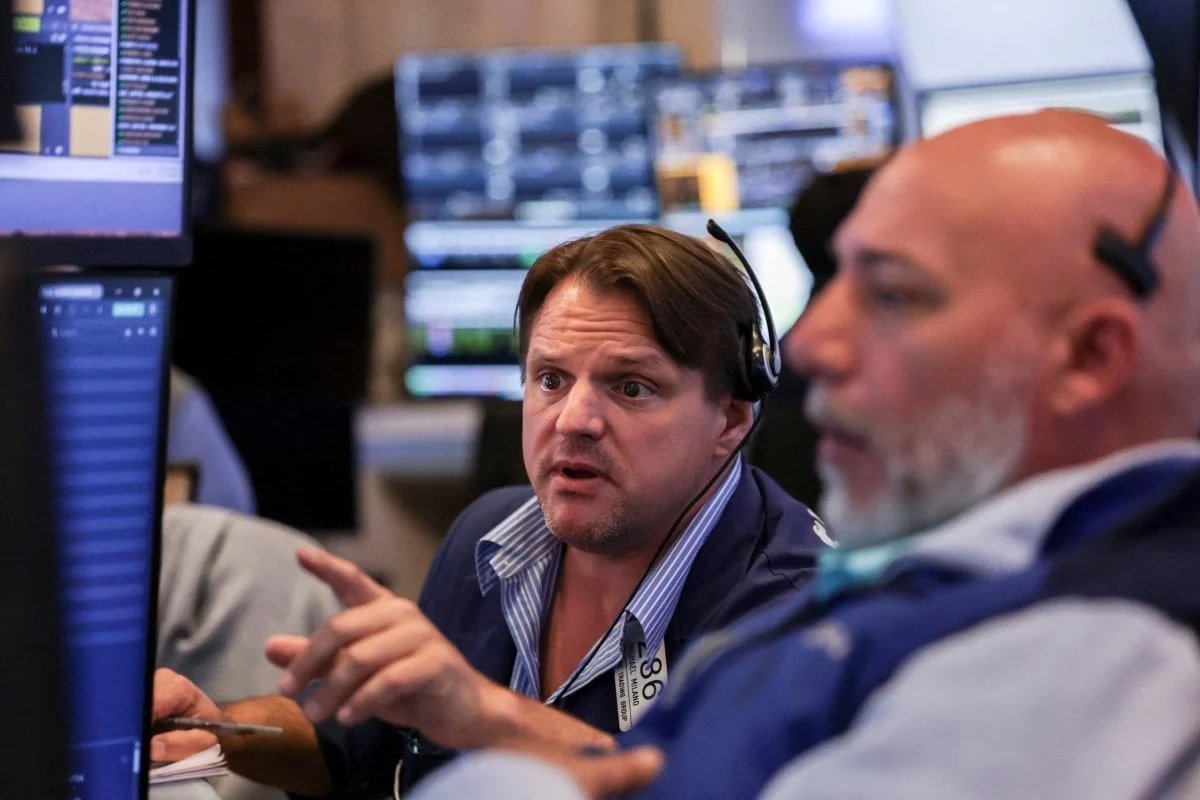
Investing.com — Situational Awareness’s forced liquidation — assets falling from ~$20B to $10B in weeks — has the hallmarks of textbook capitulation, and today’s price action reflects it: Nebius up +26.3%, CoreWeave +21.8%, +7.8%, and Arm +7.3% in a single session. But with Meta down -8.9% on AI monetization doubt and Goldman/JPMorgan margin calls still circulating, the verdict is more nuanced than a clean green light.
The Anatomy of a Forced Seller
The story here isn’t just a hedge fund having a bad month. Leopold Aschenbrenner’s fund was up ~439% after fees through end of June 2026 — a run built on concentrated bets in AI compute, power infrastructure, and Bitcoin miners. Then July arrived.
- Assets reportedly collapsed from ~$20B → $10B
- The fund sought fresh capital from existing investors and lenders after the selloff
- Ken Griffin’s Citadel moved in to acquire the bulk of the public equities portfolio
When the smartest distressed buyer on Wall Street shows up to take the other side of a fire sale, that’s not nothing.
Today’s Tape Tells a Story
The watchlist data right now is a Rorschach test for the recovery thesis. Infrastructure and compute are moving:
| Name | Today | Signal |
|---|---|---|
| Nebius NV () | +26.3% | Was in SA’s long book |
| CoreWeave () | +21.8% | SA core position |
| GE Vernova () | +8.6% | AI power play |
| ADR (ASML) | +6.8% | Semiconductor equipment |
| Taiwan Semi (TSM) | +7.8% | Foundry backbone |
| Arm () | +7.3% | Chip architecture |
| Eaton () | +7.1% | Data center power |
This is how post-capitulation bounces look — the most-shorted, most-crowded names snapping back as forced sellers exit and opportunistic buyers (Citadel et al.) step in.
The Bear Case Hasn’t Left the Room
Don’t mistake a bounce for an all-clear. Several fault lines remain:
- Meta Platforms () is down -8.9% today after JPMorgan cut its price target to $640 citing limited visibility on monetizing AI spend beyond advertising — this is the core “ROI on AI capex” question the market is still wrestling with
- HSBC’s cluster model assigns a 37% probability to “hyperscaler overspend” as the dominant narrative — the highest of five regimes — with semiconductors at risk of -14.3% annualized in a “positioning capitulation” scenario
- Goldman Sachs and JPMorgan are still issuing margin calls to concentrated AI funds — de-grossing may not be complete
- Asia-focused hedge funds are on track for a record -18.6% monthly loss, with five-day cumulative de-grossing the largest on record
The Structural Floor Argument
What distinguishes this from a prolonged AI bear market is the demand side hasn’t cracked. The EU just announced a €10B AI gigafactory program with AMD, Nvidia, and Qualcomm all signed up. Business equipment spending driven by AI is expected to post another quarter of double-digit growth in Q2 GDP. And UBS just initiated SK Hynix ADR () at Buy with a $204 target vs. a ~$127 price, projecting agentic AI will push DRAM bit demand growth to 36% YoY in 2027.
Reading the Setup
The Situational Awareness saga fits the classic “capitulation bottom” playbook — extreme concentration → leverage → margin calls → forced liquidation → smart money accumulation → reversal. Today’s moves in Nebius NV (NBIS) and CoreWeave (CRWV) suggest that particular overhang is clearing. But the deeper question — whether hyperscalers can justify their AI capex through revenue — is a multi-quarter narrative that won’t resolve on a single trading day. Infrastructure layer (compute, power, chips) looks like it found a floor. Application layer (software monetizing AI) still has to prove the model.
This article was generated with the support of AI and reviewed by an editor. For more information see our T&C.