
Anusha Nerella leads fintech automation at Global fintech firm, focused on Java Engineering, AI and intelligent automation.
For decades, Wall Street’s advantage was defined by speed. Firms poured billions into faster cables, denser data centers and GPU clusters that consumed enough power to run small cities. The prize was shaving microseconds off trades.
But here’s the hard truth: We’ve hit peak speed, and it’s not enough anymore.
Financial systems today aren’t failing because they’re too slow. They’re failing because they can’t adapt. Black-box AI models churn out decisions regulators can’t explain. Fraudsters pivot faster than detection engines. Risk systems buckle under shocks they weren’t trained to anticipate.
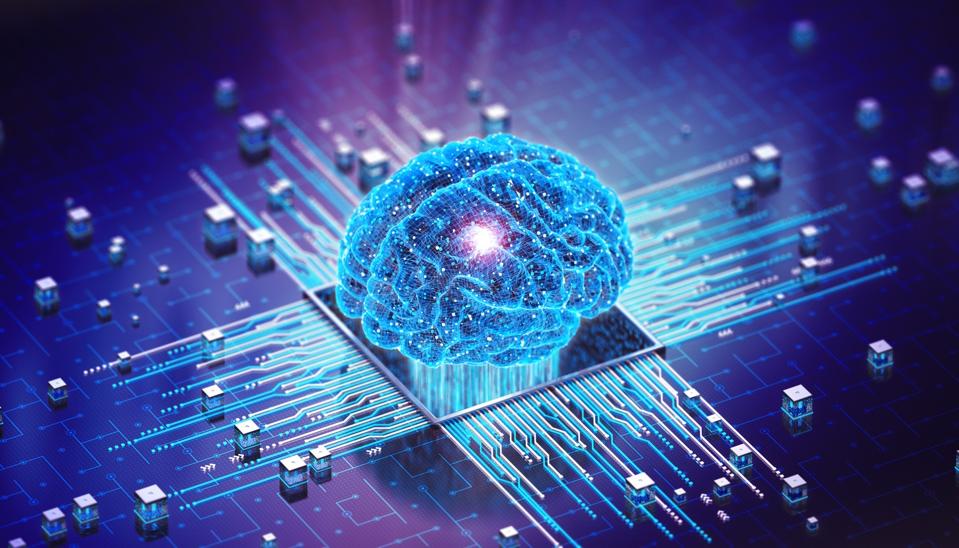
The next competitive edge won’t come from brute force. It will come from systems that think more like markets themselves: event-driven, adaptive and efficient. That’s the promise of neuromorphic finance—a concept still emerging but already showing potential in adjacent industries.
Why Markets Need A Brain, Not A Bigger Calculator
Markets don’t move logically. They behave like neurons firing spontaneously, unpredictably and chaotically. A rumor spikes volatility. A politician’s tweet swings currencies. A regulation drops, and compliance engines scramble.
Traditional compute, built for batch processing and deterministic math, wasn’t designed for this. Neuromorphic computing is. Neurons fire only when triggered, networks adapt continuously and power use falls dramatically. Instead of calculating everything, neuromorphic hardware calculates only what matters.
While no major financial institution has deployed full neuromorphic systems yet, early proofs from other domains hint at what’s possible.
Early Signals From Other Fields
China’s Darwin Monkey Supercomputer simulates over 2 billion neurons and more than 100 trillion synapses on about 2,000 watts—the draw of a hair dryer. Imagine portfolio stress tests at that efficiency.
Innatera’s Pulsar Chip powers edge devices at roughly 1/500th the energy of GPUs, showing how point-of-sale terminals could one day detect fraud before data even leaves the device.
IBM’s TrueNorth chip demonstrates how event-driven architectures process streams efficiently. Replace pixels with trades, and you can envision compliance tools that flag rogue activity instantly.
These aren’t financial deployments, but they prove the model: Systems that react only to signal can outperform those that brute-force every calculation.
Lessons From Today’s Financial Trenches
In my own work building fraud detection and compliance platforms, the bottleneck was rarely speed—it was explainability. Regulators demanded audit trails, but deep-learning models produced only opaque scores. Entire teams were tasked with building “explainability wrappers” around black-box models.
Neuromorphic approaches could change that. Spiking neural networks naturally leave event-driven traces. Each spike ties to a trigger, and that sequence becomes an audit log. Instead of reconstructing why a model flagged an anomaly, you simply follow the spikes. For regulators, that’s the difference between theory and trust.
This is still a vision, not a product you can buy today. But it shows why finance is a natural next step.
Where Neuromorphic Finance Could Land First
When adoption begins, the first movers are likely to be:
• Fraud Detection: Traditional engines either choke on volume or consume enormous energy to catch marginal anomalies. Neuromorphic fraud engines could monitor streams continuously and react only when something looks off, enabling real-time detection at far lower cost.
• Trading Desks: High-frequency strategies still rely on brute-force scenario crunching, even though markets move on discrete events. Neuromorphic processors are designed for this unpredictability, acting more like a trader’s intuition than a calculator’s routine.
• Regulatory Compliance: Every rule change today triggers lengthy model-retraining cycles. Spiking models could adapt continuously, leaving spike trails that auditors can verify.
The Architect’s Playbook
Firms considering this path should think evolution, not revolution:
• Start with edge pilots like payment terminals or ATMs equipped with neuromorphic fraud-detection chips that could prove value quickly once hardware is available.
• Adopt hybrid stacks that let CPUs, GPUs and neuromorphic chips each do what they do best.
• Shift to event-driven design architect systems to respond to signals rather than process everything in bulk.
• Embrace compliance by design where neuromorphic spike trails don’t just detect anomalies; they create natural audit logs regulators can trust.
The harder leap isn’t technical; it’s cultural. Many IT groups still think like accountants: Process everything, log everything, control everything. Neuromorphic finance will require a trader’s mindset: Act quickly, filter noise, adapt instantly.
The Road Ahead
The last century of finance rewarded speed. The next will reward adaptability.
Banks that dismissed the cloud lagged for years. Traders who ignored electronic exchanges vanished. Neuromorphic finance is on the same trajectory. It’s not yet here, but coming fast enough that pilots launched today could define tomorrow’s standards.
Because in the end, markets don’t reward the biggest machines—they reward the smartest.
Forbes Technology Council is an invitation-only community for world-class CIOs, CTOs and technology executives. Do I qualify?