
Private equity sometimes gets “a bad rap” and generally makes its returns by growing businesses rather than via “financial engineering”, opined Andrew Higginson, then chair of the supermarket chain Morrisons, when his board agreed to sell to the buyout firm Clayton Dubilier & Rice for £7bn in 2021. Really?
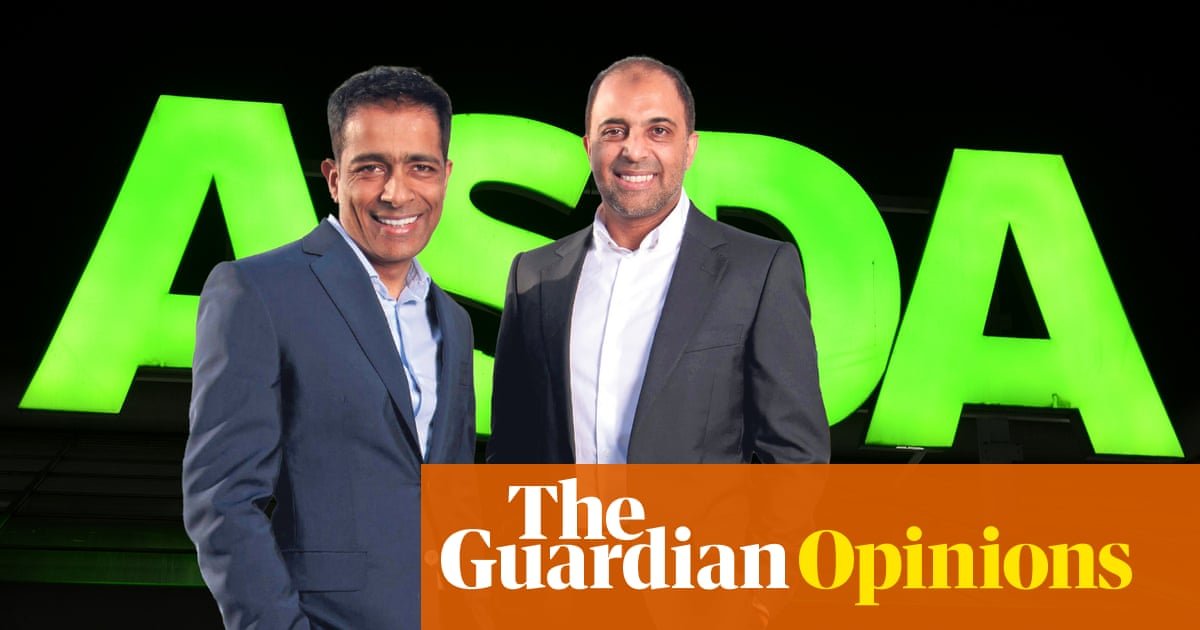
Three years on, there is no sign of growth – in the sense of gains in market share – at either Morrisons or Asda, the other big buyout deal of 2021 (by TDR Capital and the Issa brothers, Mohsin and Zuber). In September 2021 Morrisons represented 9.8% of the UK grocery market, on the research group Kantar’s numbers; last month it had 8.6%.
And the recent market share decline at Asda has been so acute that its chair, Lord Rose, a retail veteran, said he was “embarrassed”. Asda’s share has fallen from 14.3% to 12.6% since 2021, which, in an industry where shifts usually happen in fractions of percentage points over years, is a plunge. Sainsbury’s, which for years was neck-and-neck with Asda in the race to be second to Tesco, is now furlongs ahead at 15.3%.
The conclusion from those statistics is the obvious one: servicing vast quantities of debt damages your competitive edge, especially when you’re up against the muscle of conservatively capitalised Sainsbury’s and Tesco.
The degree of leverage put on the two buyout companies is best illustrated by the debt ratings awarded by the agency Moody’s. Morrisons, even after selling its petrol forecourts for £2.5bn and cutting debt by 35%, is still five notches away from investment grade. Asda is four away.
That is not to say either chain has been starved of capital. Asda has expanded into convenience stores and is spending £800m on an IT project to detach itself from the systems of its former owner, Walmart’s. Morrisons still had enough cash to buy the McColls convenience chain.
Rather, the drag on performance shows in more subtle ways. Morrisons was outgunned on prices at the height of the cost of living crisis and Asda seems to have fallen short on retailing basics such as product availability and controlling checkout queues. Yet all those failings, one can argue, stem from the relentless demand to hit annual cashflow targets to keep the buyout arithmetic on track.
Do not, though, assume the private equity barons will lose their shirts. Despite the trading struggles, there is probably still enough wriggle room in the numbers. Morrisons’ market share has stabilised in the past year under its new chief executive, Rami Baitiéh; free cash could turn positive this financial year, thinks Moody’s. Asda’s position is weaker on the ground but the background noise created by Zuber Issa selling his stake to TDR Capital has now passed; and Rose should soon be able to hire a proper retail chief executive, as opposed to having Mohsin try to do the job himself.
But, if the financial bets come good in, say, five years’ time, it probably won’t be because Morrisons and Asda have suddenly learned to land competitive blows on Tesco and Sainsbury’s. It will be because the financial engineering – the replacement of equity with debt – was merely aggressive, as opposed to catastrophic. The sliver of equity in the original Asda deal was just £780m (or £200m on a ultra-strict definition) in a £6.8bn deal, so there’s obviously upside if borrowings can be sweated down to vaguely manageable levels.
But the notion that either buyout deal was seriously aimed at growth, as the rest of the world understands the term, was nonsense. The growth has happened at Sainsbury’s and Tesco. The buyouts were old-fashioned games of leverage and debt gymnastics, just as they looked on day one.