
Commodity vs. Product: An Overview
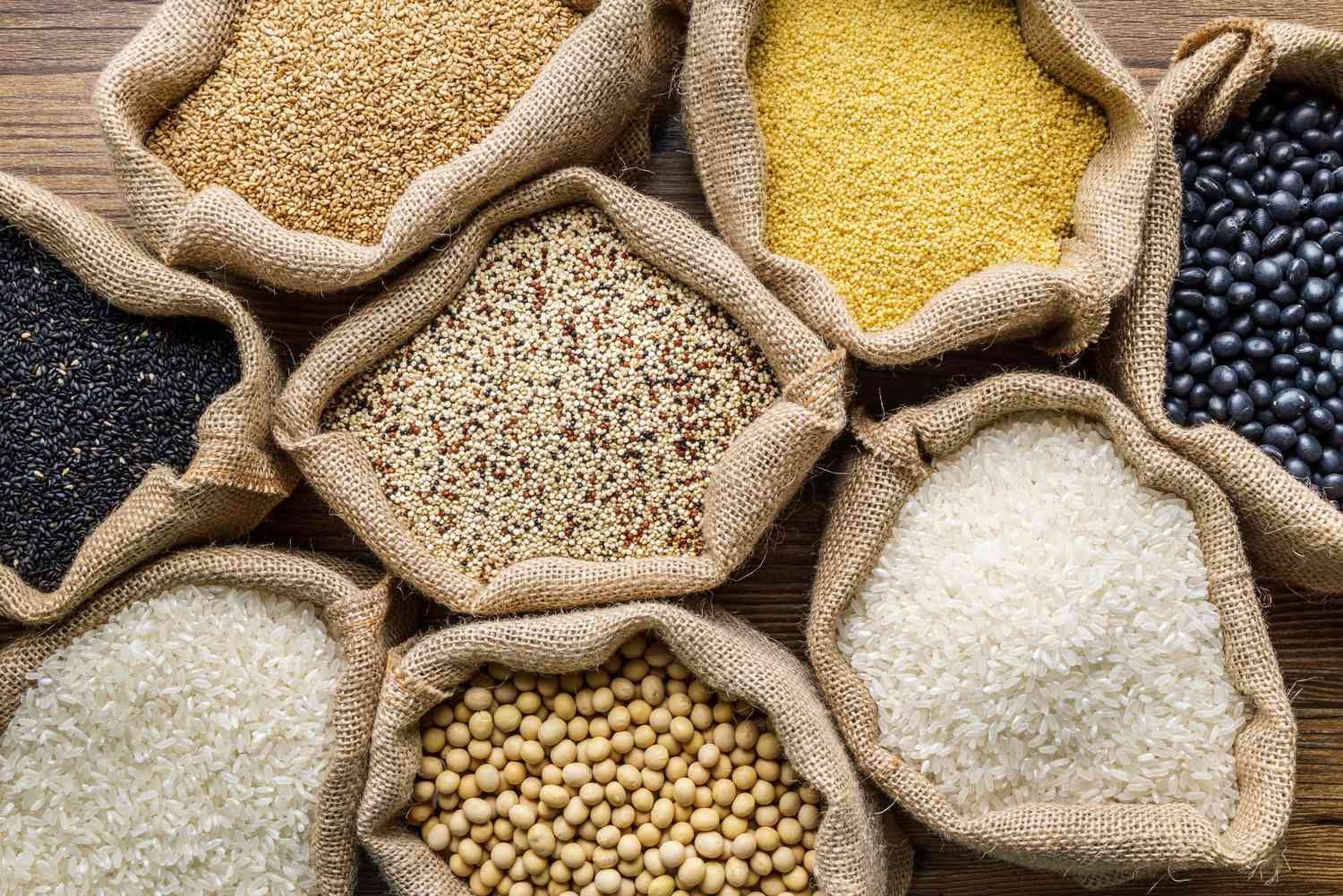
Although they are often confused and may sometimes be used interchangeably, the terms commodity and product are somewhat different when used by traders today. A commodity often refers to a raw material used to manufacture finished goods. A product, on the other hand, is the finished good sold to consumers.
Both commodities and products are part of the production and manufacturing process; the main difference being where they are in the chain. Commodities are typically in the early stages of production, while products fall at the final stage.
Key Takeaways
- A commodity is a raw material used in the production process to manufacture finished goods, while a product is a finished good sold to consumers.
- No value is added to a commodity, which can be grown, extracted, or mined.
- Commodities are traded on exchanges through futures contracts, stocks, and ETFs, and can also be bought and sold in their physical states.
- Products are sold on the market for consumption by the average consumer and can also be found in investment portfolios.
Commodities
A commodity is a basic good used as an input in the production of goods and services. That means companies use commodities in the manufacturing process to turn them into everyday goods. Commodities are found in the majority of goods that end up in the hands of consumers, including tires, tea, ground beef, orange juice, and clothing.
Some of the most common commodities include copper, crude oil, wheat, coffee beans, and gold. Commodities can be further broken down into two different categories: hard and soft commodities. Soft commodities are those that are grown and cannot be stored for extended periods. Examples include coffee, cocoa, orange juice, and sugar. Hard commodities are those that can be mined or extracted from the earth, such as metals and petroleum products.
Soft commodities futures are often more volatile than others because of the unpredictable risks involved, including the weather. Hard commodities, on the other hand, are mined and extracted, such as oil, natural gas, and precious metals. All of these commodities are a major part of the futures market.
Trading Commodities
There is little difference, if any, among commodities. They are taken from their natural state and, if necessary, brought up to meet minimum marketplace standards. No value is added to the commodity, and all commodities of the same good sell at the same price regardless of the producer.
Most of the world’s widely traded commodities have well-established markets and are traded on exchanges primarily in the form of futures; contracts to buy or sell the commodity by a specified time in the future at a certain price. The settlement of a contract means the delivery of an actual asset or cash. Trading commodities has the potential for significant market volatility. Exchanges standardize the amount and grade of the commodity being traded.
Aside from the futures market, commodities can also be traded through stocks. Investors can buy and sell the stocks of companies related to a specific commodity. An investor interested in taking a position in an oil and gas company can purchase its stock. Exchange-traded funds (ETFs) also allow investors to take a position in a commodity without investing directly in futures contracts. Investors can also purchase physical commodities, such as gold or silver.
Since commodities are traded on exchanges, there are many different factors that affect their prices. The main driver of commodity prices is supply and demand. In the case of oil, when demand increases the price will increase, but when supply increases, the price drops. Politics, economic uncertainty, and other issues such as weather can also have a big impact on prices.
Important
The Chicago Board of Trade (CBOT) is one of the world’s oldest commodity exchanges, where agricultural and financial contracts are traded.
Products
A product can be differentiated, and value can be added by the manufacturer and through branding and marketing. Products are made using commodities and are then put on the market and sold to consumers.
Products, which are also referred to as consumer goods or final goods, are purchased for consumption by the average consumer.
Products are typically classified as either durable or consumable goods. Durable consumer goods, such as appliances, furnishings, and jewelry, are generally long-lasting and purchased infrequently. Consumable goods, which include gas, groceries, and tobacco products, are used quickly or need frequent replacement.
Products are also traded and found in many investment portfolios. Companies that produce consumable goods are generally considered safe investments based on their relative stability and historical performance.
Since people still need to purchase basic goods even in a faltering economy, the demand for consumables remains strong through economic or market fluctuations. Despite their stability, consumable goods are sensitive to competition and to changes in the prices of the commodities used to make the consumable goods.
Special Considerations
The idea of differentiation presents itself within commodities and products. Products are not differentiated if they operate in separate but similar commodity markets. For example, a butcher that sells organic beef is not offering a differentiated product from a butcher that sells non-organic beef. Rather, the butcher that sells organic beef is operating in a differentiated commodity market.
The only way that the organic beef butcher can offer a differentiated product is if they offer a different value when compared to other organic beef butchers. For example, the first organic beef butcher can differentiate their product from other organic beef butchers by marketing the unique way in which they cut their beef that imparts a unique flavor, while other organic beef butchers use only traditional methods that don’t impart a unique flavor. The first butcher has differentiated its product from its competitor through this technique and its marketing.
What Are Digital Commodities?
With the advent of information technology and computing, a new class of digital commodities has been established. These include things like internet bandwidth, mobile phone minutes, blockchain-based tokens (such as cryptocurrencies), and NFTs.
What Is a Finished Product?
A finished product is one that is ready for sale. Before a product is finished it may be considered a work-in-progress or an intermediate product (which is used as an input to make some eventual finished product). Note that economists only factor in the value of finished products when computing GDP.
What Is the Marxian Concept of Commodities?
Unlike the contemporary financial view discussed above, Karl Marx saw products and commodities as the same thing. For Marx, a commodity was any reproducible good that is produced under a capitalist system and intended to be sold on the market for profit. Thus both something like iron ore and also stainless steel flatware would be considered “commodities.”