
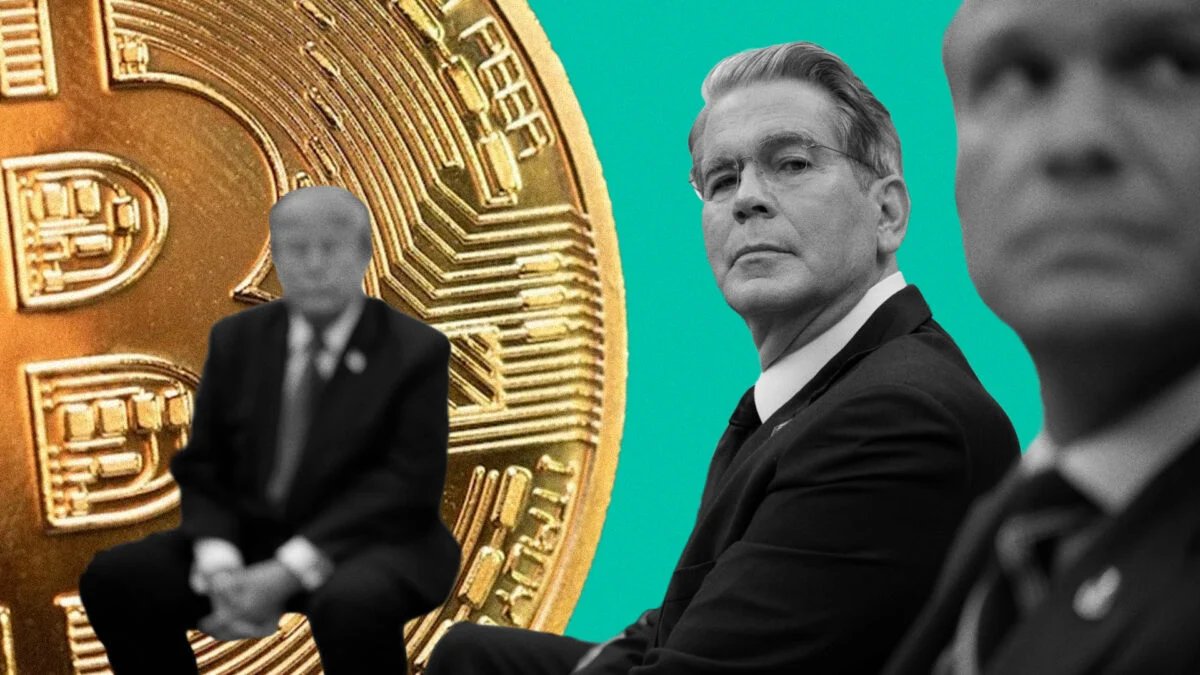
Bitcoin is experiencing an epic rebound. After falling to a low of about $62,650 on Aug. 16, the cryptocurrency climbed to roughly $80,000 this week, putting the rally from that recent bottom at about 27%.
Crypto market observers are touting several reasons for the turnaround, including renewed optimism around U.S. crypto regulation via the CLARITY Act and a short squeeze that forced more than $4 billion in bearish crypto positions to be liquidated. But bitcoin proponents also say the risks that come with a global financial system heavily dependent on one country’s currency and financial infrastructure are becoming too obvious to ignore.
The United States has enormous influence over both the supply of dollars and who gets access to the dollar-based financial system. Former French finance minister Valéry Giscard d’Estaing famously described this arrangement as an “exorbitant privilege.” The phrase referred to the ability of the U.S. to finance itself in its own currency while much of the rest of the world must obtain dollars to participate in international commerce.
For many bitcoin proponents, it is no coincidence that bitcoin’s recent price spike has come at the same time that the risks of this centralized financial architecture are on full display to the entire world.
One of the clearest examples came from the announcement last week that the U.S. Treasury would at least double the size of its purchases of longer-dated government bonds. Beginning Sept. 9, Treasury plans to increase the maximum size of individual buyback operations from $2 billion to at least $4 billion. The stated goal is to provide additional liquidity to parts of the Treasury market where trading can become relatively thin.
The move matters because the Treasury is effectively buying its own debt in the secondary market while the federal government is carrying more than $40 trillion in total debt. The buybacks are not literally the same thing as the Federal Reserve printing money, but the Treasury can use cash in its accounts and issue short-term bills to help finance the purchases. The potential scale of the intervention became clearer when U.S. Treasury Secretary Scott Bessent said Treasury could use its roughly $1 trillion General Account to fund the buybacks, rather than raising additional short-term debt.
Some investors view the policy as another indication that Washington is increasingly willing to intervene in the bond market when higher yields threaten to cause problems elsewhere in the economy. That perception has contributed to renewed concern about dollar debasement and helped push investors toward scarce assets such as gold and bitcoin.
It should be noted that there is no obvious fiat currency waiting in the wings to replace the dollar simply because the U.S. fiscal position looks uncomfortable. Europe, Japan, the United Kingdom, and other major economies have their own debt and fiscal problems. Meanwhile, bitcoin offers an alternative proposition, as its monetary rules were “set in stone for the rest of its lifetime” when the network launched in 2009.
That predetermined monetary policy is one reason bitcoin is often compared with gold. Both are viewed by some investors as assets whose supply cannot simply be increased at the discretion of a government. The comparison has become particularly visible this month, with gold also up about 14% so far in August.
SATOSHI: ANY COUNTRY CAN DO BUSINESS WITH ANYONE AND NOBODY CAN REMOVE THEM FROM THE BITCOIN NETWORK https://t.co/sKTu1QZDBA
— 🏔Adam🏔 (@denverbitcoin) August 25, 2026
The other half of the story is financial censorship. Earlier this week, Bessent announced an aggressive expansion of U.S. economic pressure on Iran, saying that entities facilitating money laundering or other economic activity for the Iranian regime could be cut off from the U.S. dollar system. Treasury’s new campaign includes secondary-sanctions risks covering digital assets, technology, gold, aviation, and shipping.
The U.S. does not need to physically confiscate every dollar held by a sanctioned person to make these restrictions effective. The Office of Foreign Assets Control (OFAC) maintains sanctions lists used by banks and other financial institutions to identify blocked parties. Foreign banks can also lose access to U.S. correspondent banking relationships, which are a critical piece of the infrastructure used to clear dollar transactions internationally.
That is the sort of privileged position in the global financial system the Bitcoin network was designed to avoid. At the base blockchain layer, a user with bitcoin can broadcast a valid transaction to the network without asking a bank, government, or payment processor for permission. There is no central Bitcoin company or government that can put a particular address on an internal blacklist and prevent the rest of the network from recognizing a valid transaction.
Of course, the distinction becomes less clear when people use custodians. If bitcoin is held at an exchange or other centralized financial service, that company can freeze the customer’s account just like a bank can. The same basic problem also applies to stablecoins, which have become a key, centralizing force in the greater crypto ecosystem. For example, in April, stablecoin issuer Tether froze roughly $344 million in USDT across two wallets after U.S. authorities identified links to Iranian activity.
In many ways, the stablecoin phenomenon can be viewed as a way for the United States to retain control over the global financial system.
Bitcoin has historically performed particularly well when its underlying value proposition is illustrated in the real world. The Cyprus banking crisis in 2013 is another classic example. As part of the country’s bailout, uninsured deposits above €100,000 were frozen and used to recapitalize banks. Bitcoin rose 87% from March 16 to March 28 as concerns about the safety of conventional bank deposits spread across Europe. When governments and financial institutions demonstrate just how much control they have over conventional money, it becomes much easier to understand why Bitcoin was created in the first place.