

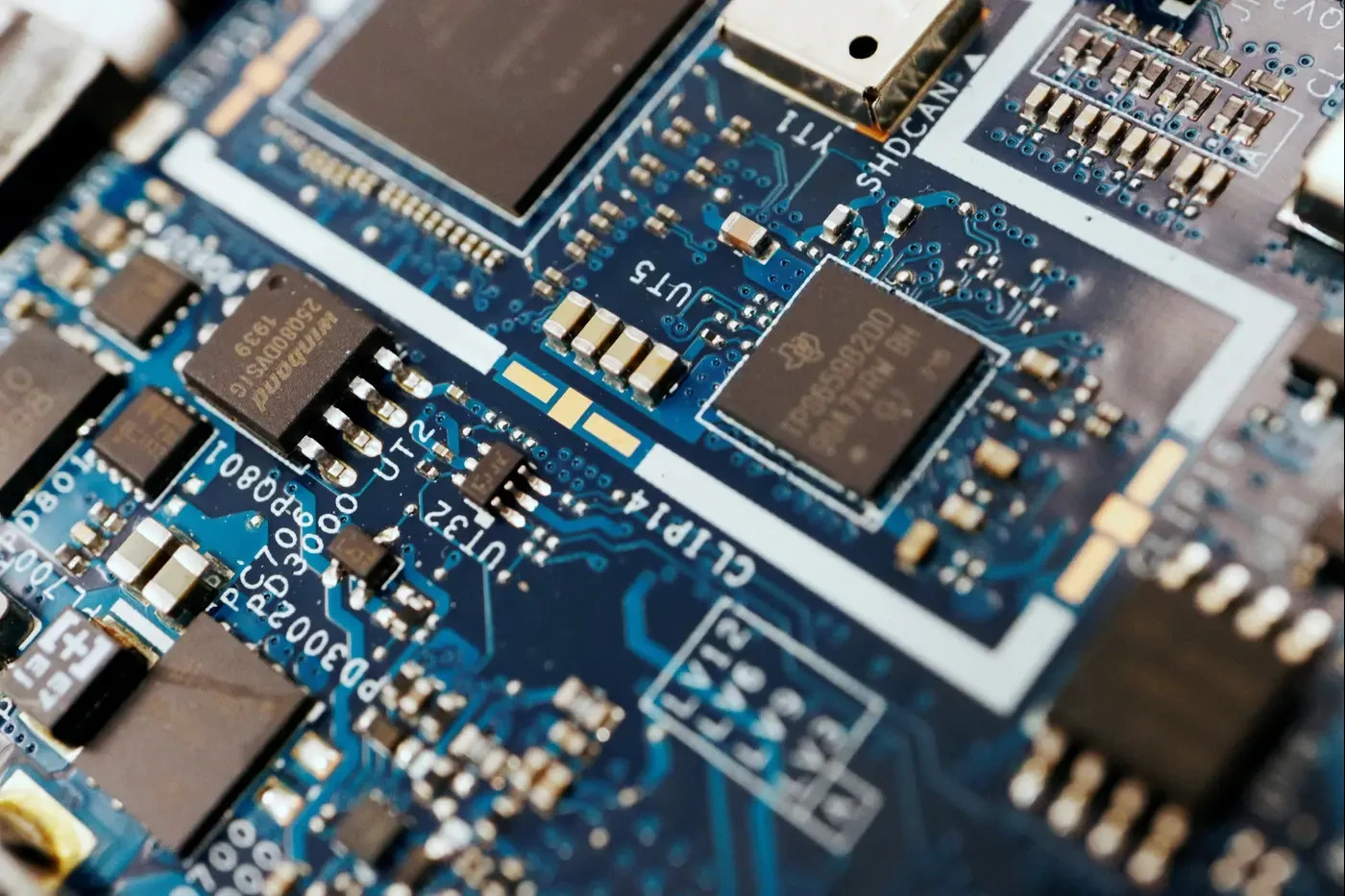
The story that has led the markets over the past two years is beginning to show signs of strain. Semiconductor and artificial intelligence stocks led losses in Asia on Thursday morning, following a negative response on Wall Street to earnings reports and forecasts from several companies most closely identified with the AI revolution.
South Korea’s KOSPI index fell by more than 4%, with SK Hynix losing over 8% and Samsung Electronics dropping by more than 5%. In Japan, the Nikkei index weakened, with stocks such as Kioxia, Murata, and TDK recording sharp declines.
The declines do not necessarily indicate that the artificial intelligence revolution is over. They do, however, point to a shift in the question occupying investors. Instead of asking how fast the sector will grow, the market is beginning to ask how much it will cost to finance this growth, and when these massive investments will begin generating a return.
Investors begin examining the cost of the AI revolution
The latest trigger came from the United States. AMD’s stock fell after its forecast failed to impress investors, despite better-than-expected quarterly results. SpaceX also lost ground after its first report as a public company illustrated the high level of spending on AI-related infrastructure.
Concurrently, weakness in US memory stocks SanDisk and Western Digital quickly spilled over to semiconductor manufacturers in Asia.
This is the same mechanism that operated in the opposite direction during the rallies. When the market believed demand for data centers, memory, and AI chips would continue to grow with virtually no limit, the entire production chain benefited. Now, any sign of a slowdown, margin erosion, or higher-than-expected expenses harms the entire sector.
More than $1 trillion in future commitments
The concern is not limited to stock prices alone. Microsoft, Meta, Oracle, Amazon, and Alphabet have collectively committed to future lease payments of approximately $1.09 trillion, primarily for data centers that have not yet begun operating.
The sum is spread across years and is not equivalent to regular bank debt, but it illustrates the scale of the gamble. Technology companies are committing in advance to data centers, power, and computing infrastructure under the assumption that demand for AI services will justify the costs in the future.
As long as revenue grows rapidly, the model can work. If growth disappoints once supply catches up with demand, the companies, developers, and lenders that financed the construction could be left with expensive facilities and long-term commitments.
Arthur Hayes: This is more similar to 2008 than the dot-com bubble
This is where the unusual forecast by Arthur Hayes, co-founder of the BitMEX crypto exchange, enters the frame. According to Hayes, investors are treating the establishment of data centers as if it were a high-growth technology investment, when in practice a large portion of the sector closely resembles leveraged real estate. Land must be purchased, facilities built, power connected, cooling systems installed, and long-term contracts signed.
Therefore, Hayes argues that the risk is more reminiscent of the 2008 credit crisis than the 2000 internet bubble. Under his scenario, lenders will continue pouring money into construction as long as demand appears strong. If tech companies slow their investments, some projects will struggle to service their debt. Such a crisis could harm banks, the credit market, and the broader economy.
How is an AI crisis supposed to help Bitcoin?
In the short term, it will not necessarily help. During periods of strain, Bitcoin behaves as a risk asset, meaning a credit crisis could initially lead to sell-offs in the crypto market as well. Hayes estimates that Bitcoin could remain in the $60,000 to $70,000 range, and even drop toward $50,000 before changing direction.
The positive phase of his thesis arrives only after that. If the credit crisis is broad enough, central banks and governments are likely to respond by lowering interest rates, issuing guarantees, bailing out financial entities, and injecting liquidity into the system. Such measures expand the money supply and erode the purchasing power of traditional currencies over time.
Under this scenario, Hayes believes demand for an asset with a fixed supply like Bitcoin could grow rapidly, reaching a price of $1 million or even higher.
Not all tech giants are in the same position
It is important to qualify the forecast. Not all companies leading the AI revolution are equally leveraged. Alphabet, Amazon, Microsoft, and Meta possess profitable businesses, strong cash flows, and relatively low debt ratios.
Oracle, by contrast, is considered more exposed. Some of its lease contracts for data centers extend between 15 and 19 years, while its contracts with customers may be significantly shorter. This gap creates risk if demand weakens in the future.
Therefore, even if a slowdown occurs in the sector, it will not necessarily develop into a systemic crisis similar to 2008. Hayes’s forecast depends on a long chain of events that must occur: Overinvestment, credit defaults, government intervention, and the transfer of liquidity into Bitcoin.
The declines in Asia remain primarily a correction following sharp gains, rather than proof that an AI bubble has burst. Nevertheless, they illustrate that the market is becoming more selective. Promises of growth are no longer enough. Investors want to see revenue, profitability, and the ability to fund these massive investments without damaging company balance sheets.