

Bitcoin’s $72,000 resistance wall has become the defining battleground for the market this week, with the world’s largest cryptocurrency struggling to reclaim what was, until recently, a vital recovery level after a sharp sell-off in mid-June that dragged prices into the low $60,000s.
Bitcoin had been trading comfortably within the $72,000 to $74,000 range before losing that support and triggering a rapid decline. The drop, which briefly pushed prices toward the $61,000–$63,000 zone, drew in buyers almost immediately, sparking a relief rally back to around $66,000. That reaction, while stabilising, has not yet repaired the broader technical damage.
Resistance Wall Turns Psychological
When Bitcoin broke below that range, trading volume spiked to its highest level of the year, signalling forced selling and liquidations. Historically, those moments can point to exhaustion, where weaker hands exit and longer-term buyers step in, given how quickly demand returned near $62,000.
But the recovery has stalled beneath key moving averages. Bitcoin remains below both its 50-day and 100-day trends, and the loss of the upward trendline that underpinned April and May’s rally still hangs over the chart. Until those levels are reclaimed, sellers retain the upper hand on longer timeframes.
The relative strength index has climbed out of oversold territory and is drifting toward neutral, suggesting the panic phase has cooled. It does not, however, confirm a reversal.
What it shows instead is a market catching its breath. Support sits near $64,000, where buyers have repeatedly stepped in. Above, the $72,000 resistance wall looms.
Shiba Inu and Ethereum Mirror a Market in Limbo
Bitcoin is not alone in this uneasy recovery phase. Across major altcoins, the same pattern is playing out, though with varying degrees of strength.
Shiba Inu’s rebound has been tentative. After sliding to roughly $0.0000044 earlier this month, the token managed a modest bounce, forming what looks like a short-term base. Yet every attempt to push higher has run into selling pressure near its moving averages, all of which continue to slope downward.

DrawKit Illustrations/Unsplash
A breakdown from a multi-month wedge pattern earlier in the spring still dominates the chart, and bulls have yet to reclaim the $0.0000050 to $0.0000055 region needed to shift sentiment meaningfully. Volume has faded since the initial sell-off, hinting that sellers may be losing momentum, but buyers have not exactly rushed in either. It is stabilising, not surging.
Ethereum is showing relative resilience. After falling from the $2,300–$2,400 range to around $1,670, ETH has begun building a recovery base with more convincing participation on both the sell-off and the rebound.
There is, however, a ceiling. The first major test sits near $1,800, aligned with the 50-day moving average. Beyond that, a heavier resistance cluster between $2,000 and $2,350 could prove difficult to break without a stronger shift in sentiment. For now, Ethereum looks steadier than its peers, but it is still boxed in.
XRP’s Recovery Still Lacks Conviction
After failing to break above $1.30, the token slipped toward $1.13 before buyers stepped in. A bounce followed, lifting prices back toward $1.20, but the move quickly lost momentum and failed to produce a higher high. Since then, XRP has drifted sideways, stuck in what can only be described as an awkward recovery phase.
Technically, it remains below its key moving averages, reinforcing the broader downtrend. The $1.20 level now acts as immediate resistance, while a more decisive shift in sentiment would require a break above the $1.25 to $1.35 zone.
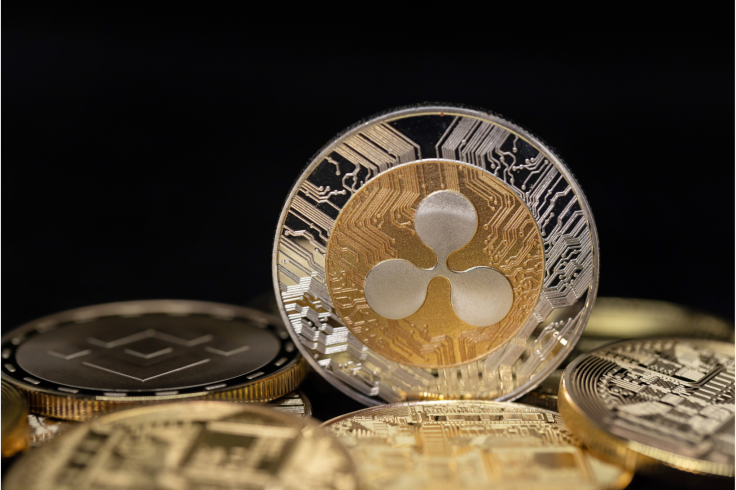
XRP has held above its June lows despite repeated attempts by sellers to push it lower, suggesting demand is gradually building at cheaper levels. Momentum indicators align with that view, pointing to a possible transition from capitulation to accumulation.
Still, without a clear push above resistance, it remains just that, a possibility. The panic has passed, the bleeding has slowed, but conviction is thin. Bitcoin’s $72,000 resistance wall is not just a price level; it is the line separating a fragile recovery from something more decisive. Whether buyers have the appetite to test it again is another question entirely.