

One of the internet’s longest-running mysteries – the inventor of bitcoin’s identity – has a new leading suspect.
In a major New York Times investigation, the paper argues that Satoshi Nakamoto, the pseudonymous creator of bitcoin, is Adam Back, the British cryptographer and chief executive of blockchain technology company Blockstream.
Back is far from an obscure crypto outsider suddenly plucked from nowhere. He has long advocated for the adoption of crypto technology. He invented Hashcash, the proof-of-work system cited in the original bitcoin whitepaper, and has spent years as one of the most influential figures in bitcoin’s ecosystem.
The attribution to Back is built on an accumulation of circumstantial evidence, from unusual hyphenation errors to the use of two spaces after full stops, alongside shared spelling quirks and similar phrasing.
For his part, Back has denied being Nakamoto. “i’m not satoshi, but I was early in laser focus on the positive societal implications of cryptography, online privacy and electronic cash,” he wrote on X.
“There is a clear connection to his work,” says Aggelos Kiayias, director of the Blockchain Technology Laboratory at the University of Edinburgh, but Kiayias refuses to speculate on whether Back is Nakamoto.
The theory is the latest to capture the public imagination – and it matters because bitcoin is increasingly part of the financial mainstream. The White House announced a Strategic Bitcoin Reserve in March 2025, a remarkable sign of just how far crypto has travelled into the political establishment, while the rollout of spot bitcoin ETFs (exchange-traded funds) helped drive a record pace of US ETF launches and drew nearly $1.9bn in their first three days in early 2024.
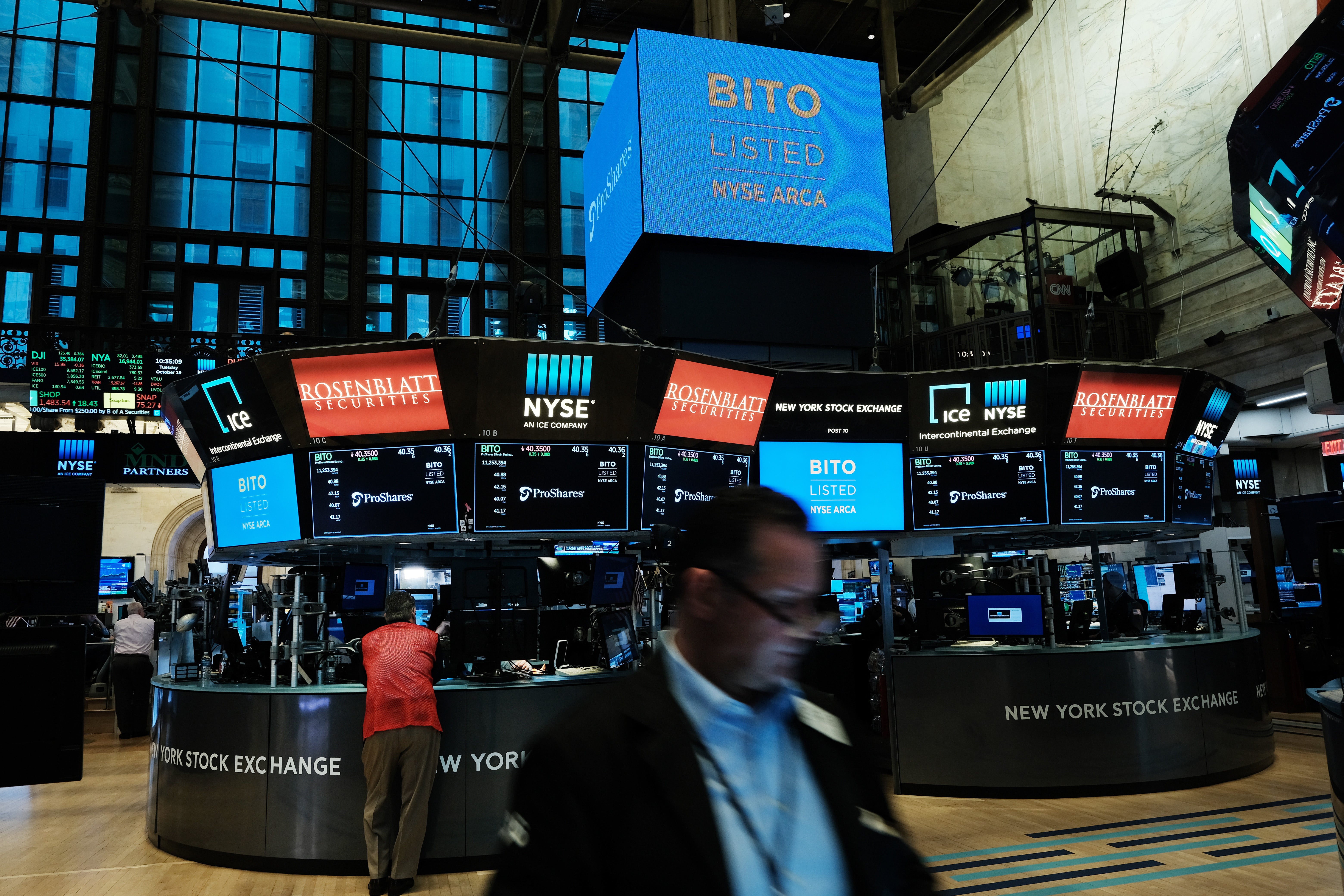
If ordinary people are being encouraged to see bitcoin as a legitimate long-term asset rather than a speculative curiosity, then they might want to know who was behind it. Nearly two in three Americans have little or no confidence that crypto is safe or reliable. Even among Brits who invest in crypto, a quarter say they’d be more inclined to invest if the assets were more regulated in the UK.
And while regulation is one thing, knowing who’s behind the system that could displace traditional finance is another way to build trust. Every few years, someone is confidently named as the pseudonymous inventor, before claims are debunked.
In 2014, Newsweek identified Dorian Nakamoto, a Japanese-American engineer living in California, as bitcoin’s creator. He later issued a statement saying he “unconditionally” denied the claim. The same year, Aston University researchers argued that Nick Szabo, the computer scientist and creator of Bit Gold, was the most likely author of the bitcoin whitepaper based on linguistic analysis. Hal Finney, the cryptographer who received the first bitcoin transaction, has long remained a favourite among believers, not least because of how close he was to bitcoin’s earliest days. And in 2024, HBO documentary Money Electric: The Bitcoin Mystery prompted another round of speculation by naming Peter Todd as its answer to the mystery.
Then there are the louder claimants. American computer scientist Craig Wright spent years insisting that he was Nakamoto, turning the mystery into a series of court battles and public feuds. But in 2024, a judge at London’s High Court said the evidence that Wright was not the mystery bitcoin master was “overwhelming”, and later rulings said he had lied “extensively and repeatedly” to support the claim.
“I never understood why people were so fussed [about who Nakamoto is],” says Sarah Meiklejohn, associate director of the Initiative for Cryptocurrencies and Contracts at University College London. Aggelos is the same. “I wouldn’t say I’ve ever looked at it in any great length, or was particularly intrigued to understand whether this is true or not,” he says. “I think it’s not that important. As a contribution, bitcoin stands by itself.”
Unless whoever they say Satoshi is willingly signs a message that says, ‘I am Satoshi Nakamoto, and here are my keys, and here’s my proof’, it will never be believed by everyone
Frederic Fosco, co-founder of OP_NET
Meiklejohn points out that “the vast majority of people using bitcoin don’t know how it works, don’t know any of the developers or any of the discussions about the protocol itself,” she says. “They’re just using it at a very abstract layer.”
However, that identification might be necessary. Crypto has long struggled with legitimacy, its history littered with rug-pull scams, exchange collapses, memecoin manias that make a lot of noise with little profit and other spectacular frauds. People putting serious money into a system that presents itself as a new kind of finance may want to know who built it, what their motives were and whether they remain influential.
And the purported identification of Back seems stronger than the other claims. Back “has been assumed to be a candidate of being Satoshi Nakamoto for quite a long time,” says Samuel Patt, co-founder of OP_NET, a bitcoin software company, and says there is “a large fraction of people who believe it” because of the circumstantial evidence. That’s something backed up by Kiayias, who says “it fits, in many ways, the description” of the mercurial bitcoin founder.
But Patt also believes that Back wasn’t Nakamoto alone. “There was likely a coalition, or a group of people who were truly behind bitcoin,” he says.
Patt’s fellow founder, Frederic Fosco, says that the identification of Back isn’t necessarily proof. “Unless whoever they say Satoshi is willingly signs a message that says, ‘I am Satoshi Nakamoto, and here are my keys, and here’s my proof’,” he says, “it will never be believed by everyone.” Bitcoin’s own culture has spent years insisting that users should be distrustful of any claims without concrete verifications. Without that evidence, it’s incredibly hard to agree on an identity.
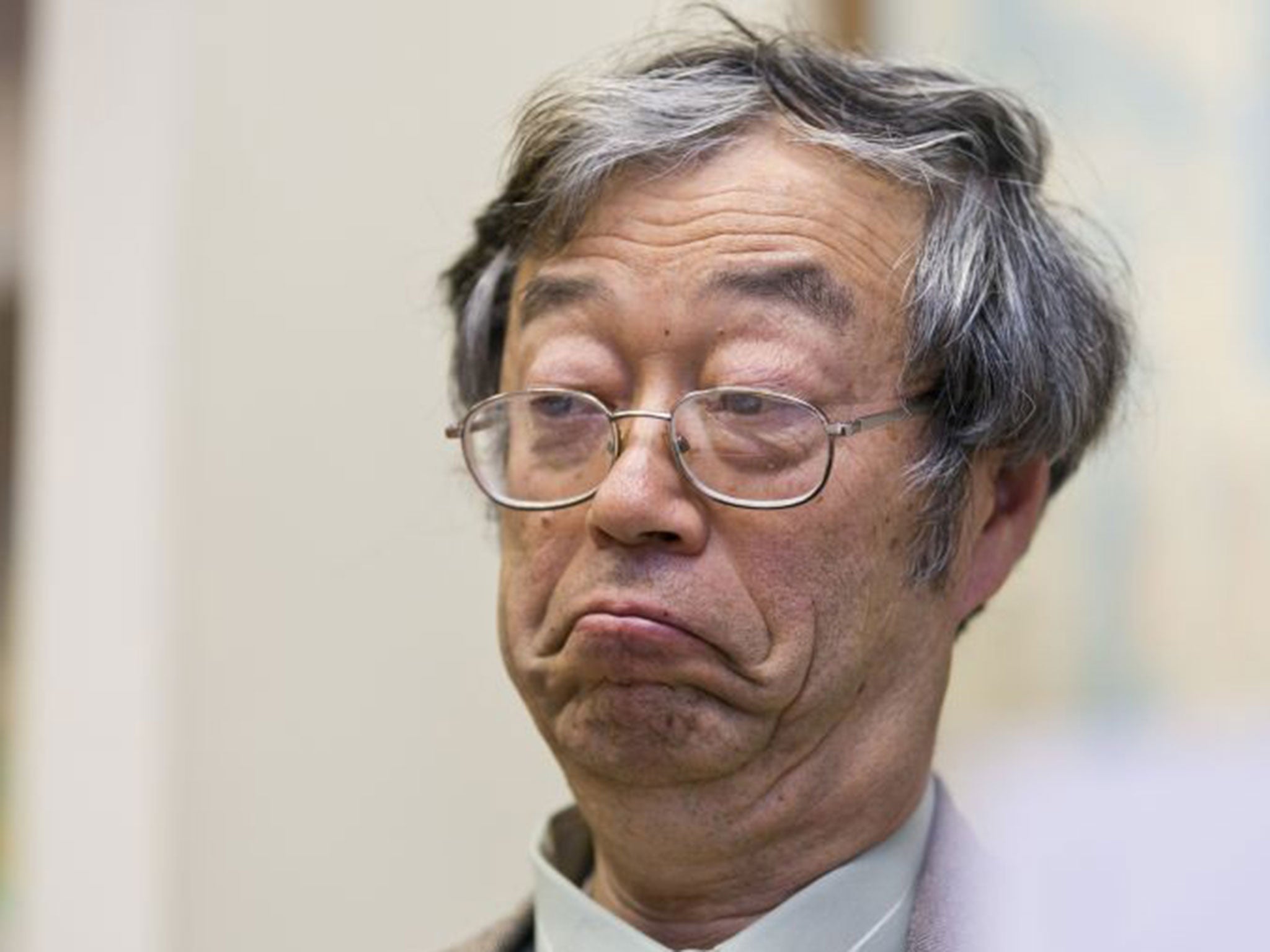
At the same time, bitcoin’s mythology depends heavily on the opposite idea: that no one person is in charge. “Bitcoin is not supposed to have a centralised leader,” says Patt. Any identification of one might make that individual influential over changes to governance and the future direction of crypto, undercutting the whole point of it.
Nevertheless, there’s plenty of interest in who’s behind the name – both for his role in the project that has propelled itself into the public consciousness and because of our prurience about his potential worth. Nakamoto’s initial stake of $1.1m would be worth between $70bn and $80bn today from that first stash alone. But the cryptocurrency has been on a downturn of late: it’s previously been worth upwards of $100bn.
So, has bitcoin’s creator finally been unmasked? The case for Adam Back looks more serious than many of the theories that came before it. He was in the community at its founding, was referenced in the founding principles by Nakamoto, and has remained intrinsically linked to it.
But until someone signs a message, opens keys only Nakamoto has access to, or does something equally undeniable, bitcoin’s creator remains out of reach. That might not be a bad thing. “I’d love to know who made it,” says Meiklejohn. “But I’m not sure that there’s more to it than that.”