

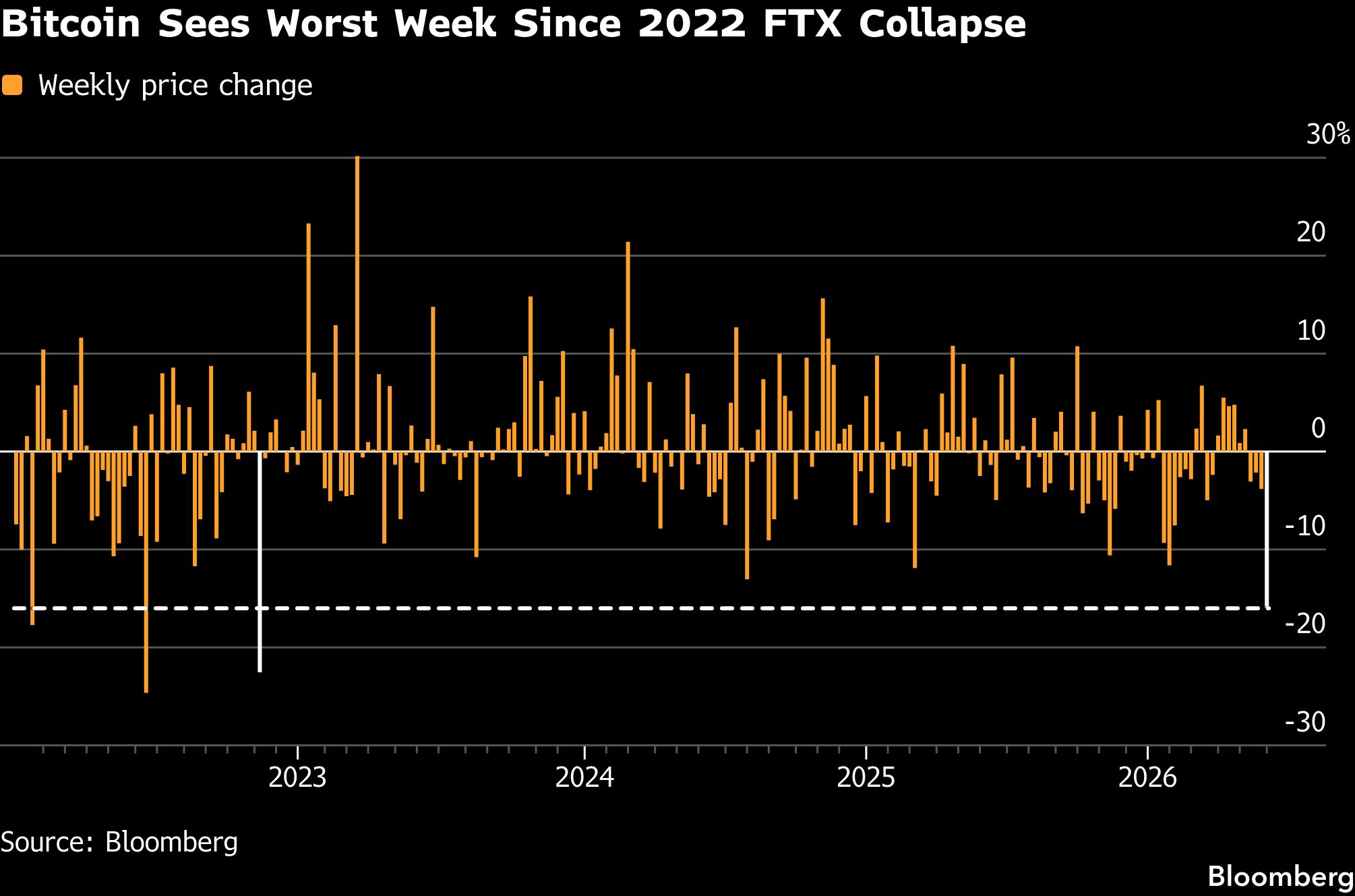
Bitcoin’s slide below $60 000 last Friday capped its worst week since the collapse of Sam Bankman-Fried’s FTX exchange in 2022.
The forces currently at play seem almost benign by comparison, but that’s raising red flags for analysts, who warn that the token’s modest rebound may prove short-lived as structural frailties are exposed.
Investors are fleeing Bitcoin exchange-traded funds, technical indicators have weakened, interest-rate expectations have shifted, and while today’s crypto winter is milder than previous editions, that could mean the worst is yet to come.
“I believe there is further downside,” said Griffin Ardern, co-founder of multi-asset manager Primal Fund. “We are still some way off a proper bottom.”
Bitcoin has recovered some ground after slumping 16% in the seven days through Sunday, its steepest weekly fall since the FTX bankruptcy triggered a 23% decline in November 2022. That was the culmination of a year to forget for crypto, beginning when the unwinding of a stablecoin called TerraUSD wiped out $40 billion in value and unleashed a daisy-chain of corporate collapses.
Bitcoin’s drop below $60 000 took the token to its lowest level since October 2024 and left it down more than 50% from last year’s record high above $126 000.
The selloff was partly attributable to Michael Saylor’s Bitcoin-buying company Strategy Inc. divesting a tiny portion of its holdings — undermining the narrative that it would never sell.
Strategy moved to steady nerves on Monday. The company said it bought 1 550 Bitcoin for about $101 million, much larger than the $2.5 million it sold, but market confidence may not be so easily restored.
ADVERTISEMENT
CONTINUE READING BELOW
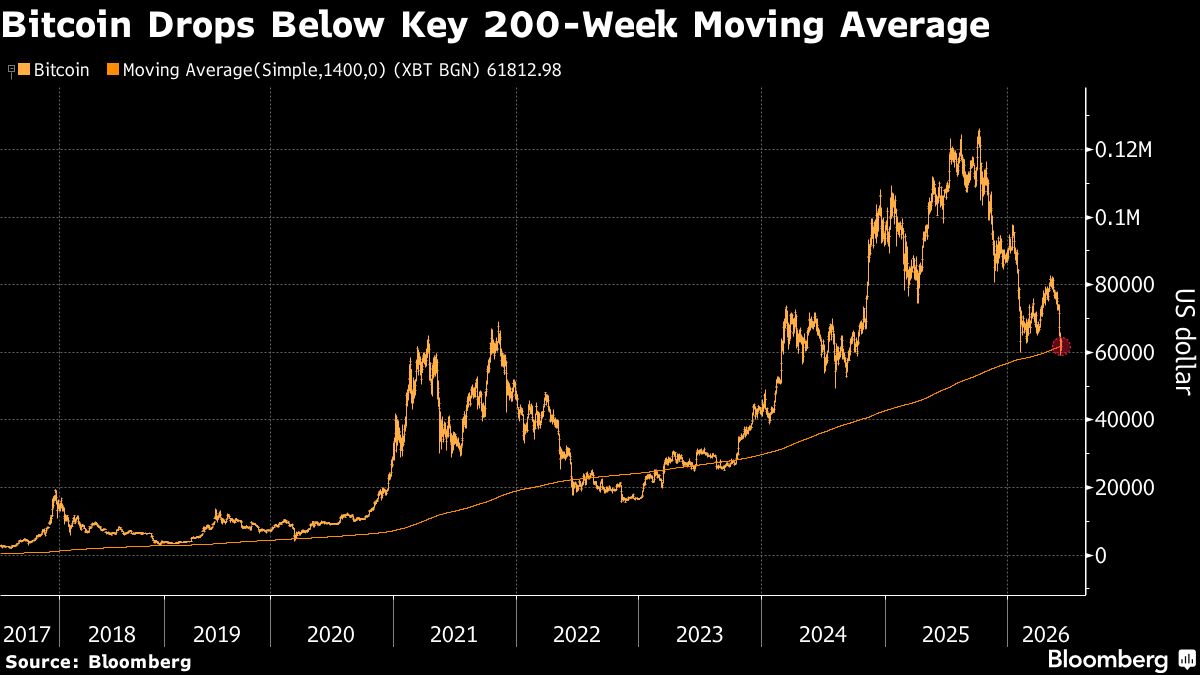
Technical signals have weakened. Bitcoin last week slipped below its 200-week moving average, a closely watched metric that many traders use as a gauge of market support. A break below that level can deepen caution, because it suggests rallies may be sold rather than chased.
Ardern said that at true bottoming points, longer-dated options tend to show a more bullish shift, which is not happening now.
And investors were already getting cold feet. They have pulled about $5.5 billion from US-listed spot Bitcoin ETFs over 13 straight days of net outflows.
Paul Howard, senior director at crypto trading firm Wincent, described the current downturn as a “silent bear market” because there has been no major FTX-style collapse.
“The break below the 200-week moving average provides important confirmation that markets may have entered a bear phase,” Howard said. With Bitcoin volatility elevated, he added: “This rally is unlikely to prove sustainable.”
Rate expectations
The shift in interest-rate expectations is part of the problem, as the prospect of higher borrowing costs draws capital away from speculative assets like crypto.
The unresolved US-Iran war and strong US jobs data have seen markets move from expecting the US Federal Reserve to cut rates to pricing in the chance of increases.
ADVERTISEMENT:
CONTINUE READING BELOW
“This is a massive reversal in expectations,” said Rajiv Sawhney, head of international portfolio management at Wave Digital Assets.
Bitcoin has also lost its positive correlation with US stocks as money has moved from crypto into artificial-intelligence and tech companies, Sawhney said, but he doesn’t expect a rotation back into crypto if equities reverse.
The current correction is still milder than past crypto winters. Bitcoin has fallen roughly 50% from its peak, compared with drawdowns of about 80% in prior bear markets. After the 2021 peak, Bitcoin took more than a year to bottom and another 15 months to recover its highs.
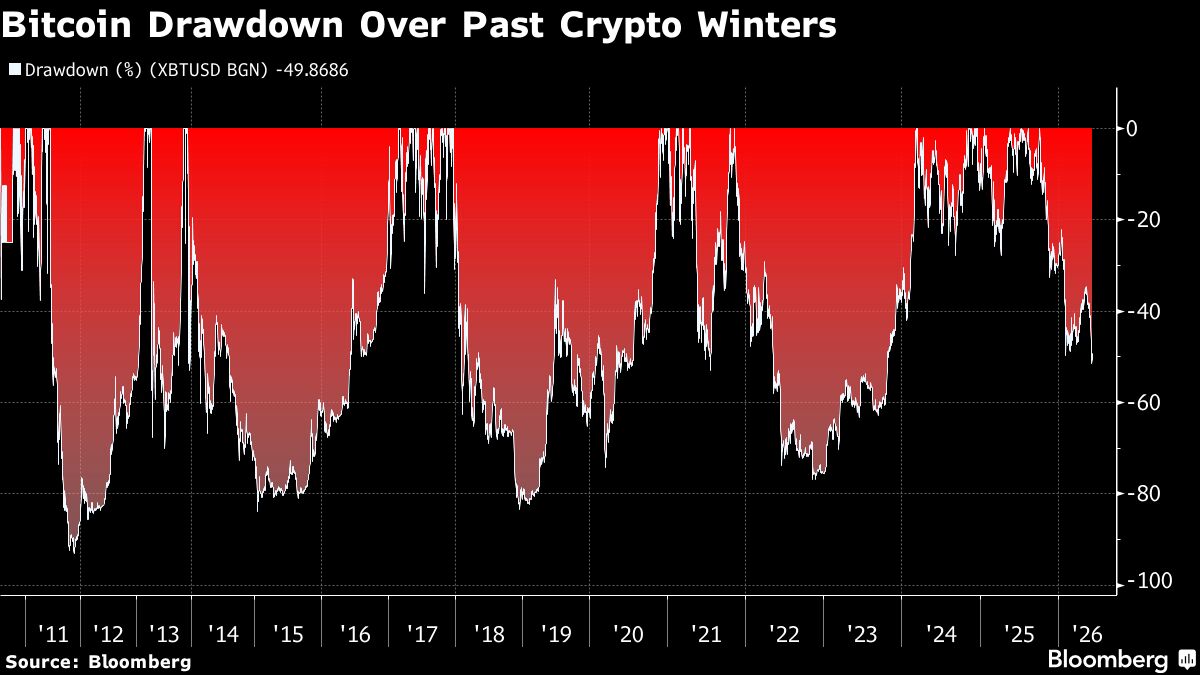
That history is why some traders are reluctant to call a floor now.
Hayden Hughes, managing partner at Tokenize Capital, said digital-asset treasury companies like Strategy create “an idiosyncratic risk to the crypto industry.” These firms hold large amounts of crypto and could be forced sellers if financing conditions tighten or share prices fall.
Hughes said there are also systemic risks that could drag on equity markets in the coming months and spread to crypto.
Bitcoin’s drop may not have matched past cycles, he said, but the word “yet” looms large.
© 2026 Bloomberg