
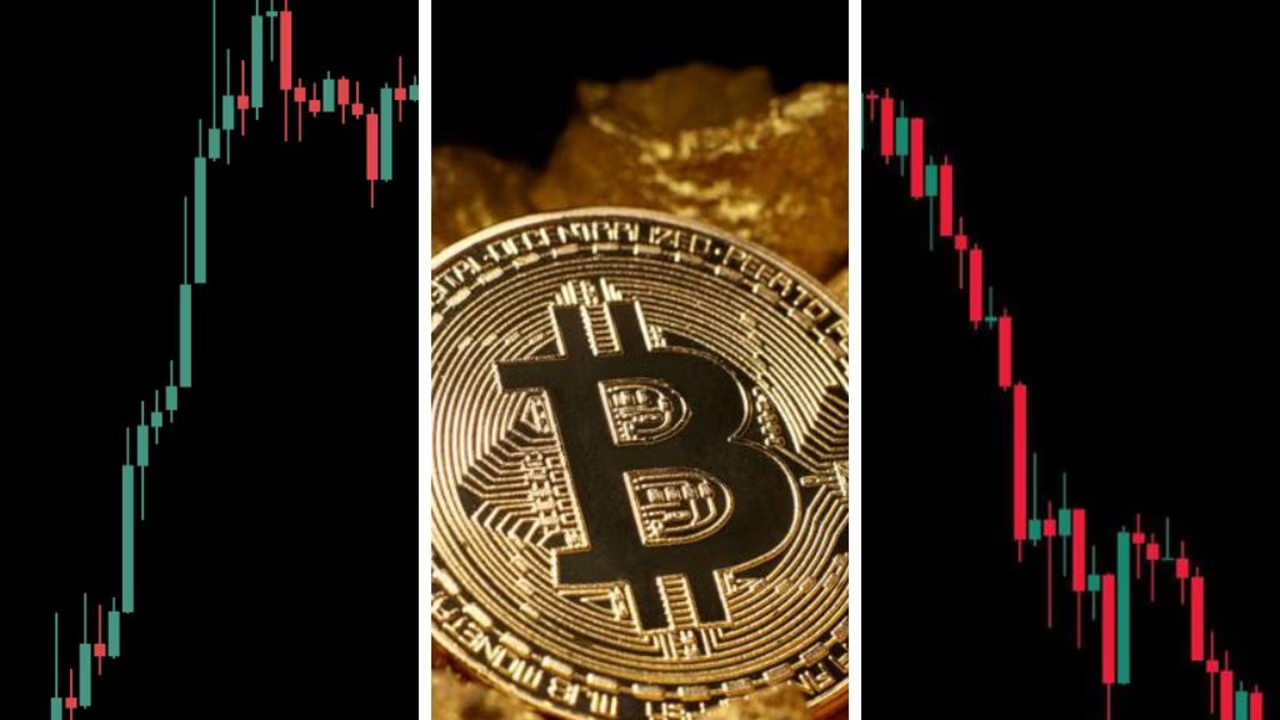
Bitcoin climbed above $113,000 this week, reaching its highest level since January and catching plenty of Australians off guard. So, what the hell is going on?
After all, isn’t crypto dead?
Just a week ago, the cryptocurrency was trading around $90,000 AUD, after Bitcoin plunged as low as $85,000 in June, almost 55 per cent below its October 2025 all-time high of more than $190,000.
It was a brutal drop, and it’s easy to see why so many Australians wrote Bitcoin off entirely, especially when, just a few years ago, it seemed impossible to escape hearing about it.
If it wasn’t your weird uncle at the BBQ telling you Bitcoin was about to change the world, it was someone at the pub, in the office kitchen, or all over your social media feed. Then came the AI boom, and suddenly finding ways to cut your work week with ChatGPT seemed more exciting than chasing the next memecoin.

But the most recent Bitcoin price spike didn’t come out of nowhere. It began last week, not long after US President Donald Trump once again hinted that the US government could start buying Bitcoin (a pipe dream the crypto community has been chasing since he took office in 2024).
Many Bitcoin enthusiasts believe a US government Bitcoin buying spree could trigger a domino effect, with other countries following suit and piling even more pressure on Bitcoin’s fixed supply of 21 million coins.
Bitcoin follows the four-year cycle
This isn’t the first time Bitcoin has looked like it was in trouble before making a comeback. In February 2022, it had already fallen roughly 50 per cent from its November 2021 all-time high.
Just three years later, it shot up to brand-new highs again. It’s a cycle Bitcoin has broadly gone through every four years: huge hype, a crash, everyone gets bored and moves on, then interest grows again.
By that pattern, 2026 falls in the third year of the cycle, usually the boring bit after the previous year’s highs.
Australian crypto exchange independent Reserve CEO Adrian Przelozny, who has spent over a decade in the Bitcoin space, says this may not be the case forever.
“The four-year cycle has been a useful way of thinking about Bitcoin historically, but I don’t think investors should assume the market will follow the same pattern forever. Bitcoin is now a much more mature asset, with institutional investors, ETFs, and greater regulatory acceptance all playing a much bigger role,” he said.
He said that while the recovery is promising, it is still too early to tell whether it will last.
“Only time will tell how long Bitcoin will stay at these levels before entering an uptrend again,” he said.
While Bitcoin may have fallen out of the mainstream eye, Australians haven’t exactly abandoned crypto.
Quite the opposite, actually. Crypto ownership among Australians has reached its highest level on record, with independent Reserve’s 2026 Cryptocurrency Index (IRCI) finding that 33 per cent of Australians now own cryptocurrency. Around 27 per cent also expect to buy more over the next 12 months.
Regulations could bolster crypto adoption in Australia
And there could be even more room for that number to grow. Among those still sceptical of cryptocurrency, 30 per cent said stronger industry regulation could make them more likely to change their minds. The Australian Securities and Investments Commission (ASIC) is planning to bring crypto platforms under the financial services licensing regime from April 2027.
There could also be an unexpected knock-on effect from proposed changes to Australia’s property investment rules.
“The recent changes to negative gearing will shift investor behaviour in digital assets,” Australian crypto micro-investing platform Bamboo CEO Blake Cassidy told news.com.au.
“We’ll see fewer participants selling assets like Bitcoin … instead they’ll borrow against them, using their holdings as collateral,” he said. IRCI data shows 22 per cent of crypto investors have either received a crypto-backed loan or used their crypto for leveraged trading.
“That lets investors unlock returns without triggering a capital gains event, while keeping a long-term view on price appreciation,” he said.
Where Bitcoin goes from here is anyone’s guess. But there’s another date investors will be watching closely: the US midterm elections in November.
Bitcoin has historically performed poorly during US midterm years, but recent data shows that the 12 months following the three midterm elections on record produced an average Bitcoin gain of 54 per cent.
Ciaran Lyons is a cryptocurrency market analyst, journalist and avid investor, with a background as a national radio presenter. He regularly contributes to global cryptocurrency publications and was one of the five Australians on the latest SBS series Filthy Rich and Homeless.