
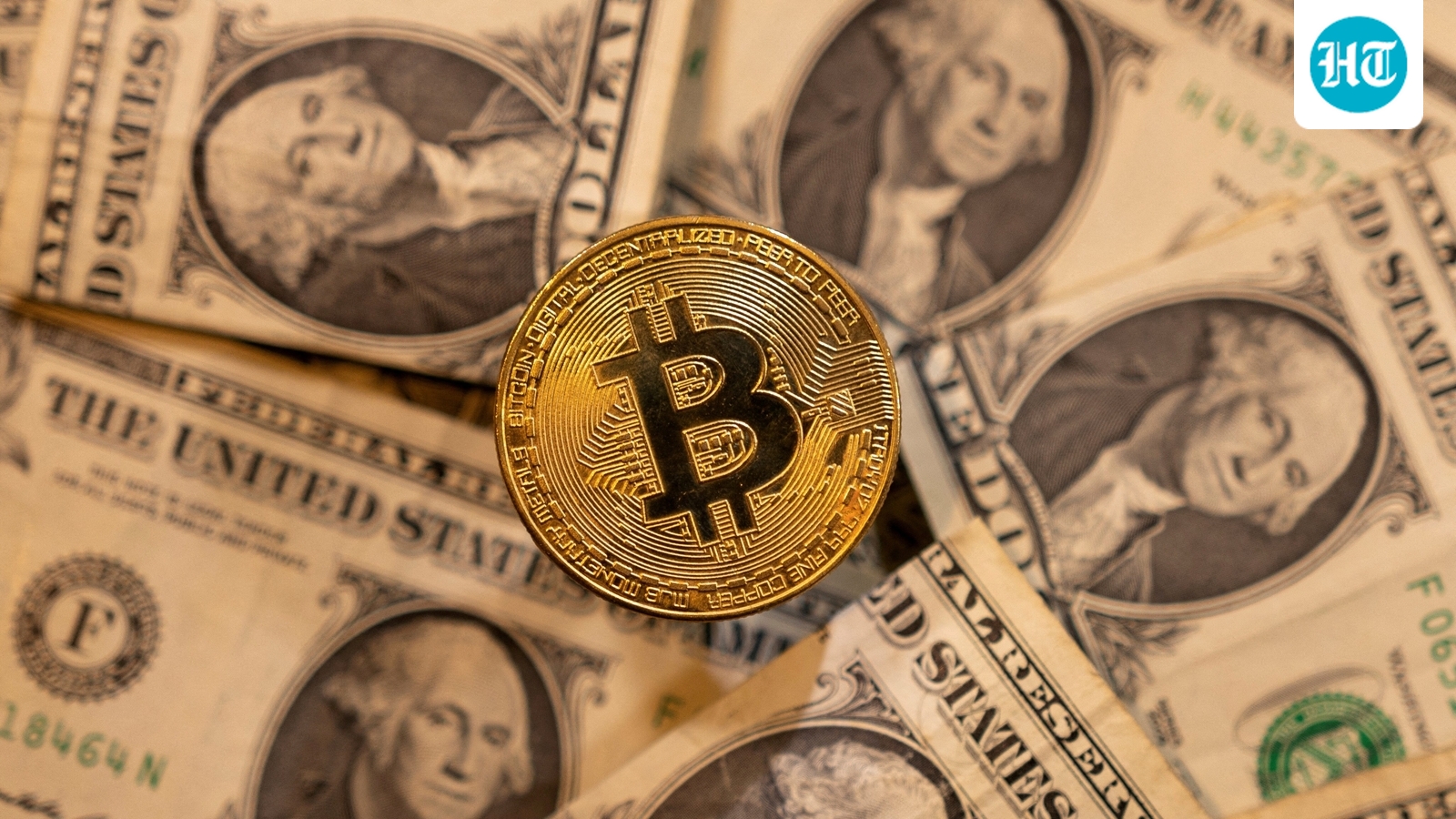
Bitcoin may be starting to move away from its strong link with US technology stocks. In July, Bitcoin performed much better than the Nasdaq-100, showing that the cryptocurrency may now have some of its own market drivers. Bitcoin gained about 8% in July, while the Nasdaq-100 dropped nearly 7%. The different performance was a major change from the way Bitcoin and technology stocks have often moved together in recent years.
Bitcoin has become closely connected with US stocks since 2020. It has often traded like a high-risk, high-growth asset, similar to technology stocks and other “risk-on” investments. The Bitcoin-Nasdaq correlation has fallen sharply in recent months.
Bitcoin’s 90-day correlation with the Nasdaq was as high as 0.89 in May, according to TradingView data cited by CoinDesk. By July 28, its 30-day correlation had fallen to 0.43, close to the lower end of its five-month range, according to K33 Research.
A lower correlation means Bitcoin and technology stocks are no longer moving as closely together. This suggests that factors specific to Bitcoin and the crypto market are becoming more important in deciding where BTC prices go. Bitcoin-specific factors now include ETF flows, leverage and changes in Bitcoin supply. These factors can push Bitcoin higher or lower even when the broader stock market is moving in a different direction.
NYDIG said Bitcoin-specific flows can become more important than its short-term relationship with stocks. In its July 10 quarterly review, NYDIG said equity correlations alone are not enough to explain Bitcoin’s performance when Bitcoin-specific flows become the main market driver, according to Coin Market Cap.
Bitcoin had already started moving differently
The gap between Bitcoin and technology stocks did not suddenly appear in July. Bitcoin had already been moving differently from the Nasdaq-100 for several months. Bitcoin fell 13.4% in the second quarter, while the Nasdaq-100 jumped 27.7%. NYDIG said the difference was linked to factors such as Bitcoin ETF outflows, weaker corporate demand and worries about additional Bitcoin supply.
Also read: S&P 500 at record high: Is it safe to buy? What Warren Buffett and history say
Those pressures started to ease in July. Bitcoin ETF inflows returned, while some of the selling pressure in the crypto market weakened. At the same time, technology stocks came under pressure. Investors became concerned about heavy spending on artificial intelligence and high valuations in technology stocks.
As a result, Bitcoin gained 7.5% in July, while the Nasdaq-100 fell 6.6%. The numbers showed how differently the two markets were behaving. The different performance reflects different sources of demand. Technology stocks are heavily influenced by the AI investment cycle, while Bitcoin is getting more demand from spot ETFs and other crypto-focused investors.
Coinbase Institutional said Bitcoin could be catching up for reasons specific to the crypto market. In a July 24 report, it said the improving gap between Bitcoin and stocks, along with the lower correlation, suggests crypto-specific factors are helping Bitcoin.
Bitcoin ETF demand is returning
One of the biggest reasons behind Bitcoin’s recent strength is renewed buying through spot Bitcoin ETFs. Coinbase Institutional said stronger ETF buying helped support Bitcoin’s July recovery. US spot Bitcoin ETFs recorded five straight days of inflows in July. Coinbase Institutional said this was the first time that had happened since April, showing that investor demand for Bitcoin exposure was returning.
ETF buying became even stronger in August. In the week ending August 7, US spot Bitcoin ETFs attracted $853.5 million in total inflows, their strongest weekly inflow since mid-April. BlackRock’s Bitcoin ETF attracted most of that money. BlackRock’s IBIT accounted for about $693 million of the weekly inflows, according to Coin Market Cap.
Analysts see the ETF inflows as a sign that some investors are slowly returning to Bitcoin. Nick Ruck, director at LVRG Research, told The Block that the recent inflows suggest investors are cautiously rebuilding their Bitcoin positions after taking profits and dealing with broader economic uncertainty.
Bitcoin’s leverage position has also improved. Bitfinex said much of the market’s leverage was cleared out during Bitcoin’s June decline. Fewer leveraged positions mean fewer forced sellers. This may have helped Bitcoin hold up better when technology stocks weakened in July because traders were less likely to be forced to sell Bitcoin positions.
Bitcoin is still sensitive to the Fed
Bitcoin may be moving less closely with stocks, but it is still strongly affected by the Federal Reserve. The crypto market remains sensitive to changes in interest rates and expectations for Fed policy. Fed expectations helped Bitcoin in July. Inflation data came in softer than expected, reducing expectations that the Federal Reserve would need to keep monetary policy tight.
Lower inflation also helped revive demand for Bitcoin funds. CoinShares said weaker Consumer Price Index (CPI) and Producer Price Index (PPI) readings helped bring back Bitcoin fund inflows and changed expectations about future interest rates.
This shows that Bitcoin has not completely separated itself from the wider economy, according to Coin Market Cap. Even if BTC is developing more crypto-specific drivers, interest rates, inflation and Fed decisions can still have a major impact on its price.
The same relationship with the Fed could hurt Bitcoin if conditions change. Coinbase warned that higher Treasury yields or a more hawkish Federal Reserve could put pressure on Bitcoin even if investors continue buying spot Bitcoin ETFs.
Bitcoin should therefore not yet be viewed as a full macro hedge. Jeff Ko, chief analyst at CoinEx, told CoinDesk that Bitcoin remains a rate-sensitive risk asset, rather than a traditional hedge against broader economic conditions.
The key takeaway is that Bitcoin may be becoming more independent from technology stocks, but it is not completely independent from the wider financial market. ETF demand, leverage and crypto-specific buying are becoming more important, while Fed policy, inflation and Treasury yields remain major factors for BTC prices.