
The great AI gold rush is having an unexpected side effect: it’s making Bitcoin mining hardware cheaper for anyone still willing to actually mine Bitcoin.
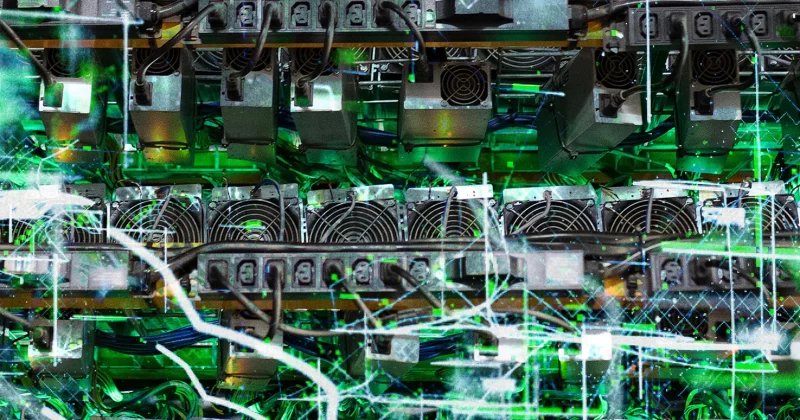
American Bitcoin, the Hut 8 subsidiary launched in early 2025, is leaning into that dynamic hard. The company has been aggressively buying up ASIC miners at depressed prices as competitors abandon the hardware in favor of AI infrastructure. Between March and April 2026, the firm purchased and activated 11,298 new ASIC machines, pushing its total mining fleet to nearly 59,000 units and its hashing capacity to roughly 25 exahashes per second.
The AI pivot is creating a buyer’s market for Bitcoin miners
Major mining operations like Marathon Digital Holdings and CleanSpark have been redirecting resources toward AI and high-performance computing. According to a Bernstein analysis, this shift has generated $90 billion worth of AI-related contracts and 27 gigawatts of power capacity across North America.
American Bitcoin reports all-in mining costs of approximately $50,000 per Bitcoin.
A pure-play Bitcoin mining bet in an AI-obsessed market
What makes American Bitcoin’s approach unusual is its deliberate simplicity. The company doesn’t own data centers. It isn’t chasing AI contracts. It isn’t trying to become a hybrid computing provider. It mines Bitcoin.
Post-halving economics drove many operators toward diversification. When the block reward dropped, margins tightened, and the same power infrastructure that ran ASIC miners could generate more predictable revenue running AI inference workloads. American Bitcoin was established in 2025 as part of a strategic move by Hut 8 to isolate Bitcoin mining as a standalone business, backed by Eric Trump, emerging in this climate where Bitcoin’s economic landscape was shifting dramatically following the 2024 halving event.
A majority of public miners reported significant financial losses in Q1 2026 as they adjusted to new AI workloads. American Bitcoin’s focus on efficiency and low-cost energy sources, particularly in Canada, reflects a path away from these prevailing trends.
What this means for investors
The broader mining sector is splitting into two distinct camps. On one side, companies pivoting toward AI and high-performance computing are essentially becoming data center operators. On the other, pure-play miners like American Bitcoin are doubling down on Bitcoin mining, with American Bitcoin’s nearly 59,000-machine fleet and 25 EH/s capacity representing a significant capital commitment to that view.
Investors watching this space should pay close attention to two metrics in the coming quarters: ASIC hardware prices, which will determine whether American Bitcoin can continue expanding cheaply, and Bitcoin’s price relative to that $50,000 all-in cost figure.